
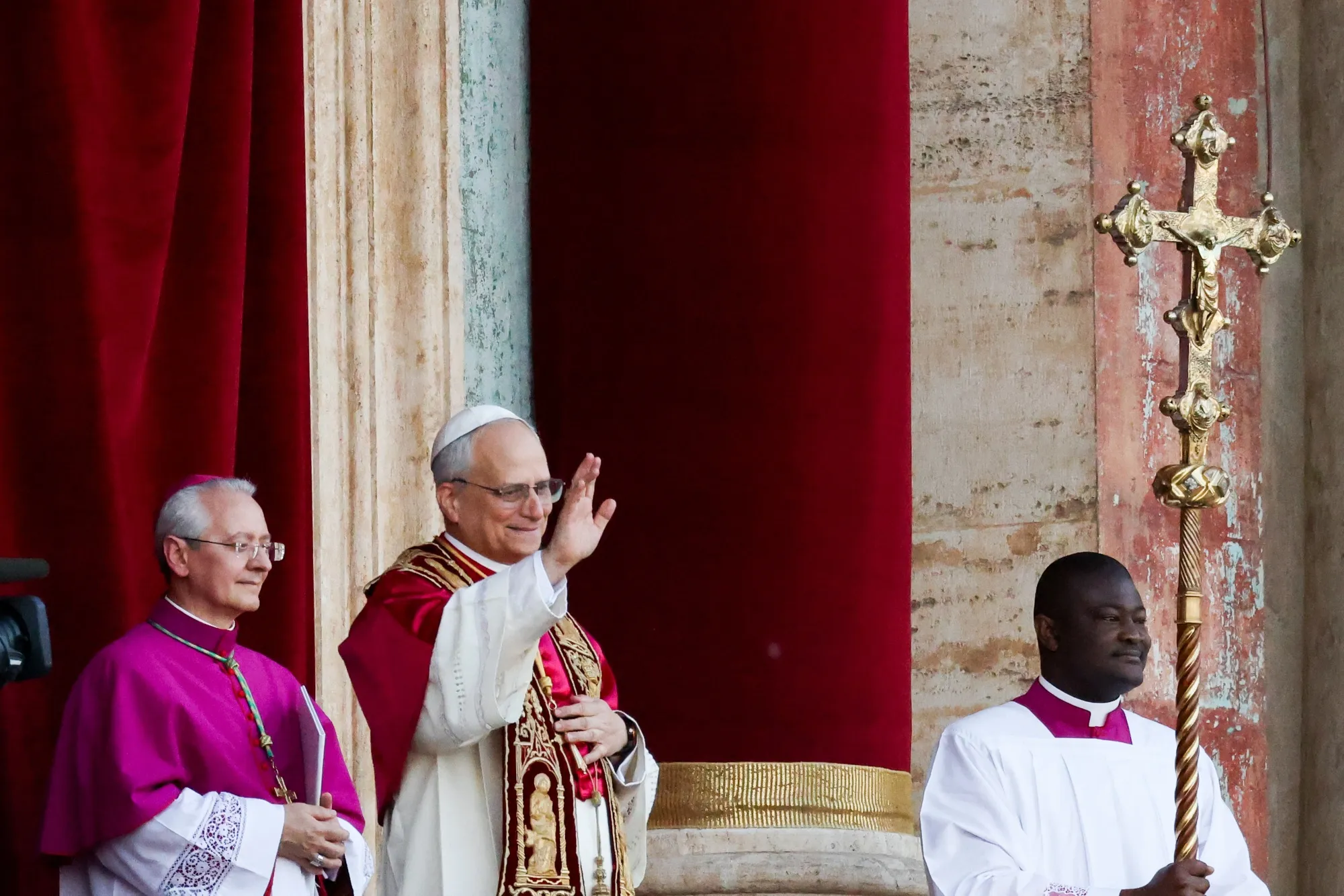
A New Era for the Catholic Church: Pope Leo XIV, the First American Pontiff with Latin American Roots
On a momentous night at St. Peter’s Basilica, as the world witnessed white smoke billowing from the Sistine Chapel, the Catholic Church welcomed a new era with the election of Robert Francis Prevost as Pope Leo XIV. The first American to take the title, Pope Leo XIV, represents a distinctive blend of personas: a Chicago-born priest with strong Latin American roots, a bridge-builder between hemispheres, and a humble pastor dedicated to the marginalized. His election marks a new era for the Church, reflecting its changing demographics and the increasing power of the Global South.
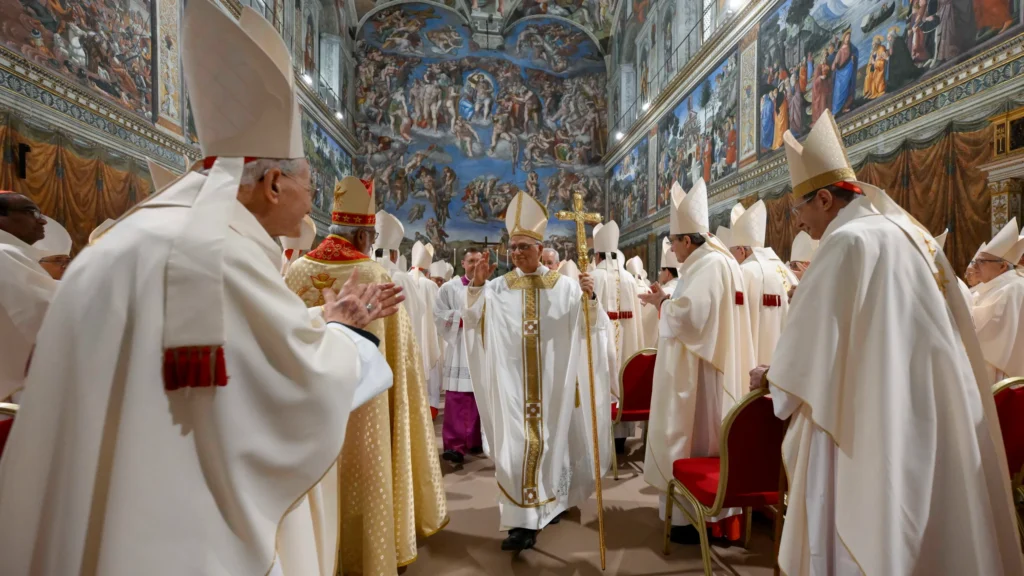
A Historic Election
The cry of “Viva il Papa! ” rang out in St. Peter’s Square even before Cardinal Prevost’s name was called. At 69, the ex-bishop of Chiclayo, Peru, enters a position filled with both promise and challenge. His double identity as an American and a Peruvian citizen, refined over decades of missionary service, makes him a symbol of unity in a divided world. For others, his papacy is a break with tradition, but also a coming back to the Church’s fundamental mission: serving the poor, engaging in dialogue with other cultures, and spiritual rebirth.
Early Life and Vocation
Robert Francis Prevost was born in 1955 in Chicago to Spanish and Franco-Italian parents. Raised in a multicultural family, he was surrounded by a rich tapestry of languages and traditions that set the stage for his future career as a worldwide spiritual leader. As an altar boy in his formative years, he was called to the priesthood, and he went on to study for the priesthood at Mundelein Seminary. Ordained in 1982, he initially worked in parishes in Chicago, where his intellectual seriousness and pastoral warmth made him a figure of respect.
But Prevost’s life took a crucial turn in 1985, when he moved to Peru as a missionary. Although he periodically returned to the U.S.—working as a pastor and prior in Chicago—his heart continued to be tied to Latin America. Eventually, he became a Peruvian citizen, a symbol of his love for the area.
Missionary Work in Peru: A Foundation for Leadership
Prevost’s 37 years in Peru shaped his worldview. Ten years as parish priest and seminary teacher in Trujillo, a poverty-stricken region of social injustice, defined his ministry: building up poor Indigenous and mestizo communities, fostering education, health, and human dignity. Colleagues and friends refer to him as a “priest of the people,” often taking dusty roadsides to visit remote villages or arbitrating conflicts between local leaders and government officials.
His work transcended pastoral life. As mission leader of the Augustinian mission in Peru, he set priorities on sustainable development projects like clean water initiatives and vocational schools. These established him as a “El Constructor” (The Builder) due to his bringing together of opposition factions—a skill that was most likely attractive to cardinals who sought a unifying figure to emerge from the conclave.
The Road to the Papacy
Prevost’s election surprised many, as he was not one of the leading candidates in pre-conclave speculation. However, insiders claim that his candidacy was a compromise between factions divided by geography and ideology. Progressive cardinals liked his promotion of social justice, and conservatives appreciated his orthodox theological style and administrative experience as Bishop of Chiclayo (2015–2023).
His choice of the name Leo XIV is symbolic. The last Pope Leo, Leo XIII (1878–1903), was a reformer who stood up for workers’ rights and interfaith relations. By using the name again, Prevost expresses solidarity with this tradition of seeking a middle ground between tradition and modernity.
Significance of His Papacy
- A First for the Americas
Prevost’s election shatters a centuries-old European dominance of the papacy. While the Church has long been global, his ascendancy acknowledges the vitality of Catholicism in the Americas—home to nearly half the world’s Catholics. For U.S. Catholics, his election is a source of pride, but Prevost has downplayed nationality, stating in his first address: “I am a citizen of Heaven, called to serve all God’s children.” - Latin America’s Pastor
Prevost’s deep ties to Peru and his advocacy for Indigenous rights resonate in a region where the Church faces competition from evangelical movements and disillusionment over clerical scandals. His papacy could reinvigorate Latin American Catholicism by emphasizing grassroots engagement and addressing systemic inequality. - A Bridge Between Worlds
Fluent in Spanish, English, Italian, and Quechua (an Indigenous Andean language), Pope Leo XIV is uniquely equipped to navigate cultural divides. His background mirrors the Church’s demographic future: by 2050, most Catholics will reside in Africa and Latin America. His leadership may prioritize decolonizing Church structures and amplifying marginalized voices.
Challenges Ahead
Pope Leo XIV inherits a Church grappling with polarization. Key issues include:
- Clergy Sexual Abuse Scandals: Prevost’s handling of accountability and transparency will be scrutinized, particularly in the U.S. and Europe.
- Doctrinal Tensions: Debates over LGBTQ+ inclusion, female leadership, and divorce remain contentious. His conservative stance on doctrine may disappoint reformers.
- Interfaith and Climate Crises: Prevost’s experience in Peru, where climate change devastates Indigenous lands, could position him as an advocate for ecological justice.
A Humble Vision
In his inaugural homily, Pope Leo XIV struck a tone of humility: “The Church must walk with the wounded, listen to the silenced, and embrace those pushed to the margins.” Early signs suggest a papacy focused on pastoral presence over pomp—a reflection of his years in Peruvian parishes.
A Pope for a New World
Robert Prevost’s path from altar boy in Chicago to Pope Leo XIV represents the ever-changing face of the Catholic Church. His papacy comes at a turning point, with promise of rejuvenation through service, conversation, and solidarity. Challenges are ahead, but his legacy could be in bridging gaps—not only between continents, but between faith and humanity’s pressing needs. As the world resonates with the chant of “Viva il Papa,” everyone wants to know: Will this community builder erect a lasting cornerstone for the future of the Church? Only time—and faith—will tell.
Click here to subscribe to our newsletters and get the latest updates directly to your inbox.