
A 4.1 Magnitude Earthquake in Tennessee Shakes the Southeast: What You Need to Know
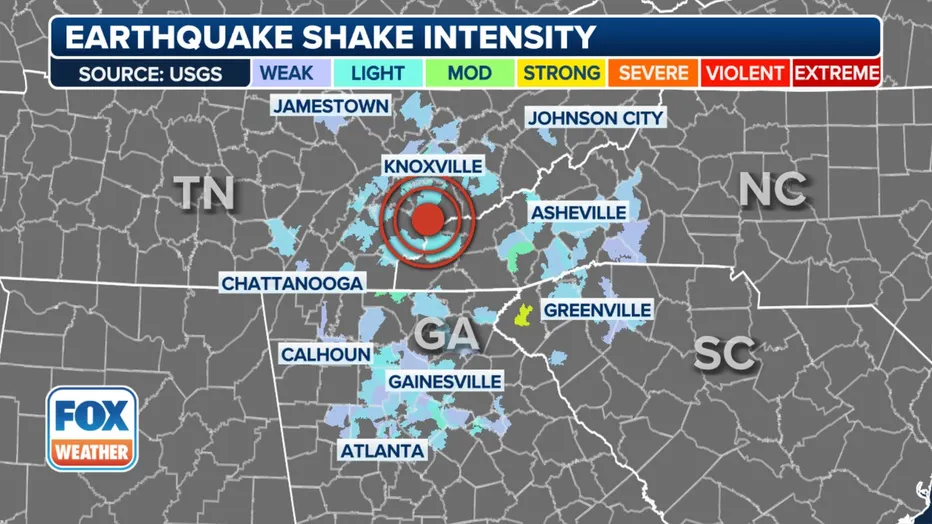
On a quiet Saturday morning, home owners all across Tennessee, Atlanta, and northwestern North Carolina were suddenly shaken awake by a surprise event: a magnitude 4.1 earthquake. Brought into brief reports within seconds of 9 a.m. EDT on Sept. 30, 2023, the quake occurred near Greenback, Tenn.—a little village about 30 miles south of Knoxville—and rippled beyond state lines to startle unshaken communities. Although no serious damage or casualties were reported, the earthquake elicited discussions on earthquake readiness, local geology, and the unexpected extent of moderate quakes. In this post, we dissect the event details, delve into its scientific and social ramifications, and discuss what it entails for the Southeast.
The Earthquake: Key Details
The earthquake had a preliminary magnitude of 4.1, according to the U.S. Geological Survey (USGS), with an epicenter 12 miles (20 kilometers) from Greenback, Tennessee. The earthquake occurred at a shallow depth of 8.7 kilometers (5.4 miles), which possibly added to its far-reaching perceptibility. Shallow quakes are more efficient at propagating energy to the ground surface, making them shake communities hundreds of miles away more intensely.
The quake was reported in a wide swath of the Southeast, from metro Atlanta more than 150 miles from the epicenter, to portions of western North Carolina, eastern Alabama, and northern Georgia. Social media instantly filled with stories of shaking windows, swaying chandeliers, and fleeting moments of disorientation. “I thought a truck crashed into my house,” one Atlantaer tweeted, while another Knoxville resident posted, “My dog barked just before the room moved.”
Why Tennessee? Understanding the East Tennessee Seismic Zone
Tennessee does not evoke thoughts of tectonic turmoil such as California or Japan, yet the state quietly sits on the fault line. The quake was centered in the East Tennessee Seismic Zone (ETSZ), a 300-mile-long tract running from northeast Alabama to southwestern Virginia. This zone is the second-most active seismic zone east of the Missouri-based New Madrid Seismic Zone.
The ETSZ generates dozens of minor earthquakes annually, although the majority are less than magnitude 2.5 and pass without notice. Every now and then, though, the zone reminds locals of its existence with more significant occurrences. The most recent major quake in the region was a 4.4 magnitude earthquake in December 2018, also close to Decatur, Tennessee.
Geologists blame the ETSZ’s activity on old faults buried deep in the Appalachian Mountains. The faults originated hundreds of millions of years ago when the mountain range formed as a result of continental collisions. Though less active than boundary zones such as the San Andreas Fault, these old cracks in the Earth’s crust still slip under continued regional stresses.
Why Was the Earthquake Felt So Far Away?
Perhaps the most impressive feature of this earthquake was how far its impact extended. Citizens in Atlanta—almost three hours’ drive from the epicenter—felt light shaking. This is typical in the eastern United States, where cold, old, dense bedrock permits seismic waves to go farther with less weakening than the fractured geology of the West.
“Eastern quakes are much like ringing a bell,” says Dr. Sarah McBride, a USGS seismologist. “The energy propagates very efficiently through the hard continental crust, so even a smallish shake can be felt over several states.”
Earthquakes in the Southeast
Although the Southeast is not prone to disastrous earthquakes, the past few centuries demonstrate that it is not totally exempt from them. The largest earthquake in U.S. history east of the Rockies was in 1811–1812 along the New Madrid Seismic Zone, with magnitudes estimated between 7.0 and 7.5. Those earthquakes reshaped the terrain, reversed the flow of the Mississippi River, and rang church bells as far north as Boston.
More recently, a 5.1 earthquake hit Sparta, North Carolina, in August 2020 and broke buildings and reminded Southeasterners of their geologic frailty. The 2023 Tennessee earthquake, although less severe, reminds the region of the ongoing risk.
Community Reactions: From Alarm to Curiosity
For many in Atlanta and North Carolina, the tremor was a novel experience. “I’ve lived here my whole life and never felt anything like that,” said Marietta resident Linda Carter. Others took to TikTok to share security camera footage of shaking furniture or pets reacting to the quake seconds before humans.
In Tennessee, where there are more frequent small quakes, the reaction was more subdued but still significant. Local authorities said they carried out routine inspections on infrastructure such as bridges and dams as a precaution. Knox County Emergency Management Director Colin Ickes told people not to panic, saying, “There’s no need for panic, but this is a good reminder to review earthquake safety plans.”
Earthquake Preparedness: A Wake-Up Call
While a 4.1 magnitude quake is unlikely to cause major damage, it serves as a timely reminder for preparedness. The USGS recommends the following steps for earthquake safety:
- Drop, Cover, and Hold On: Protect yourself from falling debris.
- Secure Heavy Furniture: Anchor bookshelves, TVs, and appliances to walls.
- Create an Emergency Kit: Include water, non-perishable food, flashlights, and first-aid supplies.
- Develop a Communication Plan: Ensure family members know how to reconnect if separated.
States like Tennessee and Georgia have increasingly incorporated seismic resilience into building codes, though older structures remain vulnerable.
Human Activity and Earthquakes: A Connection?
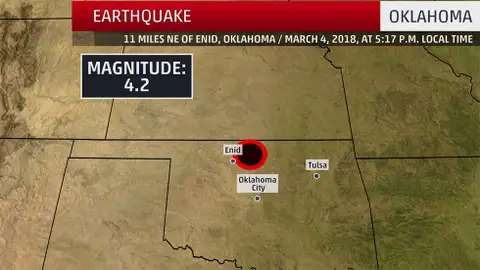
In the past decade or so, human activities like wastewater injection and fracking have been associated with induced seismicity in places like Oklahoma. Nevertheless, the USGS has ascertained that this Tennessee earthquake was tectonic in nature, with no connection to industrial activities. “The activity of the ETSZ is purely natural,” stated Dr. McBride. “This is the Earth exhaling ages of tension.”
Looking Ahead: Monitoring and Awareness
The USGS remains on watch for aftershocks, though up to this point, none have been more than magnitude 2.0. Although the risk of a subsequent larger earthquake after a 4.1 is low, approximately less than 5%, experts stress awareness is key.
Such groups as the Central United States Earthquake Consortium (CUSEC) push for education campaigns among the general public, especially in areas where earthquakes don’t happen often but can.
The 4.1 magnitude Tennessee earthquake may not make headlines globally, but for Southeastern residents, it’s a poignant reminder of the dynamic planet beneath our feet. As tectonic stresses continue to shape the region, preparedness and scientific literacy remain our best tools for resilience. Whether you’re in earthquake-prone California or the seemingly stable Southeast, understanding the risks—and staying ready—can make all the difference when the ground begins to shake.
Click here to subscribe to our newsletters and get the latest updates directly to your inbox.