
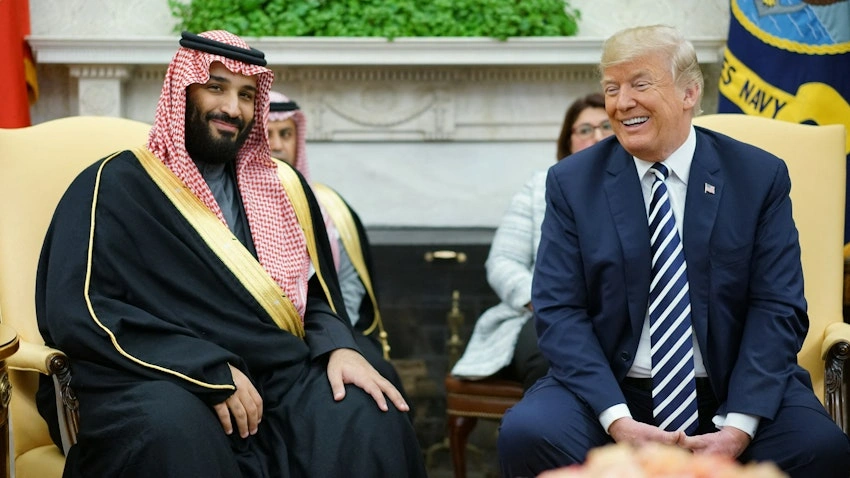
Trump’s Visit to Saudi Arabia Reignites Debate Over U.S. Nuclear Deal Prospects
With the visit of former U.S. President Donald Trump to Saudi Arabia, his first since the presumed beginning of a second term, speculation is rising about a possible U.S.-Saudi civil nuclear deal. The visit has made headlines around the world, not just for its symbolic value but also for the possibility of redrawing energy geopolitics in the Middle East. Reports indicate the Trump administration is “very excited” to assist Saudi Arabia in establishing its civilian nuclear program, a measure that would strengthen American economic interests while pushing back against Russia and China’s increasing reach in the region. But the offer is controversial, especially regarding Saudi Arabia’s demand for uranium enrichment capacity—a red line for non-proliferation campaigners.
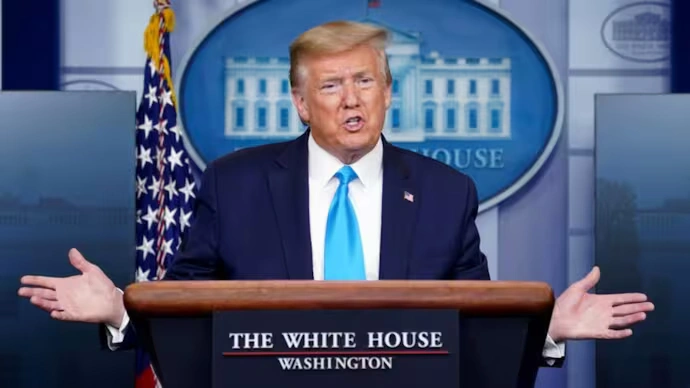
The Strategic and Economic Stakes for the U.S.
At the center of the negotiated nuclear agreement is a two-pronged opportunity for the United States: economic benefits and geopolitical influence. Saudi Arabia, as part of its Vision 2030 strategy, seeks to diversify its energy portfolio and lower dependence on oil. Nuclear power is a pillar of this plan, with the kingdom aiming to have 17 gigawatts of nuclear capacity by 2040. For U.S. companies such as Westinghouse Electric Company, this is a profitable opportunity to win multi-billion-dollar deals for reactor building, uranium sales, and technology transfer.
The Trump administration has pitched the agreement as a “win-win,” highlighting job growth and U.S. leadership in cutting-edge energy technology. “This isn’t just about energy—it’s about keeping America first in critical industries,” a senior official was quoted as saying. By teaming up with Riyadh, the U.S. might beat out rivals such as Russia’s Rosatom and China’s CNNC, both of which have aggressively sought nuclear agreements in the Middle East.
But critics point out that economic gains are accompanied by high risks. Saudi Arabia has always refused to sign contracts limiting its freedom to enrich uranium or reprocess spent fuel—activities that can be diverted toward weapons production. The U.S. has usually insisted on “123 Agreements” (under the Atomic Energy Act) imposing strict non-proliferation measures as a prerequisite for nuclear cooperation. Whether the Trump administration will soften these conditions to obtain a deal is a hotly debated issue.
Saudi Arabia’s Nuclear Ambitions: Vision 2030 and Beyond
Saudi Arabia’s desire for nuclear power is born of pragmatism. The kingdom is hit with skyrocketing domestic energy demand, its industrial expansion and population of young people stretching current power networks to their limits. Producing electricity from crude oil, still widespread practice in the kingdom, is rapidly becoming economically and environmentally unfeasible. Crown Prince Mohammed bin Salman (MBS) has made nuclear power a cornerstone of Saudi Arabia’s post-oil economy transition, consistent with Vision 2030’s diversification and modernization objectives.
But Riyadh’s nuclear ambitions go beyond the energy sector. The kingdom has traditionally seen its geopolitical competition with Iran in security terms. Following Iran’s 2015 nuclear agreement (JCPOA), Saudi officials threatened to develop nuclear weapons if Tehran were to cross the line. Though a member of the Nuclear Non-Proliferation Treaty (NPT), Saudi Arabia has refused to sign up for the Additional Protocol, permitting invasive inspections by the International Atomic Energy Agency (IAEA). It has nurtured fears of Riyadh’s intentions for the future.
The Uranium Enrichment Dilemma
The most contentious element of the likely U.S.-Saudi agreement is uranium enrichment. Saudi leaders have openly demanded to be able to enrich uranium on the domestic front, a position that MBS stated in 2018: “If Iran builds a nuclear bomb, we will do so too, as fast as we can.” Enrichment technology, although permitted under the NPT for civilian purposes, can be converted to create weapons-grade material.
The U.S. has long been against permitting allied countries in unstable areas to enrich uranium, citing proliferation concerns. For example, the UAE’s 2009 nuclear deal with the U.S. specifically prohibited enrichment and reprocessing. Saudi Arabia, however, sees such limitations as an affront to its sovereignty and a double standard, considering Iran’s disputed enrichment efforts.
Experts say that giving Riyadh enrichment rights without strong protections could create a hazardous precedent. “If Saudi enriches uranium, it’s only a matter of time before Turkey, Egypt, and others ask for the same,” said Dr. Emily B. Landau, a non-proliferation expert at the Institute for National Security Studies. “The Middle East might become a tinderbox of dormant nuclear capabilities.
Regional Security and the Specter of an Arms Race
A U.S.-Saudi nuclear agreement would have echoes throughout the Middle East, especially in Iran and Israel. Tehran has long criticized Washington for hypocrisy in its nuclear diplomacy, and an agreement with Riyadh that does not have tight controls could encourage hardliners trying to restart Iran’s weapons program. Meanwhile, Israel, which has a policy of “nuclear ambiguity,” has lobbied the U.S. behind the scenes to place tough conditions on Riyadh.
Regional stability is in the balance. Saudi-Iranian rivalry has already spurred proxy wars in Yemen, Syria, and elsewhere. A nuclearized Saudi Arabia might even drive Iran to hasten its program, and set off an arms race. “The Middle East does not have the trust and institutional underpinnings to contain nuclear rivalry,” stated Abdulaziz Sager, chairman of the Gulf Research Center. “A single misstep would result in disaster.”
Balancing Economic Gains and Non-Proliferation
The Trump administration must navigate a careful balancing act. On the one hand, the nuclear agreement would bolster relations with an important ally, generate employment, and repel Russian and Chinese encroachments. But on the other, it jeopardizes decades of non-proliferation diplomacy.
To get around this, the U.S. might try to broker a compromise: permitting limited enrichment under IAEA supervision and mandating Saudi Arabia to import reactor fuel instead of making it at home. Such an approach has succeeded in the UAE, where reactors are in operation without the ability to enrich. But Saudi Arabia’s more ambitious goals and regional influence make it a unique situation.
A High-Risk, High-Reward Gamble
Donald Trump’s trip to Saudi Arabia highlights the kingdom’s continued strategic value for Washington. A civil nuclear agreement holds tantalizing promise—economic development, energy diversification, and geopolitical influence—but the dangers are similarly deep. Without rock-solid protections, the U.S. may inadvertently embolden Saudi Arabia to seek nuclear arms, destabilizing an already turbulent region.
As the negotiations progress, the world will observe if the Trump administration places short-term gains ahead of long-term security. History’s lesson is obvious: In an age of nuclear arms, the difference between energy and weapons is frighteningly narrow. For the U.S. and Saudi Arabia, the stakes have never been greater.
Click here to subscribe to our newsletters and get the latest updates directly to your inbox.