
Iran, Backed by China and Russia, Dismisses European Sanctions Push as ‘Legally Baseless’
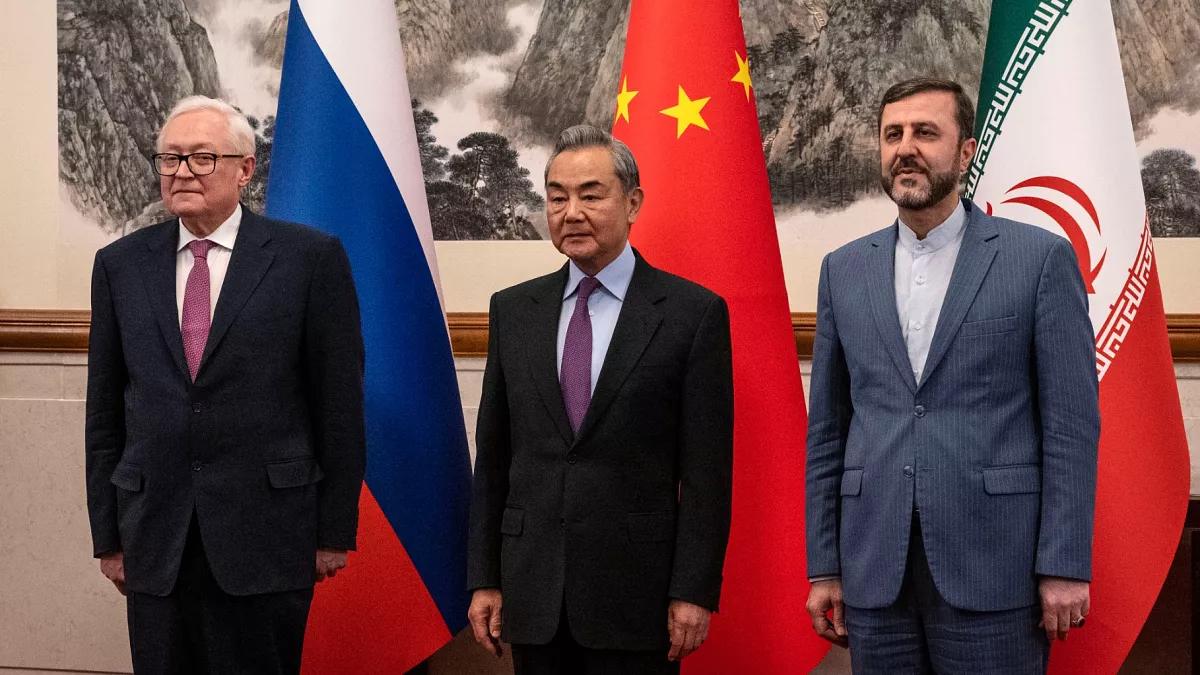
Iran has once again found itself at the centre of international diplomatic tensions, this time rejecting a European-led effort to re-impose UN sanctions on Tehran. With the firm support of China and Russia, the Iranian government has declared the European move “legally unfounded” and “politically disastrous”, signalling a new round of geopolitical confrontation over the future of the 2015 nuclear deal. These latest developments underscore the fragile state of the agreement, the growing rift between major global powers and the uncertain future of diplomacy in the region.
The European Move and the Snapback Mechanism
At the heart of the controversy lies the decision by Britain, France, and Germany—often referred to as the E3—to trigger the “snapback mechanism” of the 2015 nuclear deal. This provision allows for the automatic reimposition of UN sanctions if a signatory believes Iran has breached its obligations. The E3 justified their decision by pointing to Tehran’s violations, particularly its production of uranium beyond agreed limits.
The snapback mechanism was originally designed as a safeguard to ensure Iran adhered to its nuclear commitments. However, Iran argues that it has been unfairly targeted, particularly after the United States unilaterally withdrew from the agreement in 2018 under then-President Donald Trump. According to Tehran, Washington’s exit—and subsequent sanctions—effectively nullified the deal, leaving Iran with little reason to continue adhering to its restrictions. The E3, however, maintains that Iran’s actions undermine international security and justify the reimposition of sanctions.
The Joint Response from Iran, China, and Russia
In a letter signed by the foreign ministers of Iran, China and Russia, the three countries strongly opposed the EU’s move. Iranian Foreign Minister Abbas Araqchi shared the document on social media and stressed that the EU’s move is legally flawed and harmful to the delicate balance of international diplomacy. The letter accused the EU of abusing the authority and functions of the UN Security Council and called the action an overreach with dangerous consequences for global governance.
By presenting a united front with Beijing and Moscow, Tehran has sent a strong signal to the West. China and Russia were original signatories to the 2015 nuclear deal, known as the Joint Comprehensive Plan of Action (JCPOA), and their continued support lends credibility to Iran’s position. Both powers have long been critical of Western unilateralism in international institutions and see the move as part of a broader strategy to pressure Tehran while sidelining alternative approaches.
The Fragile State of the 2015 Nuclear Deal
When the JCPOA was signed in 2015, it was hailed as a historic achievement. By limiting Iran’s nuclear activities in exchange for sanctions relief, the deal aimed to prevent nuclear proliferation while promoting regional stability. For a while, the deal succeeded in easing tensions and opening avenues for economic engagement.
However, the deal gradually began to weaken after the US exited it in 2018. Washington not only reimposed tough sanctions but also pressured other countries to reduce their economic ties with Iran. In response, Tehran gradually began violating its commitments, including storing enriched uranium beyond the deal’s limits. The impasse left the JCPOA in limbo, and diplomatic efforts were often overshadowed by military confrontations, cyber attacks and regional proxy conflicts.
The deal is now reaching a critical juncture, as it is set to expire in October. With time running out, the E3’s decision to immediately reimpose sanctions reflects their lack of confidence in Tehran’s willingness to comply, while Iran sees the move as an unjustified escalation.
Tensions After Recent Strikes
Recent military developments have only added fuel to the fire. In June, the US and Israel launched attacks targeting Iranian nuclear sites, further increasing Tehran’s sense of insecurity and mistrust. Following this, Iran signalled that it was less willing to make concessions, while European countries became increasingly convinced that Tehran was not committed to reviving the deal. Talks between Iran and the E3 in Geneva reportedly ended without any progress, reinforcing the notion that the diplomatic path had stalled.
From Tehran’s perspective, these attacks further justified its decision to ramp up uranium production, as external aggression highlighted the risks of relying solely on international agreements for security. From a European perspective, however, Iran’s nuclear progress is a direct threat that cannot be ignored, making the snapback mechanism a last resort.
The Geopolitical Dimensions
The clash over the snapback mechanism extends far beyond the technical details of the nuclear agreement. It reflects deeper geopolitical alignments that are reshaping global politics. On one side, the United States and its European allies seek to maintain pressure on Iran, arguing that Tehran’s behavior destabilizes the Middle East and threatens international security. On the other side, China and Russia are using the opportunity to strengthen their partnership with Iran and challenge Western dominance in global institutions.
For Beijing, supporting Iran provides both strategic and economic benefits. Iran is a crucial energy supplier, and cooperation helps secure access to vital resources. Moreover, standing by Tehran allows China to position itself as a defender of multipolarity, opposing what it sees as Western overreach. For Moscow, the stakes are similarly high. Russia views Iran as a partner in countering U.S. influence in the Middle East and as an important ally in institutions like the UN Security Council.
The Legal Debate
Central to the dispute is the question of whether the European nations are legally entitled to trigger the snapback mechanism at this stage. Iran, China, and Russia argue that the U.S. withdrawal from the JCPOA undermined the legitimacy of the entire framework, making the snapback process invalid. They further contend that the E3 lacks sufficient grounds to invoke the mechanism, accusing them of twisting the agreement’s provisions for political purposes.
The E3, however, argues that as original signatories, they retain the right to enforce compliance. From their standpoint, Iran’s violations are clear and dangerous, and allowing them to go unchecked would weaken the credibility of international agreements. This legal impasse has no easy resolution, as interpretations differ sharply and the UN Security Council remains divided.
The Road Ahead for Diplomacy
The latest standoff raises serious questions about whether the JCPOA can survive in any meaningful form. With the deal nearing its expiration date, the chances of negotiating a new agreement appear slim. The lack of trust between Tehran and the West, compounded by recent military actions, makes compromise increasingly unlikely.
At the same time, Iran’s growing alignment with China and Russia suggests that Tehran may prefer to deepen ties with non-Western partners rather than return to a framework dominated by the U.S. and Europe. Such a shift could fundamentally reshape Middle Eastern geopolitics, pulling Iran further into the orbit of the Beijing-Moscow axis.
Yet, the risks of failure are considerable. A complete collapse of the JCPOA could accelerate Iran’s nuclear program, trigger further military confrontations, and destabilize an already volatile region. It could also undermine the broader credibility of international agreements, making future negotiations on arms control or conflict resolution even more difficult.
Diplomatic Crossroads for the Nuclear Deal
The decision by Britain, France and Germany to invoke the snapback mechanism has unleashed a new wave of diplomatic tensions, with Iran, China and Russia united in opposition. At stake is not just the future of the 2015 nuclear deal, but also the credibility of international diplomacy and the balance of power in the Middle East.
By rejecting the European move as “legally unfounded”, Tehran, Beijing and Moscow have drawn a clear line against Western unilateralism. With the JCPOA nearing its expiration and negotiations stalled, the world now faces a crucial question: can diplomacy still prevent tensions from escalating, or is the nuclear issue heading towards another dangerous phase?
The coming months will be decisive. Whether through compromise, confrontation, or a shift towards new alliances, the choices made by global powers will shape the future of nuclear diplomacy and the stability of the region in the years to come.
Follow for more news at Valleynewz.com