
Northwestern University President Resigns Following Trump Administration’s Federal Funding Cuts
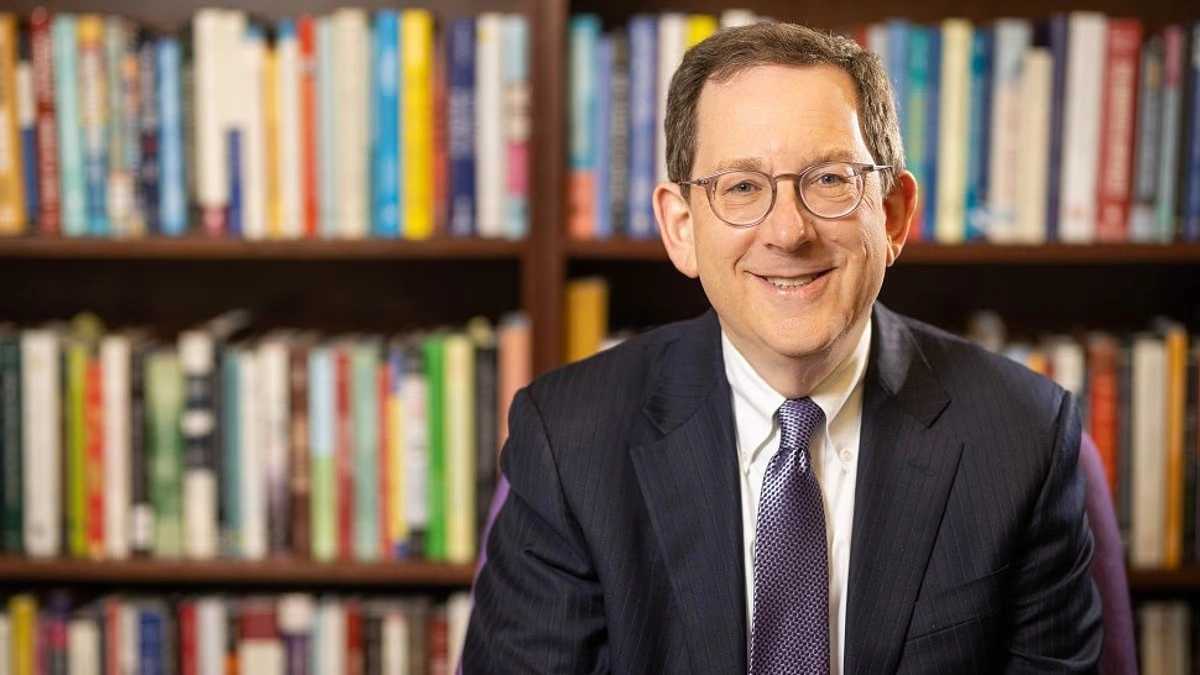
Northwestern University President Michael H. Schill announced on September 4, 2025, that he will step down from his role after three turbulent years leading one of America’s most prestigious private research institutions. His decision comes amid growing political and financial challenges facing the university, largely tied to federal funding freezes imposed by the Trump administration earlier this year.
In his resignation statement, Schill emphasized that the timing was right for new leadership to guide the university through a period of uncertainty. He highlighted his pride in Northwestern’s accomplishments under his tenure, while also acknowledging the significant obstacles created by the federal government’s actions. The announcement marks one of the most high-profile university leadership exits in recent years, underscoring the increasing intersection between higher education and national politics.
Schill’s tenure, beginning in 2022, was characterized by ambitious academic initiatives, a commitment to research, and navigating the complexities of campus life in a politically charged era. His resignation, however, reflects both external pressures and internal strains that grew too large to ignore.
Federal Funding Freeze at the Center of the Crisis
At the heart of Schill’s resignation lies the Trump administration’s decision in April 2025 to freeze nearly $790–800 million in federal research funding for Northwestern. The freeze was justified by the administration as a response to what it described as inadequate action against antisemitism on campus, particularly in relation to heated protests and demonstrations tied to the Israel–Palestine conflict.
For Northwestern, the impact was devastating. The university relies heavily on federal research grants to fund groundbreaking projects in science, medicine, and technology. Without access to this stream of funding, the school was forced to enact immediate cost-cutting measures, including sweeping layoffs. Approximately 425 positions were eliminated, about half of which were vacant roles, while the remainder affected faculty, staff, and administrative positions.
These cuts sent shockwaves through the academic community and raised questions about the precedent being set by Washington. Critics argued that the freeze amounted to political interference in higher education, punishing institutions for campus debates that are often difficult to control. Supporters of the move, however, contended that universities must be held accountable for addressing hate speech and ensuring safe environments for all students.
Political Pressure and Mounting Controversies
The funding freeze was not the only challenge facing Schill in recent months. Northwestern had already been under scrutiny from Republican lawmakers who accused the university of failing to adequately manage pro-Palestinian campus protests. These demonstrations, which mirrored activism at universities nationwide, became a flashpoint in the broader cultural debate about free speech, academic independence, and political expression on campus.
In addition, Northwestern had previously been embroiled in controversy over a hazing scandal within its football program. The scandal damaged the school’s reputation and put additional strain on Schill’s administration. While the president worked to address the issue and implement reforms, critics argued that the institution’s leadership had been too slow to act decisively.
By the summer of 2025, pressure on Schill was mounting from multiple directions: political attacks from Washington, financial instability caused by the funding freeze, and reputational challenges tied to both athletic and academic controversies. His resignation appeared less as a sudden decision and more as the culmination of months of escalating strain.
Schill’s Legacy and Future Role
Despite the challenges, Schill leaves behind a mixed but notable legacy. During his tenure, Northwestern advanced several key academic priorities, expanded its commitment to diversity and inclusion, and strengthened ties with local communities in Chicago and Evanston. He was a vocal advocate for academic freedom and often defended the university’s right to remain independent of political influence.
In his resignation letter, Schill made clear that he remains deeply committed to Northwestern. He will continue serving until an interim president is appointed, after which he plans to return to his role as a faculty member at Northwestern’s law school. Additionally, he pledged to work alongside the Board of Trustees to pursue avenues for restoring the frozen federal research funds, a task that could define the institution’s financial health in the years ahead.
This dual commitment—to both teaching and strategic fundraising—signals that Schill’s relationship with Northwestern is far from over. His pivot back to academia may allow him to contribute without the burden of navigating the volatile politics that have defined university leadership in recent years.
Broader Implications for Higher Education
The resignation of Northwestern’s president is not just a local story; it reflects larger dynamics shaping the landscape of American higher education. The federal government’s use of funding as leverage against universities has sparked alarm across the academic world, raising concerns about academic independence and the politicization of research grants.
Universities have long depended on federal support to fuel scientific breakthroughs, medical research, and technological innovation. If funding becomes subject to political litmus tests, critics warn that the country’s research output and global competitiveness could suffer. Moreover, the precedent of tying financial support to campus speech and protest management could place university leaders in increasingly difficult positions, forced to balance free expression with political expectations from Washington.
The case also highlights the growing vulnerability of university presidents, who are expected to act as both academic leaders and political navigators. With pressure mounting from students, faculty, trustees, and government officials, the role has become increasingly precarious. Schill’s departure adds to a growing list of university leaders stepping down amid political or cultural battles, signaling a turbulent era ahead for higher education governance.
Northwestern’s Next Chapter
Looking ahead, Northwestern faces a daunting period of transition. The immediate challenge will be identifying an interim president capable of stabilizing the university while negotiations over federal funding continue. The Board of Trustees will likely weigh the need for a leader with strong political instincts, financial acumen, and an ability to unite a divided campus community.
The restoration of federal funding remains the most urgent priority. Without access to the nearly $800 million in frozen research support, Northwestern risks falling behind its peer institutions in critical fields of study. Efforts to lobby Congress and the administration will be key in determining whether the university can recover quickly or face prolonged budgetary strain.
Equally important will be addressing the internal morale of students, faculty, and staff. The layoffs, combined with the uncertainty surrounding leadership, have created unease on campus. The university will need to rebuild trust while reaffirming its commitment to research excellence, diversity, and academic freedom.
Closing Perspective
Michael Schill’s resignation as president of Northwestern University illustrates the profound challenges facing higher education in the United States today. His departure was shaped not only by internal controversies but also by the unprecedented intervention of the federal government in the form of research funding freezes tied to political demands.
As Northwestern prepares for its next chapter, the university’s path forward will be closely watched by peers across the academic world. The outcome will help determine how resilient America’s higher education institutions remain in the face of growing political and financial pressures.
For now, Northwestern must navigate a period of transition with the knowledge that the issues it faces—free speech on campus, political interference, financial uncertainty—are not unique but part of a broader national conversation. The university’s ability to adapt and preserve its independence will be critical in shaping both its own future and the future of American higher education.
Click Here to subscribe to our newsletters and get the latest updates directly to your inbox.