
Nepal Crisis Deepens: Gen Z Groups Divided, No Consensus Yet on Interim Chief
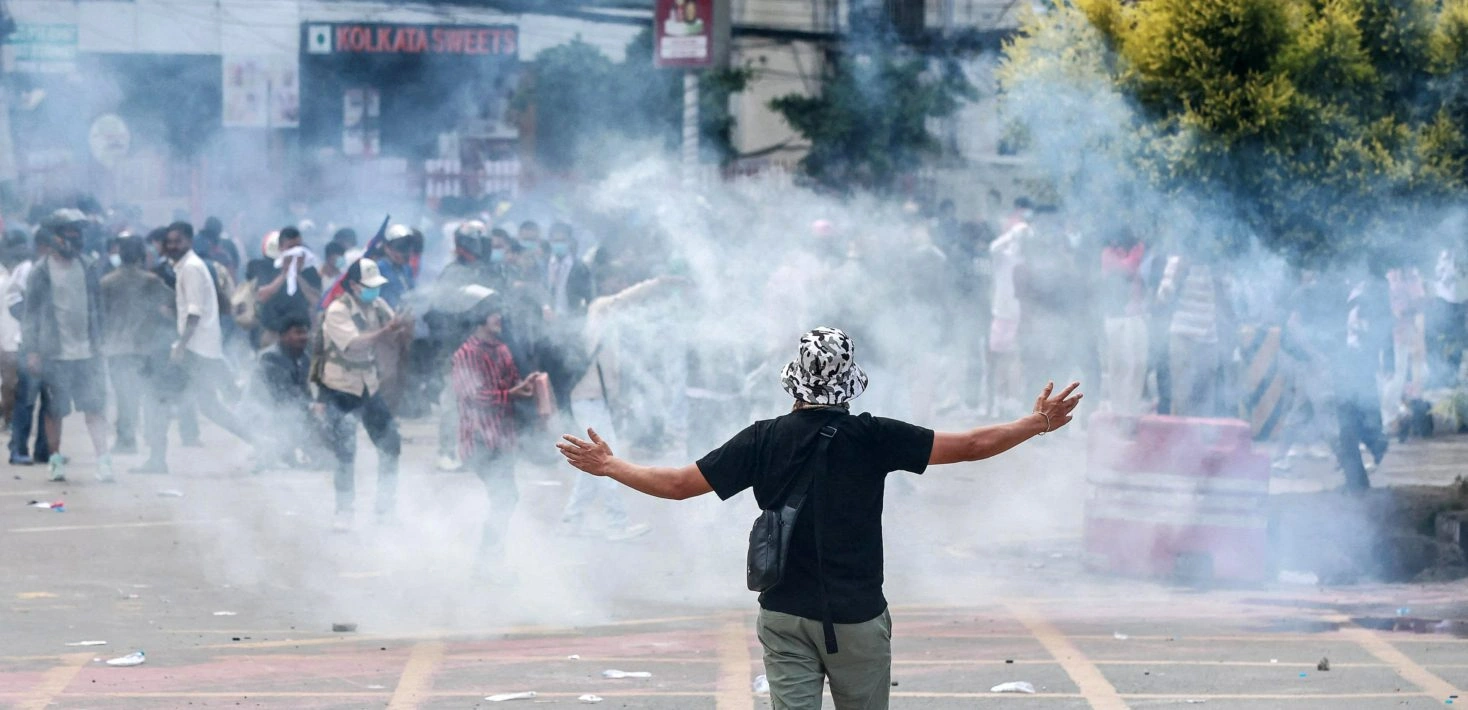
Nepal’s political crisis entered a deeper phase of uncertainty on Thursday as efforts to put together an interim government after the fall of Prime Minister K P Sharma Oli stalled. Despite mounting pressure from the streets and the urgency to stabilize governance, divisions within the youth-led protest movements—collectively identified as Gen Z groups—have prevented any clear consensus on who should assume the role of interim chief.
President Ram Chandra Poudel has insisted that any solution must be found strictly within the existing constitutional framework, a position that limits the scope of options being floated in public discourse. His insistence has also placed additional hurdles before Nepal Army chief General Ashok Raj Sigdel, who has been playing an active role in trying to shepherd the political class and civil society toward a temporary arrangement that can command credibility.
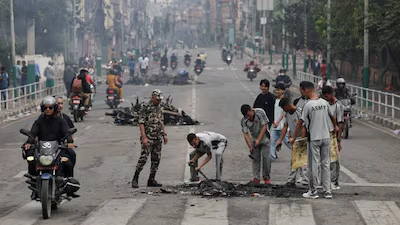
On Wednesday, General Sigdel reached out to former Chief Justice Sushila Karki, inviting her to lead an interim dispensation as Chief Executive. After much persuasion and backing from a section of Gen Z protest groups, Karki tentatively accepted the proposal. But with rival youth factions refusing to rally behind her, the path to consensus remains far from clear.
Political Stalemate Following Oli’s Fall
The collapse of the K P Sharma Oli government created a power vacuum that Nepal has struggled to fill. Oli’s administration, beset with corruption allegations, governance failures, and growing street protests, lost legitimacy in the eyes of both the public and sections of the political establishment. His inability to reconcile with youth-led protest movements further weakened his position, culminating in his eventual downfall.
Yet the fall of a government has not meant the resolution of the crisis. Rather, it has deepened divisions, exposing structural weaknesses in Nepal’s democratic institutions and the absence of a clear succession mechanism during moments of upheaval. Without a credible caretaker government, the country risks sliding further into instability, with economic recovery, governance, and security hanging in the balance.
The Role of Gen Z Protest Movements
In the absence of strong leadership from established political parties, Gen Z groups have emerged as key stakeholders in shaping Nepal’s immediate political future. These groups, representing the country’s young, urban, and politically restless population, were at the forefront of demonstrations that hastened Oli’s fall.
However, the unity of these movements appears fragile. While some factions have endorsed former Chief Justice Sushila Karki as a non-political, impartial figure capable of steering the country during a sensitive transition, others have rejected her candidacy outright. Critics within the protest groups argue that a judicial figure, no matter how respected, cannot adequately represent the aspirations of a younger generation demanding systemic change.
This lack of unity has paralyzed decision-making. Instead of consolidating momentum and channeling their influence into a coherent political outcome, the Gen Z groups risk squandering their political capital through infighting and mutual suspicion.
President Poudel’s Constitutional Position
Amid the uncertainty, President Ram Chandra Poudel has maintained a firm position: any interim solution must be consistent with Nepal’s existing Constitution. His stance reflects both a commitment to constitutionalism and a reluctance to endorse extra-legal arrangements that might undermine the fragile democratic order.
However, his insistence has had the unintended effect of narrowing options at a time when flexibility is needed. The Constitution does not explicitly outline a roadmap for interim arrangements in such circumstances, leaving the country in uncharted territory. By demanding strict adherence to constitutional provisions, Poudel has effectively ruled out some of the innovative, consensus-based solutions being floated by protest groups and civil society.
This rigidity has complicated the efforts of General Sigdel, who has been attempting to balance constitutional concerns with the practical necessity of putting together an interim government. The President’s position may win praise from legal purists, but it has also raised concerns that the insistence on procedure over pragmatism could prolong instability.
The Army’s Emerging Role
Nepal Army chief General Ashok Raj Sigdel has become a central figure in the crisis, stepping into a vacuum left by the political class. His outreach to former Chief Justice Karki illustrates both the seriousness of the situation and the lengths to which the military is prepared to go in ensuring a transitional authority is in place.
While the Army’s involvement has stirred anxieties about the potential for overreach, General Sigdel has so far framed his role as one of facilitation rather than control. By seeking a civilian, non-partisan figure like Karki, the Army appears to be signaling its preference for a temporary arrangement that enjoys public credibility without entrenching military dominance.
Still, the longer the stalemate continues, the greater the temptation for the Army to expand its role beyond mediation. Analysts warn that if political actors and protest groups cannot agree soon, the Army may be forced to take a more direct role, raising concerns about democratic backsliding.
Sushila Karki’s Potential Role
The candidacy of former Chief Justice Sushila Karki has become a flashpoint in the debate over the interim government. Known for her independence and reformist credentials, Karki represents the type of non-political figure who could lend legitimacy to a temporary administration. Her acceptance of the offer, after much persuasion, indicates her willingness to step into the breach during a moment of national crisis.
Yet her appointment remains far from assured. Without consensus among Gen Z groups and broader political acceptance, her leadership could quickly become a source of contention rather than stability. Some critics fear that installing a former judge in such a role could blur the lines between the judiciary and the executive, undermining institutional independence.
Whether or not Karki ultimately assumes leadership, her name highlights the lack of political consensus and the desperate search for figures outside the traditional political elite to guide Nepal during this uncertain period.
Risks of Prolonged Uncertainty
The longer Nepal remains without a credible interim government, the greater the risks to its stability. The absence of leadership creates vulnerabilities in governance, economic management, and law enforcement. Already, signs of administrative paralysis are visible, with ministries unable to make decisions and international partners adopting a wait-and-see approach.
For ordinary citizens, the crisis translates into economic stagnation, rising prices, and an erosion of trust in the political system. For the youth who led the protests, the failure to secure a decisive outcome risks disillusionment, weakening civic engagement and fueling cynicism about the prospects of real reform.
Internationally, Nepal’s instability could raise concerns among its neighbors and global partners. With both India and China monitoring developments closely, prolonged uncertainty risks drawing in external players in ways that could complicate domestic dynamics.
What Lies Ahead for Nepal
The path forward for Nepal remains deeply uncertain. Much depends on whether Gen Z groups can overcome their divisions and rally behind a consensus candidate for interim leadership. Without such unity, attempts to form a temporary administration are likely to stall, prolonging the stalemate.
President Poudel’s insistence on constitutional solutions will continue to shape the debate, potentially narrowing the field of acceptable options. At the same time, the Army’s role as facilitator—or potentially as arbiter—will remain a critical factor in how the crisis unfolds.
Ultimately, the ability of Nepal’s political and civil actors to reach an agreement in the coming days and weeks will determine whether the country can restore stability or sink deeper into uncertainty.
Nepal at a Crossroads
Nepal’s ongoing crisis has placed the nation at a historic crossroads. The fall of the Oli government created an opportunity for renewal, but divisions among protest movements and rigid constitutional constraints have complicated the search for a way forward. Whether through consensus around a figure like Sushila Karki or some other compromise, the country urgently needs an interim leadership to restore stability and prepare for long-term reforms.
If leaders, protest groups, and institutions can rise to the moment, Nepal may yet turn its crisis into an opportunity for democratic strengthening. If not, the nation risks deepening instability that could imperil its democratic future.
Click Here to subscribe to our newsletters and get the latest updates directly to your inbox.