
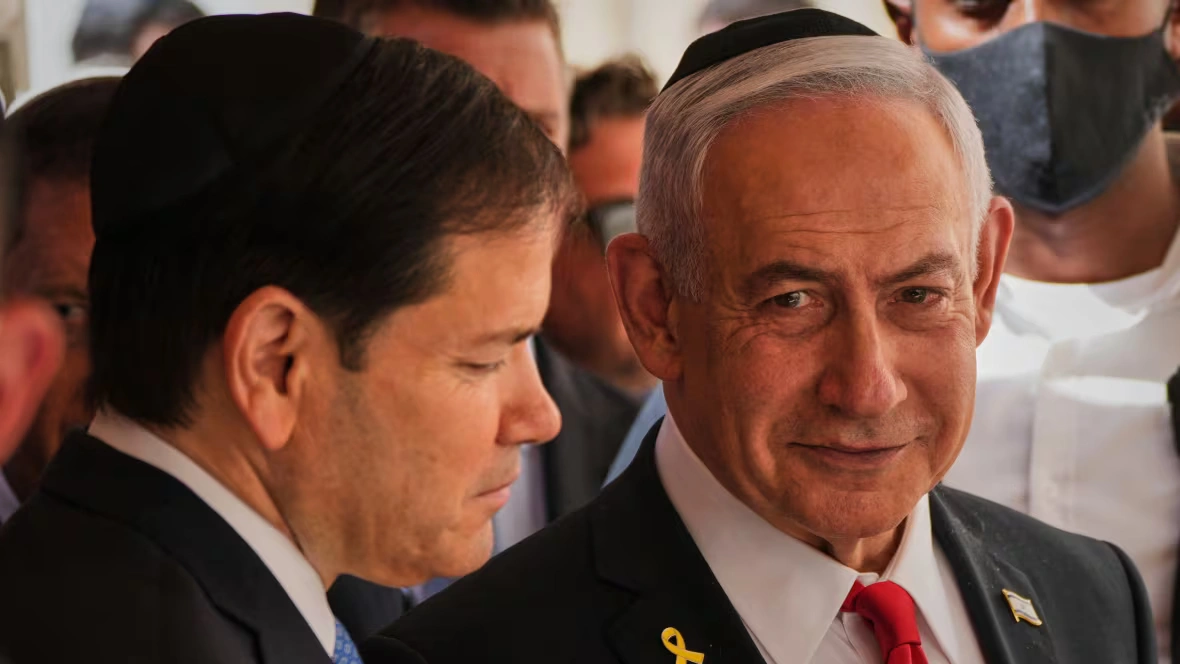
Marco Rubio Visits Israel Amid Intensified Strikes on Northern Gaza
US Secretary of State Marco Rubio arrived in Israel on Sunday as the country’s military campaign in northern Gaza intensified, resulting in the flattening of multiple high-rise buildings and the deaths of at least 13 Palestinians. Rubio’s visit comes in the wake of a recent attack linked to Qatar, a development that has added another layer of complexity to the already volatile Middle East conflict.
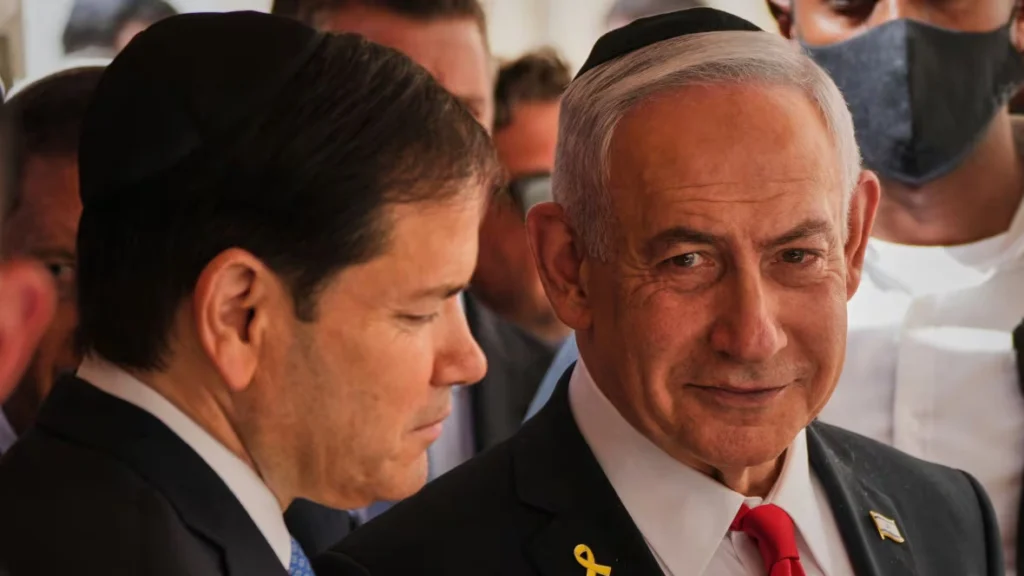
The timing of Rubio’s visit underscores Washington’s continued involvement in the Israeli-Palestinian conflict and its role in addressing regional security threats. By being present on the ground during one of the most critical phases of Israel’s military operations, the US Secretary of State has signaled strong diplomatic support for Israel while also raising questions about Washington’s approach to de-escalation efforts.
Intensification of Israeli Strikes in Gaza
According to reports from local officials and international media, Israel’s strikes in northern Gaza have escalated over the past several days, with the latest wave targeting key urban centers. Multiple high-rise buildings were brought down in precision strikes that Israel claimed were aimed at Hamas command centers, weapons storage sites, and operational hubs.
Palestinian health authorities confirmed that at least 13 civilians were killed in the strikes, while dozens more were injured. Rescue workers scrambled to retrieve survivors from the rubble, highlighting the severe humanitarian consequences of the ongoing bombardment. The strikes not only left behind casualties but also displaced hundreds of families who now face an uncertain future without homes or basic security.
For Israel, the military campaign is part of a broader effort to dismantle Hamas’ operational capacity in northern Gaza, a region it considers central to ongoing security threats. Yet, as strikes intensify, the international community has increasingly voiced concerns about civilian casualties and the humanitarian crisis unfolding on the ground.
The Qatar Attack and Its Wider Impact
Rubio’s visit comes just days after an incident described as the Qatar attack, a development that has rattled regional security discussions. While details remain limited, officials have indicated that the attack was linked to militant networks allegedly operating with external support. Israel has viewed this incident as evidence of a broader regional network feeding into Gaza’s conflict, thereby justifying its escalated military operations.
For Washington, the attack underscores the complexity of Middle Eastern geopolitics, where conflicts are rarely confined to one territory or actor. Rubio’s presence in Israel following the Qatar incident appears to be a calculated move, aimed at sending a message of solidarity to Israel while also reinforcing US commitments to counterterrorism cooperation with its regional partners.
Washington’s Balancing Act
Rubio’s visit is significant not just for its symbolism but also for the policy direction it represents. The United States has long walked a fine line between supporting Israel’s right to self-defense and pressing for humanitarian considerations in Gaza. With civilian casualties mounting, human rights groups and international organizations have urged Washington to play a more assertive role in promoting de-escalation.
Rubio, however, focused his remarks on Israel’s security needs, praising the country’s military operations as necessary for regional stability. His statements are consistent with Washington’s historic support for Israel but have also raised concerns among Palestinians and international observers who argue that such positions embolden further escalation rather than paving the way for negotiations.
Humanitarian Concerns in Gaza
The humanitarian crisis in Gaza has worsened as strikes continue, particularly in northern regions where much of the infrastructure has been destroyed. According to Palestinian officials, thousands of people have been displaced, and hospitals are struggling to cope with the influx of injured civilians. Power shortages, lack of clean water, and shortages of medical supplies have compounded the crisis, leaving international aid groups scrambling to provide support.
International pressure has been mounting on Israel to ensure that its military operations distinguish between militant targets and civilian areas. However, given the dense urban environment in Gaza, such distinctions are increasingly difficult to maintain, often leading to tragic consequences for innocent civilians.
Rubio’s visit, while signaling diplomatic solidarity with Israel, has done little to ease Palestinian concerns about the humanitarian impact of the strikes. Instead, many observers fear that Washington’s overt support may prolong the conflict by emboldening further Israeli offensives.
Regional Reactions to the Escalation
The intensification of strikes in Gaza and Rubio’s visit to Israel have drawn strong reactions across the region. Qatar, already central to the recent incident, criticized Israel’s actions and called for restraint. Egypt, which has historically played a mediating role, has expressed concern that the conflict could spiral further out of control without urgent diplomatic interventions.
Meanwhile, Turkey and Jordan have condemned Israel’s airstrikes, urging the international community to step in and prevent further civilian casualties. Within the United Nations, discussions are ongoing about potential measures to address the crisis, but divisions among Security Council members continue to limit the scope of action.
Rubio’s Diplomatic Agenda
During his trip, Rubio met with senior Israeli leaders, including Prime Minister Benjamin Netanyahu and Defense Minister Yoav Gallant. According to reports, the discussions focused on military cooperation, regional security, and the role of external actors such as Iran and Qatar in fueling instability.
Rubio reiterated Washington’s commitment to Israel’s security, promising continued military and diplomatic support. He also highlighted the broader US strategy in the Middle East, which includes countering Iran’s influence, strengthening alliances, and supporting regional stability through both diplomatic and military channels.
However, critics argue that Rubio’s visit lacked a balanced approach, as it focused heavily on security concerns while paying little attention to humanitarian issues or potential pathways to peace. By not engaging with Palestinian representatives or addressing Gaza’s humanitarian plight directly, Washington risks being perceived as one-sided in its approach to the conflict.
International Community’s Role Moving Forward
The escalation in Gaza, combined with Rubio’s visit, has reignited debates over the role of the international community in mediating the conflict. While the US remains Israel’s most important ally, other actors—including the European Union, the United Nations, and regional powers—are expected to step up efforts to de-escalate tensions and provide humanitarian relief.
Diplomatic analysts argue that without a coordinated international response, the situation in Gaza risks spiraling further into chaos, with devastating consequences for both Palestinians and Israelis. At the same time, they stress that Washington’s support must be balanced with a genuine push for peace talks, or else the cycle of violence will continue.
The Road Ahead for Gaza and Israel
As Israeli strikes continue and civilian casualties rise, the question of how to break the cycle of violence remains at the forefront. Rubio’s visit to Israel highlights Washington’s commitment to supporting Israel militarily, but it also underscores the limitations of a security-first approach. Without addressing underlying political grievances and humanitarian concerns, the conflict is unlikely to see any lasting resolution.
For Palestinians in Gaza, the immediate priority remains survival amid escalating airstrikes and worsening humanitarian conditions. For Israel, the focus is on neutralizing security threats and preventing further regional escalations linked to actors such as Qatar and Iran. And for the United States, the challenge lies in balancing unwavering support for Israel with growing calls for humanitarian restraint and diplomatic engagement.
A Conflict at a Crossroads
The convergence of Rubio’s visit, the Qatar-linked attack, and Israel’s intensified strikes in Gaza marks a critical moment in the ongoing conflict. With lives at stake and regional stability on the line, the international community faces urgent pressure to act. Whether through diplomacy, humanitarian intervention, or security coordination, the road ahead requires careful navigation to prevent further escalation and create space for meaningful dialogue.
Click Here to subscribe to our newsletters and get the latest updates directly to your inbox.