
UN Commission Finds Israel Committing Genocide in Gaza: A Historic but Disputed Determination
A landmark report released on September 16, 2025, by the United Nations Commission of Inquiry has concluded that Israel is committing genocide against Palestinians in Gaza, marking the most significant international legal accusation against Israel since the conflict began nearly two years ago. The comprehensive 72-page report represents what experts are calling “the strongest and most authoritative UN finding to date” regarding Israel’s conduct in its war with Hamas.
The commission’s findings have sent shockwaves through the international community, with Israel categorically rejecting the accusations as “distorted and false,” while human rights organizations hail the report as validation of longstanding concerns about the systematic nature of violence in Gaza.
Understanding the Legal Framework of Genocide
To comprehend the gravity of these allegations, it’s essential to understand what genocide means under international law. The 1948 Convention on the Prevention and Punishment of the Crime of Genocide, adopted in the aftermath of the Holocaust, defines genocide as “any of the following acts committed with intent to destroy, in whole or in part, a national, ethnical, racial or religious group”.un+1
These acts include: killing members of the group; causing serious bodily or mental harm to members of the group; deliberately inflicting conditions of life calculated to bring about the group’s physical destruction; imposing measures intended to prevent births within the group; and forcibly transferring children of the group to another group. Crucially, for an act to constitute genocide, there must be proven intent to destroy the targeted group, wholly or partially.
The Commission’s Devastating Findings
The UN Commission of Inquiry, chaired by Navi Pillay, a former UN human rights chief and International Criminal Tribunal judge, determined that Israel had committed four of the five genocidal acts outlined in the Genocide Convention. The commission found evidence of systematic killing of Palestinians, inflicting serious bodily and mental harm, deliberately creating conditions aimed at physical destruction, and imposing measures to prevent births.
“The Commission finds that Israel is responsible for the commission of genocide in Gaza,” stated Pillay. “It is clear that there is an intent to destroy the Palestinians in Gaza through acts that meet the criteria set forth in the Genocide Convention”. The report specifically implicated Israeli Prime Minister Benjamin Netanyahu, President Isaac Herzog, and former Defense Minister Yoav Gallant as having “incited the commission of genocide” through their public statements and policies.
The commission’s conclusions were based on extensive evidence gathering, including interviews with victims and witnesses, analysis of verified open-source documents, satellite imagery, and statements from Israeli officials that the panel argued demonstrated genocidal intent. The report highlighted Netanyahu’s vow for “mighty vengeance” and Gallant’s reference to Palestinians as “human animals” as examples of language indicating intent to destroy the group.
The Unprecedented Scale of Destruction
The evidence supporting the commission’s findings is staggering in scope. Since October 7, 2023, when Hamas launched its deadly assault on Israel killing over 1,200 people and taking 251 hostages, Israel’s military response has resulted in the deaths of more than 64,000 Palestinians in Gaza according to the Hamas-run health ministry. The UN and international observers generally consider these casualty figures reliable, though they don’t distinguish between combatants and civilians.
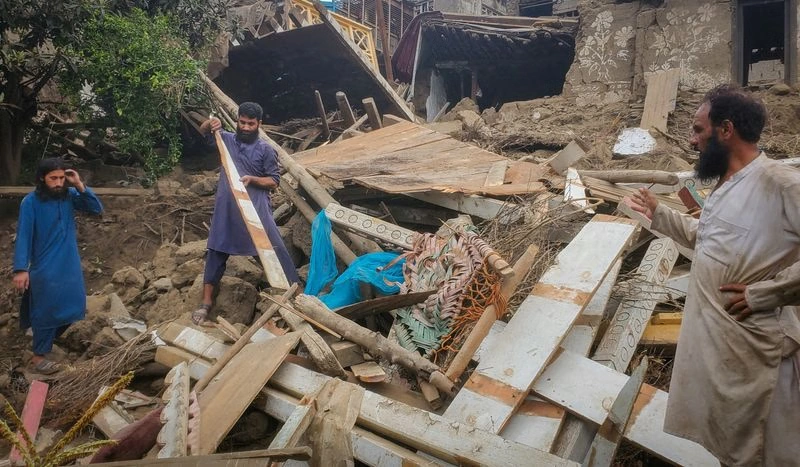
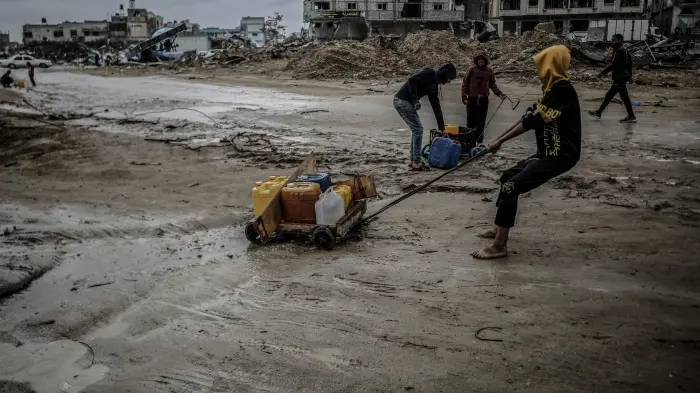
Beyond the death toll, the commission documented what it called systematic destruction of Gaza’s infrastructure. More than 90% of residential buildings have been damaged or destroyed, while healthcare, water, sanitation, and educational systems have collapsed. UN food security experts have declared famine conditions in Gaza City, with nearly one million residents facing “catastrophic levels” of food insecurity.
The commission particularly highlighted Israel’s “total siege” of Gaza, blocking humanitarian aid that has led to widespread starvation, the systematic destruction of healthcare facilities, and direct targeting of children as evidence supporting their genocide determination. These actions, combined with forced displacements affecting the vast majority of Gaza’s population, formed the basis for concluding that Israel was deliberately creating conditions aimed at the physical destruction of Palestinians in Gaza.
Israel’s Vehement Rejection and International Response
Israel has responded with fierce denials and accusations that the commission members are “Hamas proxies” with “overtly antisemitic views”. Israeli Ambassador to the UN Danny Meron dismissed the report as “scandalous” and “fabricated,” arguing that it promotes “a narrative serving Hamas and its supporters in attempting to delegitimize and demonize the state of Israel”.
The Israeli government maintains that its military operations are defensive measures aimed at dismantling Hamas and securing the release of remaining hostages, conducted in accordance with international law while minimizing civilian casualties. Israeli officials argue that Hamas, not Israel, committed genocidal acts during the October 7 attack, and that Hamas uses civilians as human shields, making civilian casualties inevitable.
The genocide allegations are particularly sensitive for Israel, a nation founded as a refuge for Jews following the Holocaust. Israeli leaders have characterized the accusations as antisemitic “blood libel,” arguing that they distort Israel’s right to self-defense against terrorism.
Broader International Legal Context
The UN commission’s findings come amid an already complex international legal landscape surrounding the Gaza conflict. South Africa filed a case at the International Court of Justice (ICJ) in January 2024, alleging that Israel was committing genocide in Gaza. The ICJ ruled it was “plausible” that Israel’s acts could amount to genocide and issued provisional measures requiring Israel to take steps to prevent genocidal acts, though it didn’t order a halt to military operations.
The commission’s report, while not legally binding, provides what may be the most detailed documentation yet of alleged genocidal acts and intent. Human rights organizations including Amnesty International have welcomed the findings, with Amnesty’s Secretary General stating that the report “provides further confirmation of what Amnesty International and others have been concluding for months”.
Implications and Calls for Action
The commission’s report urges the international community to take immediate action, calling on states to halt arms transfers to Israel and use “all reasonably available means to prevent genocide in Gaza”. The report warns that failure to act when clear evidence of genocide emerges “amounts to complicity”.
Several international bodies have echoed these concerns. Brazil announced it would officially join South Africa’s ICJ case against Israel, while various UN officials have called for immediate ceasefire and unimpeded humanitarian access to Gaza. The report coincided with Israel launching a new ground offensive in Gaza City, intensifying international criticism.
A Watershed Moment with Uncertain Outcomes
The UN Commission of Inquiry’s genocide determination represents a watershed moment in international efforts to address the Gaza conflict through legal frameworks. While the commission operates independently and doesn’t speak for the UN as a whole, its findings carry significant moral and political weight that could influence international diplomatic pressure and future legal proceedings.
However, the path forward remains fraught with challenges. International courts move slowly, and even binding legal decisions often lack enforcement mechanisms. The ICJ genocide case filed by South Africa is expected to take years to conclude, while the humanitarian crisis in Gaza continues to worsen daily.
As the international community grapples with these allegations, the fundamental questions remain: Will the global response match the gravity of the commission’s findings? And can international law provide meaningful accountability when civilians are suffering on such a massive scale? The answers to these questions may determine not only the future of Palestinians in Gaza but also the credibility of the international legal system itself in addressing mass atrocities in the 21st century.
Click Here to subscribe to our newsletters and get the latest updates directly to your inbox.