
Venezuela Flexes Military Might with Russian Fighter Jets Amid Rising US Tensions
Venezuela launched one of its most significant military demonstrations in recent years this week, deploying over 2,500 troops, Russian-made fighter jets, and naval vessels in what officials called a direct response to growing US military presence in the Caribbean. The three-day exercises, dubbed “Sovereign Caribbean 200,” represent a dramatic escalation in the ongoing standoff between Washington and Caracas that has brought tensions to levels not seen in decades.
Massive Military Display on La Orchila Island
The Venezuelan Armed Forces began their largest-ever Caribbean military exercise on September 17, 2025, mobilizing substantial resources on La Orchila Island, a strategic military outpost located about 100 miles northeast of Caracas. Defense Minister Vladimir Padrino López announced that the operation involved 12 naval ships of various classes, 22 aircraft, and 20 small boats from the Special Naval Militia.
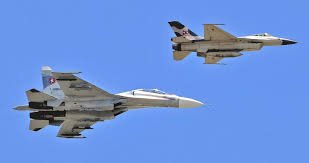
Television footage broadcast by state media showed an impressive array of military equipment, including amphibious assault vehicles storming beaches, warships conducting maneuvers, and Russian Sukhoi Su-30MK2 fighter jets with anti-ship missiles visible under their wings. The exercise involved advanced capabilities such as armed surveillance drones, submarine drones, electronic warfare systems, and coastal artillery.
Russian Military Hardware Takes Center Stage
Perhaps the most provocative element of Venezuela’s military display was the prominent display of Russian-made weapons systems. The Venezuelan Air Force released footage of Sukhoi Su-30MK2 fighter jets equipped with Kh-31 “Krypton” anti-ship missiles. According to analysts, these weapons were purchased from Russia between 2007 and 2008. These supersonic missiles, capable of targeting naval vessels at ranges up to 100 kilometers, pose a significant threat to any potential naval incursion.
According to a 2024 assessment by the International Institute for Strategic Studies, Venezuela possesses 21 Su-30MK2 fighter jets equipped with both anti-ship and anti-radar versions of the Kh-31 missile system. However, experts say that years of economic crisis and international sanctions have likely degraded Venezuela’s military capabilities, and questions remain about how many of these aircraft are actually operational.
US Military Buildup Sparks Venezuelan Response
The Venezuelan military exercises come in direct response to what Caracas characterizes as an unprecedented US military buildup in the Caribbean region. American forces have deployed a formidable naval contingent including three Arleigh Burke-class destroyers (USS Gravely, USS Jason Dunham, and USS Sampson), the cruiser USS Lake Erie, the amphibious assault ship USS Iwo Jima, and the fast-attack submarine USS Newport News.
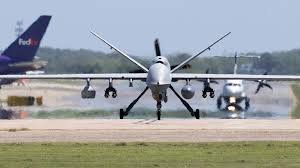
Additionally, the US has established a significant air presence at the former Roosevelt Roads Naval Station in Puerto Rico, now known as José Aponte de la Torre Airport, deploying F-35B Lightning II stealth fighters, V-22 Osprey tiltrotor aircraft, MQ-9 Reaper drones, and P-8 Poseidon maritime patrol aircraft. This combined force represents thousands of US Marines and sailors positioned within striking distance of Venezuelan territory.
Escalating Maritime Incidents
Tensions have been further inflamed by a series of deadly incidents in Caribbean waters. President Donald Trump announced that US forces have struck at least three Venezuelan vessels in recent weeks, claiming they were involved in drug trafficking operations linked to criminal organizations. The first strike on September 2 allegedly targeted a vessel connected to the Venezuelan gang Tren de Aragua, resulting in 11 fatalities.
Trump later confirmed additional strikes, stating “We knocked off three boats, actually, not two. But you saw two,” though he provided limited evidence of the vessels’ alleged involvement in narcotics trafficking. Venezuelan officials have strongly condemned these actions as extrajudicial killings, with UN experts also criticizing the strikes as potentially violating international maritime law.
Venezuelan Claims of US Aggression
President Nicolás Maduro has characterized the US military presence as part of a broader regime-change strategy, warning that “no empire will touch the sacred soil of Venezuela”. Venezuelan Foreign Minister Yván Gil accused US forces of illegally boarding a Venezuelan fishing vessel over the weekend, detaining nine crew members for eight hours in what he described as a provocative act that could escalate into military conflict.
Defense Minister Padrino described the military exercises as a response to “the threatening and vulgar deployment of US ships in the Caribbean,” emphasizing that Venezuela views the American presence as “a threat to the country and the region”. The Venezuelan government has also claimed to have mobilized millions of militia members nationwide as part of its defensive preparations.
Trump Administration’s Anti-Drug Campaign
The Trump administration maintains that its Caribbean military operations are focused solely on combating drug trafficking organizations that threaten American security. President Trump has repeatedly linked Venezuelan President Maduro to drug cartels, placing a $50 million bounty on his head and designating the Venezuelan gang Tren de Aragua as a terrorist organization.
Secretary of State Marco Rubio defended the strikes on alleged drug vessels, stating that the US has “100% fidelity and certainty” about their involvement in trafficking operations. “Some of these boats need to be destroyed,” Rubio declared during a Fox News interview, characterizing Maduro as “a direct threat to national security”.
Regional Security Implications
The military escalation has raised serious concerns among regional security experts about the potential for miscalculation leading to broader conflict. The Caribbean has become a tense theater where both nations are demonstrating military readiness while issuing stern warnings to each other. Venezuela’s decision to conduct F-16 flyovers of US Navy destroyers earlier this month prompted Trump to threaten that any Venezuelan aircraft putting American forces “in a dangerous situation” would be shot down.
The exercises also highlight Venezuela’s continued reliance on Russian military support despite international sanctions. The prominent display of Russian-made weapons systems sends a clear message about Venezuela’s military partnerships and its willingness to leverage these relationships in its confrontation with the United States.
Economic Context Behind Military Posturing
The military tensions unfold against the backdrop of Venezuela’s severe economic crisis, with average household income around $200 per month—roughly half of what is needed to feed a family of four. Nearly a third of Venezuela’s population has fled the country over the past decade, seeking relief from one of the worst economic collapses in modern history.
Many Venezuelan citizens report being too consumed with daily survival to focus on the geopolitical drama. “With the economy the way it is, we don’t even have time to think about what might happen,” said one entrepreneur in Caracas. This disconnect between government military posturing and citizen priorities underscores the complex domestic pressures facing the Maduro administration.
International Legal Concerns
Legal experts have raised serious questions about the legality of US strikes in international waters, suggesting they may violate international human rights and maritime law. The attacks have drawn criticism from UN experts who characterized them as “extrajudicial executions,” highlighting the murky legal territory surrounding the Trump administration’s expanded military operations against alleged drug traffickers.
The Venezuelan government has used these legal concerns to rally international support, characterizing the US actions as violations of sovereignty and international law. Foreign Minister Gil warned that such provocations could serve as a pretext for military escalation and regime-change efforts.
Dangerous Escalation
As the “Sovereign Caribbean 200” exercises continue through September 19, both nations appear locked in an escalating cycle of military posturing that risks spiraling beyond anyone’s control. The Venezuelan demonstration of Russian military hardware, combined with the substantial US naval presence in the region, has created a powder keg situation where a single miscalculation could trigger broader conflict.
President Maduro has warned that diplomatic relations with the US have been “shattered by their threats of bombing,” while Trump has refused to rule out strikes on mainland Venezuela, stating ominously “We’ll see what happens”. With both leaders seemingly committed to projecting strength to their domestic audiences, the Caribbean has become a dangerous theater where great power competition intersects with regional instability.
The world watches nervously as two nations with a history of confrontation edge closer to a potential military conflict that could destabilize the entire Caribbean basin and draw in other regional powers. Whether cooler heads will prevail or whether this latest escalation will trigger the broader conflict both sides seem to be preparing for remains the critical question facing policymakers in Washington, Caracas, and capitals throughout the Americas.
Click Here to subscribe to our newsletters and get the latest updates directly to your inbox