
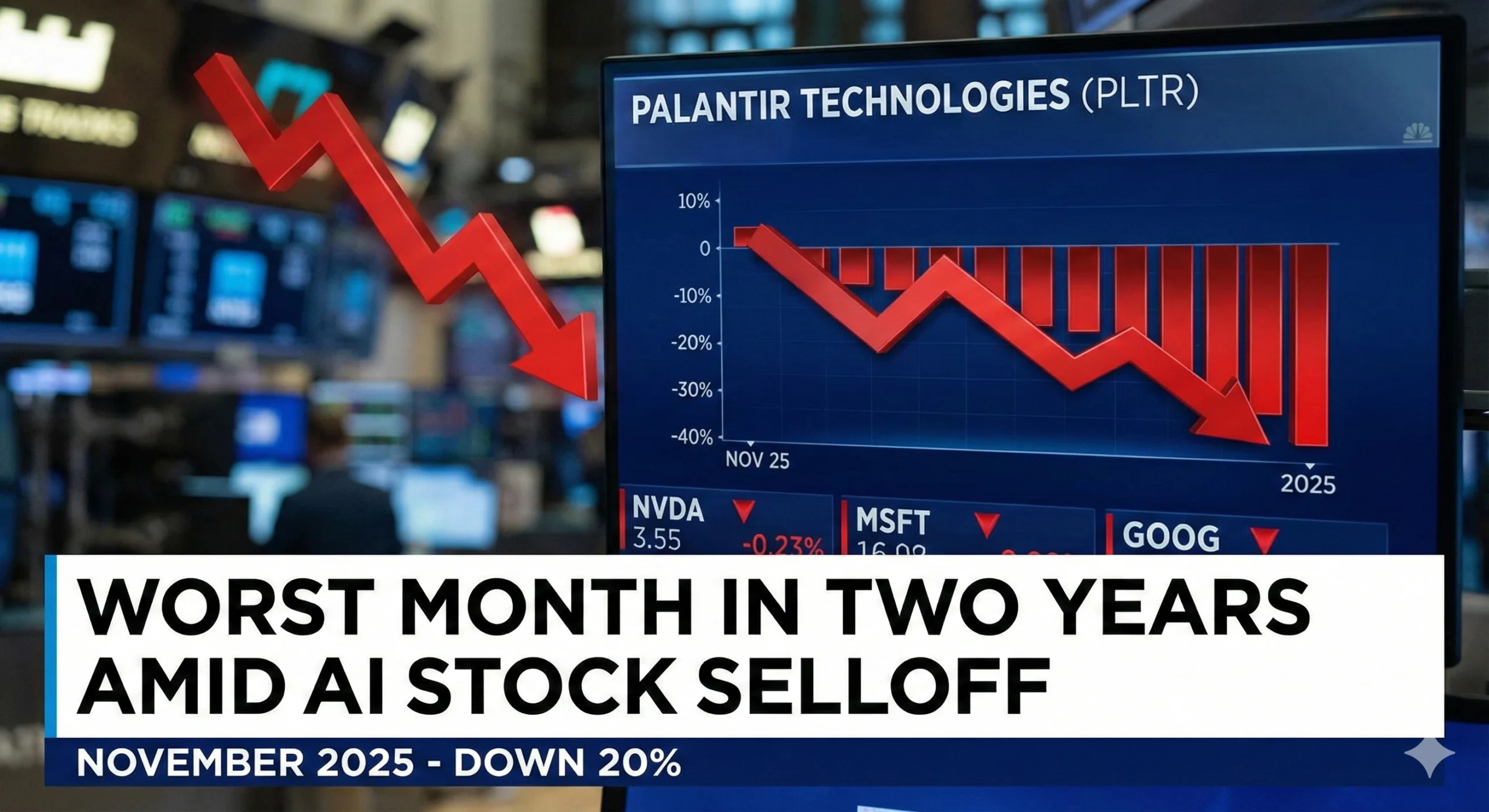
Palantir Suffers Worst Month in Two Years Amid AI Stock Selloff
Palantir Technologies Inc. experienced a sharp decline this November, slipping about 16%, its worst monthly performance since August 2023. The Denver-based AI and data analytics powerhouse entered November with impressive momentum, having surpassed Wall Street expectations for its third-quarter earnings and revenue. Despite the solid financial performance—marking the second consecutive quarter with revenues exceeding $1 billion—the high valuation and investor caution triggered a broad sell-off among AI stocks, impacting Palantir alongside its peers.
Stellar Q3 Performance Sparks Initial Optimism
At the start of November, sentiment around Palantir was buoyant. The company posted revenue of $1.18 billion for Q3 2025, an increase of 63% year-over-year and 18% sequentially, showcasing rapid growth and expanding profitability. Record contract bookings worth $2.8 billion, a 151% jump year-over-year, further fueled investor enthusiasm. Palantir’s client base grew wider with 911 customers, including 204 new contracts worth more than $1 million each. Its net dollar retention rate of 134% highlighted strong customer loyalty, signaling that existing clients are significantly increasing their spending.
Palantir also delivered its highest adjusted operating margin of 51% in its history and free cash flow of $540 million, strengthening its financial position with a $6.4 billion cash reserve to invest aggressively in further AI development. The company’s guidance for Q4 projects revenue between $1.327 billion and $1.331 billion, maintaining robust momentum, particularly in the U.S. commercial sector where growth is expected to exceed 100%.
The Sell-Off: Valuation Concerns and Profit-Taking
Despite these strong fundamentals, Palantir’s stock experienced significant profit-taking in November. The shares peaked at an all-time high of $207.52 in early November but fell roughly 16% by month-end. The stock now trades near $169, down from its November highs, reflecting investors’ concerns over the company’s sky-high valuation multiples. With a price-to-earnings ratio exceeding 375 times forward earnings and a price-to-sales ratio over 160x, the market’s expectations are astronomically high.
This disconnect triggered a cautious mood among investors, who may have deemed the recent surge overextended amid a broader AI stock sell-off. Michael Burry’s Scion Asset Management’s disclosure of put options on 5 million Palantir shares—effectively a bet on price declines—added to the negative sentiment, raising questions about the sustainability of Palantir’s valuation despite the company’s strong execution.
Analysts’ Take: Mixed Outlook amid Growth and Risks
Analysts remain divided but optimistic about Palantir’s near-term prospects. The company is expected to report a fiscal 2025 earnings per share (EPS) of roughly $0.52, marking a staggering 550% increase from the previous year. Expectations are for continued growth, with EPS potentially rising another 52% in fiscal 2026. However, brokerages such as RBC Capital Markets and William Blair have expressed cautious views: RBC retains an “Underperform” rating due to challenges like limited international traction, while William Blair assigns a “Market Perform” rating with slightly tempered expectations on free cash flow growth.
Cantor Fitzgerald is more bullish, maintaining a “Neutral” rating but raising its price target to $198, praising Palantir’s flawless execution in a competitive enterprise AI market. Overall, while Palantir’s commercial momentum and AI capabilities keep it attractive, valuation remains the foremost restraint and source of volatility for the stock.
Broader AI Market Downturn Affecting Palantir
November’s sell-off is not an isolated event for Palantir; it reflects a broader cooling in the AI sector. After a dazzling rally that saw Palantir’s shares soar over 200% in the last year, many AI and tech stocks experienced profit-taking as investors reconsidered lofty valuations in the face of macroeconomic uncertainty and tightening monetary policy expectations.
This sector-wide retracement has slightly deflated the huge enthusiasm that helped drive Palantir’s meteoric rise. Despite this, Palantir remains a leader in AI-driven enterprise software and defense sector investments, with its long-term growth story still largely intact. The company’s solid balance sheet and consistent contract wins offer confidence in navigating the current turbulence.
What’s Next for Palantir Investors?
Palantir’s journey in late 2025 is a textbook case of market cycles: rapid growth followed by consolidation due to valuation pressures and macro factors. Investors should monitor key indicators such as upcoming earnings reports, contract renewals, and the broader AI market sentiment.
Technical levels to watch include support near the current trading price around $169 and potential resistance at recent highs around $207. Divergent ratings from financial analysts suggest cautious optimism, recommending strategic entry points for those attracted to Palantir’s leading position in AI despite near-term volatility.
Given the massive potential of AI integration into government and commercial sectors, Palantir’s long-term outlook remains appealing. The recent sell-off can also be an opportunity for investors to acquire a high-quality AI stock at a more reasonable valuation before a potential rebound fueled by continuous innovation and contract expansion.
Palantir Technologies Inc. remains a compelling but high-risk stock heading into 2026. The recent worst month in two years signals a market pause, but the company’s robust execution and strategic AI positioning could drive renewed momentum for investors willing to navigate short-term fluctuations.
Click Here to subscribe to our newsletters and get the latest updates directly to your inbox