
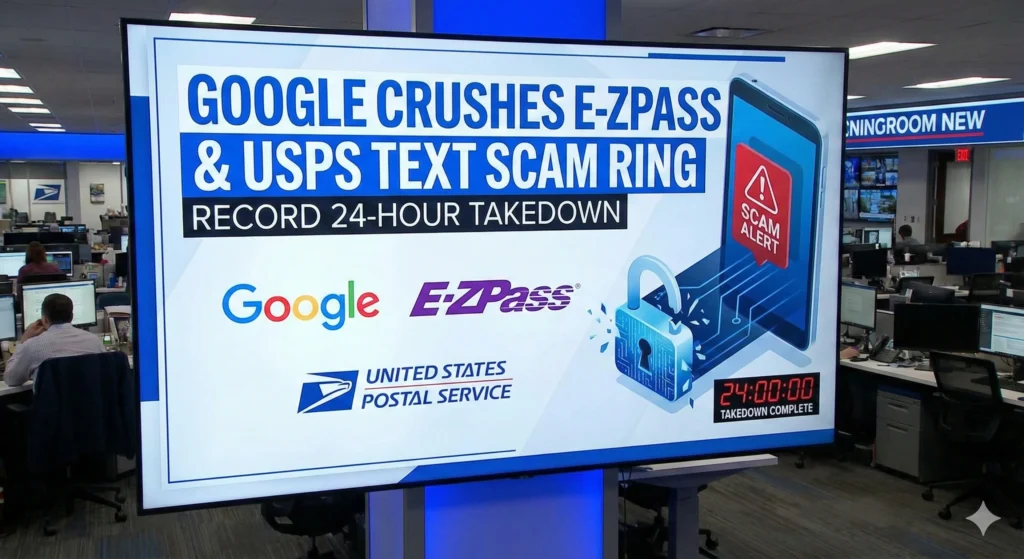
Google Crushes E-ZPass and USPS Text Scam Ring in Record 24-Hour Takedown
Google pulled off what cybersecurity experts are calling one of the fastest takedowns in cybercrime history. Just 24 hours after filing a lawsuit in California federal court, the tech giant announced it had effectively shut down a foreign criminal operation responsible for flooding millions of phones with fake E-ZPass and USPS text scams. Google’s general counsel, Halimah DeLaine Prado, declared the victory a “considerable win for consumers,” emphasizing the company’s commitment to dismantling scammers who prey on everyday trust in brands like toll services and the postal system.
The targeted group, dubbed the “Smishing Triad” by researchers, operated a sophisticated phishing-as-a-service (PhaaS) platform called “Lighthouse.” This toolkit allowed affiliates worldwide to generate and blast deceptive SMS messages impersonating legitimate entities. Over one million victims across 120 countries fell prey, with heavy hits in U.S. states like New York, Florida, Pennsylvania, and Texas. Scammers stole Social Security numbers, credit card details, and banking credentials through urgent fake alerts about unpaid tolls, undelivered packages, or account fraud.
The Smishing Triad: Anatomy of a Phishing Empire
Smishing—SMS phishing—thrives on immediacy and authority. Victims received texts like: “Your E-ZPass balance is low. Pay now to avoid suspension: [malicious link]” or “USPS package delayed. Track here: [fake site].” Links led to polished counterfeit pages mimicking official branding, complete with Google logos to build false credibility. The Triad created over 100 templates, supporting iMessage (iOS) and RCS (Android) to slip past carrier spam filters.
Cybersecurity firm Talos traced the operation to a Chinese ringleader known as “Wang Duo Yu,” active since October 2024. Lighthouse industrialized fraud: criminals paid for access, customized campaigns in multiple languages, and scaled globally. Leaked Telegram chats revealed their panic post-takedown: “Our cloud server has been blocked due to malicious complaints. Please be patient, we will restore it as soon as possible!” Another promised a “reopening date,” but Google ensured it never came.
This wasn’t amateur hour. The platform evaded detection by rotating domains, using burner payment processors, and mimicking trusted senders. New York Governor Kathy Hochul warned residents months earlier about E-ZPass variants from international numbers urging “Y” replies to shady links. E-ZPass and USPS officially confirm they never solicit sensitive info via text—always verify through apps or 1-800 lines.
Google’s Lightning Lawsuit: From Court to Blackout
Google filed under RICO statutes Wednesday, targeting the entire ecosystem: servers, domains, Telegram channels, and affiliates. By Thursday, Prado confirmed disruption, though details remain sealed—likely involving court-ordered blocks on cloud hosts and registrars. “This shutdown of Lighthouse’s activities is a win for everyone,” she told CNBC. Google’s playbook draws from prior wins against phishing rings, blending legal muscle with technical blocks.
The speed shocked even criminals, per translated chats. BleepingComputer highlighted the platform’s evolution from solo hackers to industrialized PhaaS, lowering barriers for global fraud. While copycats loom, this blow disrupts supply chains for months.
Real Victim Stories: The Human Cost of Smishing
These scams devastate lives. One Florida driver clicked a fake E-ZPass link, losing $1,200 in unauthorized charges before freezing cards. A Pennsylvania retiree handed over SSN details in a USPS “package hold” ruse, triggering identity theft and credit freezes. Victims report endless spam—Reddit threads overflow with frustration: “527 blocked notifications and counting,” one user vented.
Financial losses mount into millions annually. AARP estimates smishing costs Americans $500 million yearly, hitting seniors hardest. Emotional toll? Anxiety, shame, endless bank calls. Credit Karma and Intuit users complain of data leaks fueling calls, demanding accountability.
Why Smishing Succeeds: RCS, iMessage, and Trust Exploits
Modern messaging enables it. RCS/iMessage bypass SMS filters; short codes spoof legitimacy. Scammers exploit “authority bias”—we trust E-ZPass because we use it weekly. Urgency (“Act now or fees double!”) triggers impulse clicks. PhaaS like Lighthouse democratizes this: $50 buys templates, $500 unlocks premium evasion tools.
Carriers lag: FCC fines are rare. Apple’s RCS push opened Android floodgates without robust anti-phishing. Google, ironically targeted via faked security alerts, fights back aggressively.
Google’s Broader War on Scams: Lawsuits, Tech, Legislation
This fits Google’s anti-scam blitz. They’ve sued robocall rings, backed bipartisan SCAM Act for local enforcement funding, and rolled Play Protect updates blocking 1.5 million malicious apps yearly. Blog posts detail RCS scam filters and AI-powered sender warnings. Partnerships with carriers and feds amplify reach.
Critics note Google’s Gmail enables spoofing, but actions speak: billions invested in Trust & Safety. Reddit debates if Big Tech overreaches as “governments,” yet results justify it.
Essential Protection Guide: Don’t Be the Next Victim
Stay vigilant—scams evolve fast.
Spot Red Flags:
- Unsolicited payment/delivery demands from unknown/short codes.
- Urgent threats (“Suspend account!”) or poor grammar.
- Bit.ly-style short links; hover reveals truth.
- Sender mismatches (e.g., “USPS” from +44 UK).
Verify Safely:
- Ignore/reply nothing. Contact via official app/site (ezpassny.com, usps.com).
- E-ZPass: 1-800-333-8655. USPS: 1-800-ASK-USPS.
- Check accounts directly—no links.
Tech Defenses:
- Forward spam to 7726 (SPAM). Block/report in Messages.
- Enable 2FA apps (Authy), not SMS. Password managers auto-block phishing.
- iOS: Filter Unknown Senders. Android: RCS spam toggle.
- Monitor credit (annualcreditreport.com); freeze via Equifax/TransUnion.
Advanced Tips:
- VPNs like Mullvad obscure numbers. Incogni removes data broker leaks.
- Tools: RoboKiller ($4/mo) AI-blocks 99% smishing.
- Family: Educate elders; shared Family Sharing alerts scams.
Governor Hochul: “Scammers get smarter, vigilance wins.” Google’s win buys breathing room—use it.
Cybercrime’s Arms Race
This takedown spotlights PhaaS proliferation—cybercrime’s SaaS boom. Like ransomware-as-a-service, it scales globally. Chinese nexus raises geopolitics; U.S. pushes export controls. Meanwhile, AI crafts hyper-personalized phishing, per Talos.
Positive: Momentum builds. FCC probes RCS scams; EU’s DSA mandates takedowns. Google’s model—sue fast, block infrastructure—could standardize. Victims reclaim power via lawsuits like SCAM Act.
Victory Today, Vigilance Tomorrow
Google’s 24-hour blitz proves tech giants can outpace criminals legally. Smishing Triad joins disrupted ranks, sparing thousands financial ruin. Yet piracy resurfaces; expect variants.
Consumers: Paranoia pays. Never click unsolicited urgency. Report relentlessly. Policymakers: Fund locals, regulate RCS. Tech: AI filters mandatory.
In cyber’s endless war, Google’s hammer fell hard. Stay sharp—your next text could be a trap.
Click Here to subscribe to our newsletters and get the latest updates directly to your inbox