
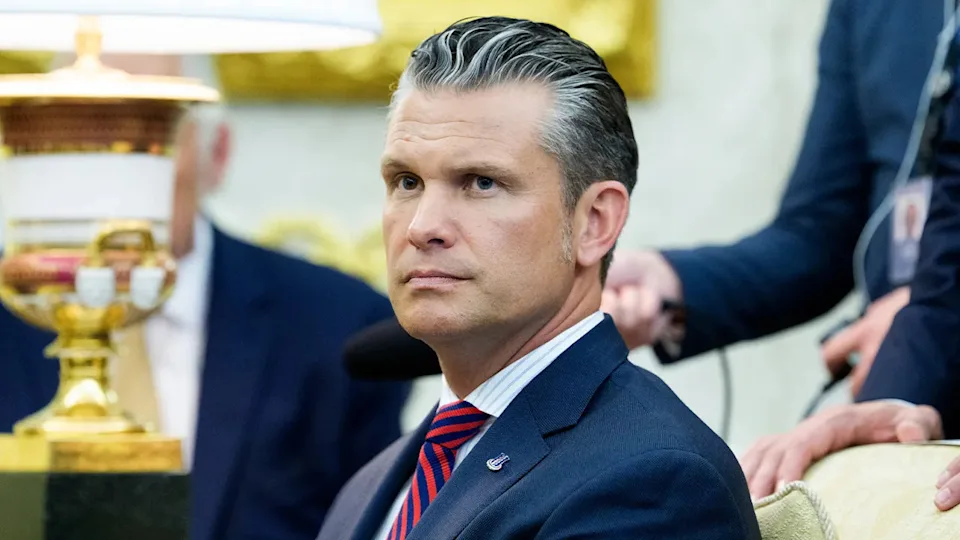
Hegseth Defends Deadly Cartel Boat Strikes: Trump Can Use Force ‘As He Sees Fit’
Defense Secretary Pete Hegseth delivered a fiery defense Saturday of U.S. military strikes on alleged drug cartel boats that have killed over 87 people, declaring President Donald Trump holds unrestricted authority to deploy force “as he sees fit” to protect American interests. Speaking at the Reagan National Defense Forum in California, Hegseth dismissed international law concerns and criticism from lawmakers demanding answers about the strikes’ legality, framing the operations as essential national defense akin to post-9/11 terror campaigns. “If you’re working for a designated terrorist organization and you bring drugs to this country in a boat, we will find you and we will sink you,” he thundered to applause from the audience of national security experts. The remarks coincide with the Trump administration’s new national security strategy emphasizing Western Hemisphere dominance and checking China’s rise through strength.
Hegseth’s unapologetic stance addresses mounting scrutiny over the strikes, which began in September and escalated recently with a follow-up attack despite Pentagon awareness of survivors. Lawmakers from both parties seek clarification on legal justifications, potential war crimes allegations, and whether rules of engagement permitted targeting vessels carrying civilians alongside suspected smugglers. Death toll now exceeds 87, with reports of intercepted cartel speedboats laden with fentanyl precursors exploding under missile fire off Central American coasts. Hegseth likened cartel operatives to Al-Qaeda, insisting the fentanyl crisis—claiming 100,000+ American lives annually—warrants decisive, overwhelming response regardless of international norms.
Post-9/11 Parallel: Cartels as Terrorists?
Hegseth explicitly equated cartel boat operators to post-9/11 Al-Qaeda, invoking Reagan-era muscularity while positioning Trump as the “true and rightful heir” to the Gipper’s foreign policy. “President Trump can and will take decisive military action as he sees fit to defend our nation’s interests,” he declared, rejecting “feckless nation-building” and “climate change distractions” that he claims distracted previous Republican administrations. The strategy aligns with Trump’s “America First” doctrine: prioritize hemispheric security over European alliances (branded “weak”) and counter China through strength, including resuming nuclear testing if adversaries like Russia or China do first—a provocative stance alarming arms control experts.
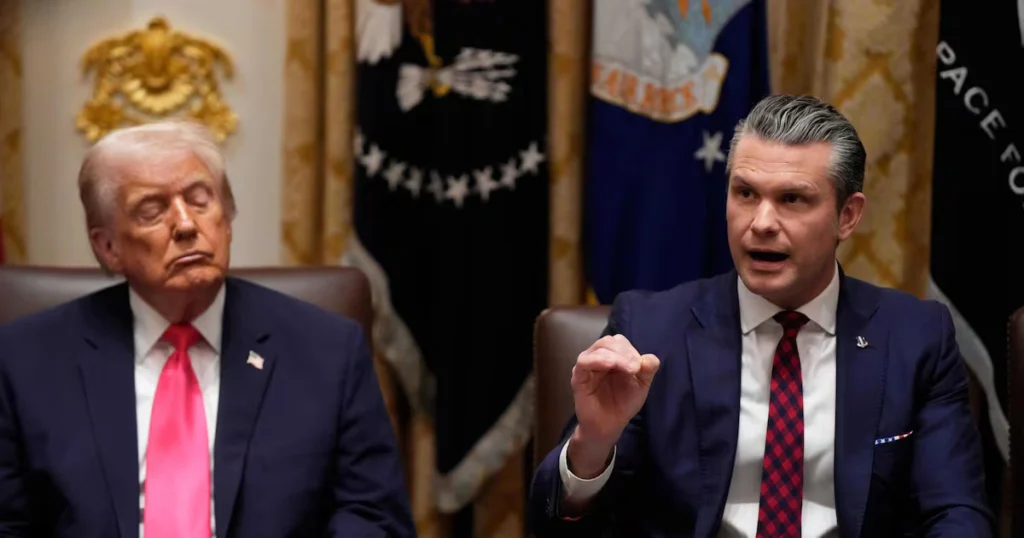
Critics highlight stark differences: Al-Qaeda deliberately targeted civilians in acts of terrorism; cartels pursue profit through smuggling, not ideological warfare. International law experts question proportionality—striking boats potentially carrying non-combatants—and compliance with UN Charter rules requiring imminent threat justification. Hegseth waved away such concerns, framing strikes as self-defense against an existential drug threat devastating American communities.
Strike Details and Escalation Concerns
The campaign targets “narco-subs” and speedboats ferrying fentanyl precursors from Mexico/Central America. Most recent strike—a Pacific Coast operation—pushed totals past 87 confirmed dead, with unverified reports suggesting higher. September’s initial attack reportedly left survivors, yet follow-up strikes proceeded, prompting questions about rules of engagement and potential excessive force. Pentagon briefings remain sparse; Hegseth’s remarks constitute highest-level defense to date.
Lawmakers demand transparency: Did strikes violate Posse Comitatus or international humanitarian law? Were civilians knowingly aboard? Congressional oversight committees signal hearings, though Republican majorities likely shield administration. Public opinion splits: border state residents applaud decisive action; coastal liberals decry vigilantism. Fentanyl deaths provide political cover—Trump’s base demands results over legal niceties.
New National Security Strategy: Hemisphere Focus, China Check
Hegseth previewed Trump’s strategy reasserting U.S. dominance in Western Hemisphere, sidelining European “weakness.” Key pillars:
- Cartel strikes as model: Preemptive military action against non-state threats.
- China containment: Nuclear testing resumption if Beijing/Russia test first; Pacific deterrence buildup.
- Reagan revival: Muscular projection minus Middle East “forever wars.”
Hegseth lambasted post-Reagan GOP for Iraq/Afghanistan debacles, democracy promotion failures, and “woke” distractions like climate readiness. “The war department will not be distracted by… climate change, woke moralizing,” he vowed, signaling cultural warfare alongside geopolitical strategy.
Legal and International Backlash Brewing
Strikes test international boundaries. Latin American governments protest sovereignty violations; UN rapporteurs flag potential war crimes. Allies like Canada express unease over precedent. Domestically, ACLU lawsuits loom alleging unconstitutional overreach. Yet Trump’s post-reelection mandate and conservative judiciary provide buffer—SCOTUS likely upholds broad executive war powers.
Hegseth’s rhetoric—”sink you”—escalates tone, inviting accusations of recklessness. Yet administration calculates public support amid opioid crisis; 70% of Americans favor stronger cartel measures per recent polls.
China Nuclear Posturing: High-Stakes Brinkmanship
Hegseth reiterated Trump’s vow to match Chinese/Russian nuclear testing—a decades-dormant U.S. capability last used 1992. Russia signaled reciprocity; China silent. Arms control community warns of new arms race; CTBT collapse accelerates. Strategy positions nuclear modernization as deterrence cornerstone against peer competitors.
Domestic Political Calculus: Base Mobilization
Hegseth’s Reagan Forum address—prime-time conservative venue—serves multiple masters: rally GOP base ahead midterms, signal adversaries resolve, counter “deep state” critics. Positioning Trump as Reagan heir burnishes legacy while differentiating from Bush/Obama “weakness.” Climate denial, anti-woke framing energize culture warriors.
Expert Reactions: Praise and Alarm
Supporters: Heritage Foundation hails “return to strength”; border hawks praise cartel deterrence.
Critics: ACLU warns “lawless vigilantism”; arms experts decry nuclear saber-rattling; Latin diplomats protest sovereignty.
Escalation or Deterrence?
Strikes likely continue—fentanyl flows unabated. Legal challenges test boundaries; congressional oversight symbolic. Nuclear rhetoric pressures adversaries but risks miscalculation.
Hegseth’s address crystallizes Trump Doctrine: decisive force, hemispheric primacy, peer competition. Cartel boats become proving ground—success bolsters narrative; overreach invites backlash.
For analysts/devs: Track via React dashboards aggregating CBP data, UN reports. Tailwind-styled policy trackers visualize escalation risks.
Saturday’s remarks set tone: Trump era foreign policy prioritizes results over restraint. Cartels beware; adversaries take note.
Click Here to subscribe to our newsletters and get the latest updates directly to your inbox