
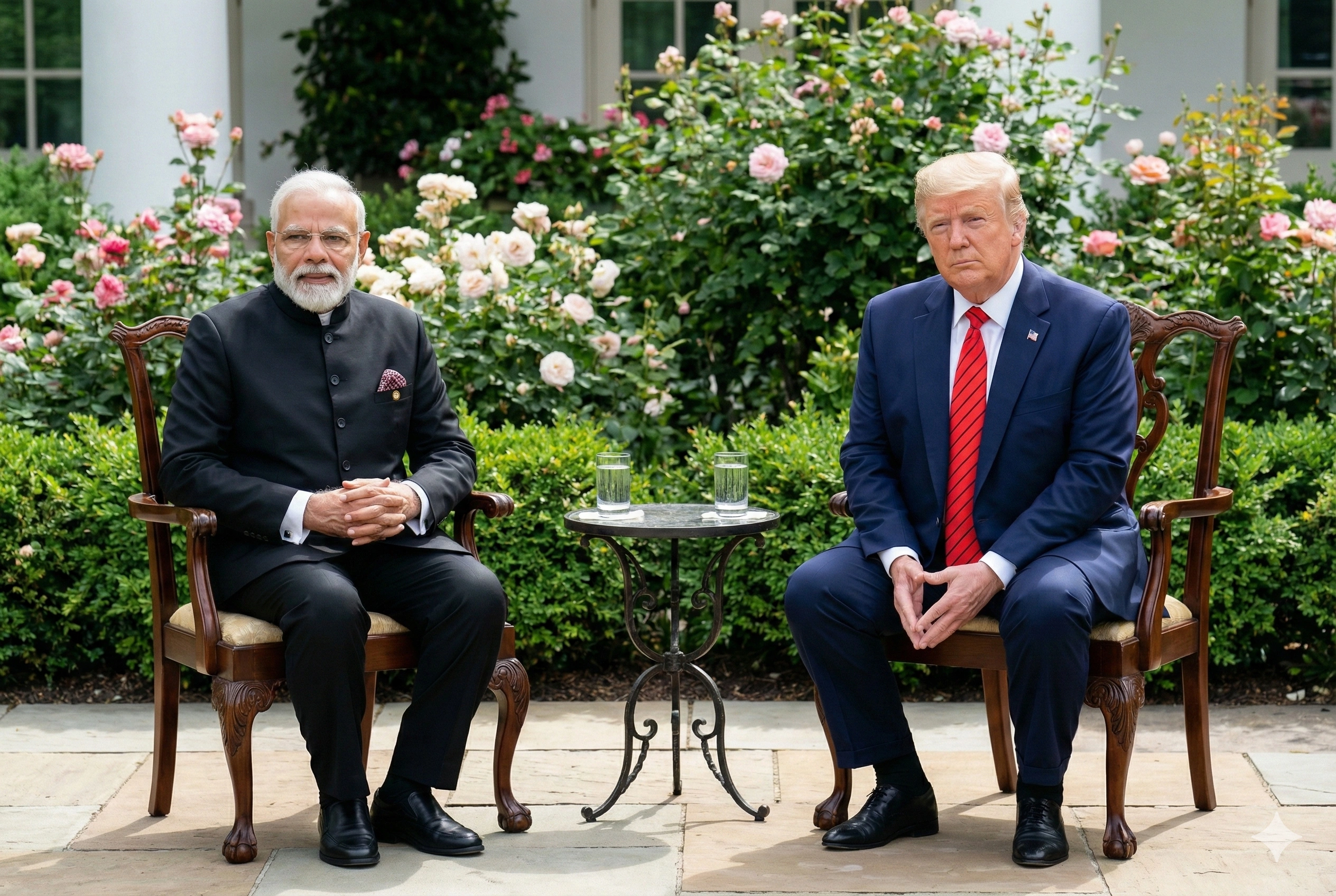
US-India Trade Deal Nears Finish Line: Negotiators Head to Delhi for December Signing Push
A high-stakes US trade delegation led by Deputy US Trade Representative Rick Switzer and chief negotiator Brendan Lynch is scheduled to arrive in Delhi next week, fueling optimism for finalizing the long-awaited Bilateral Trade Agreement (BTA) before December ends. The visit follows India’s submission of its final proposal last month and comes on the heels of Russian President Vladimir Putin’s recent two-day trip, where India and Russia committed to ramping bilateral trade to $100 billion by 2030 from $64 billion currently. Commerce Secretary Rajesh Agrawal confirmed expectations of sealing the deal by year-end, emphasizing that technical hurdles are largely resolved and only a “political call” remains at multiple levels.
Negotiations gained momentum after Prime Minister Narendra Modi’s February 2025 US visit, targeting a first-tranche BTA focused on reciprocal tariffs and market access. The Trump administration imposed up to 50% tariffs on Indian goods—the highest globally—citing India’s Russian oil purchases, but recent data shows the bilateral trade gap narrowing to $1.5 billion from $4 billion in March, aided by surging US oil imports to India. President Trump signaled relief on November 11, noting India has “stopped doing the Russian oil” substantially, paving the way for tariff reductions. During US Ambassador Sergio Gor’s swearing-in, Trump hailed the “fantastic relationship” with Modi, underscoring India’s role as a key Indo-Pacific economic and security partner.
Key Sticking Points Resolved: Tariffs, Agriculture, and Market Access
The first tranche prioritizes tariff reciprocity, addressing US grievances over high Indian duties on agriculture, dairy, automobiles, steel, and electronics. India offered unilateral cuts in its 2025 Union Budget on luxury motorcycles, cars, and electronics to preempt punitive measures. Parallel talks on a Framework Trade Deal tackle immediate tariff relief, while the comprehensive BTA eyes $500 billion bilateral trade by 2030—doubling from $191 billion currently.
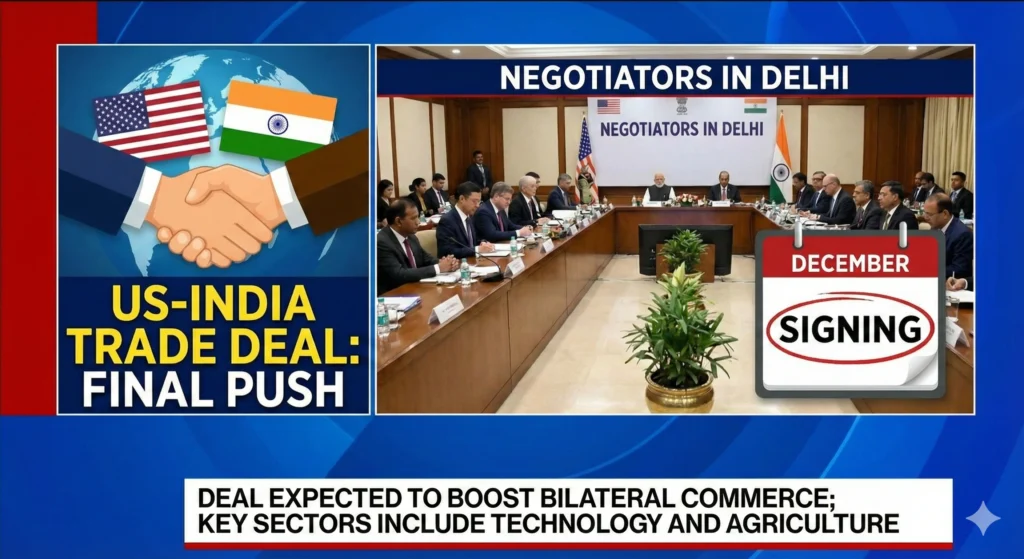
No formal technical rounds occurred last month as India’s NAFTA wing shifted to Canada talks, but sources describe next week’s Delhi meetings as political-level resolutions rather than line-by-line haggling. Commerce Secretary Agrawal stressed most issues are ironed out: “We are close… now it is only a matter of time.” Potential US demands include easing FDI in multi-brand retail (benefiting Amazon, Walmart), Boeing aircraft deals, and IP protections—though India draws “red lines” on farm subsidies and sensitive sectors.
Putin’s Visit Adds Strategic Layer to India’s Balancing Act
Timing proves critical: Putin’s trip charted India-Russia roadmap for labor mobility, nuclear energy, trade, and defense, targeting $100 billion trade via domestic currencies to bypass dollar volatility. This diversification cushions India against US tariff pressures while signaling multipolar strategy. Yet Delhi navigates delicately—reduced Russian oil buys assuage Washington without fully alienating Moscow amid Ukraine war sanctions.
FICCI President Anant Goenka predicts rupee strengthening post-deal, reversing depreciation from current account deficits and FPI outflows. Apparel exporters face $2 billion summer orders at risk without relief, potentially shifting to Bangladesh, Vietnam, or China facing lower US tariffs.
Trump’s Tariff Leverage and Political Momentum
Trump’s rhetoric underscores deal’s stakes: “Right now, the tariffs are very high on India because of the Russian oil… We will bring the tariffs down.” His administration views India as counterweight to China, praising its 1.5 billion population, fastest-growing middle class, and Modi rapport. The BTA fits “Mission 500” launched in February—catalyzing commerce, military partnership, and technology via COMPACT initiative.
India’s resilient domestic economy provides negotiation leverage, absorbing export hits better than anticipated despite $41.68 billion October trade deficit driven by gold imports. Analysts see the deal as historic, unlocking goodwill for future tranches on contentious issues like dairy quotas and auto components.
Economic Impacts: Winners and Risks
For India:
- Tariff relief boosts textiles, pharma, gems ($2B+ apparel orders secured).
- Enhanced US oil/LNG imports stabilize energy amid Russia pivot.
- Rupee appreciation aids import costs, FPI inflows.
For US:
- Reduced deficit via Indian market access (dairy, autos).
- Strategic foothold in Indo-Pacific against China.
Risks: No-deal scenario imposes full 50% tariffs; delayed BTA jeopardizes 2030 targets. Parliamentary panels note India’s firm “red lines,” preferring no deal over unfavorable terms.
Broader Geopolitical Context: Indo-Pacific Strategy
The BTA transcends economics, embedding US-India defense-tech ties amid China tensions. Trump’s envoy Sergio Gor enhances Modi rapport, positioning India as “important economic and strategic security partner.” Parallel Russia engagement diversifies risks, with rupee-rouble trade shielding sanctions.
FICCI warns trade talks face last-minute hurdles: “Even one sticking point delays.” Yet optimism prevails—Agrawal’s “very hopeful” tone and Switzer’s visit signal year-end breakthrough.
December Deadline or Slip to 2026?
Next week’s Delhi talks represent final sprint. Success yields tariff relief, rupee boost, $500B trajectory. Failure risks escalated tariffs, export shifts to rivals. With Putin roadmap fresh, Modi balances East-West deftly.
For businesses: Monitor apparel, autos, pharma. Devs: Build React dashboards tracking tariffs via Tailwind—India-US BTA dashboard imminent.
Delhi’s negotiators hold high cards: resilient economy, strategic value. December deal beckons—political will seals it
Click Here to subscribe to our newsletters and get the latest updates directly to your inbox