
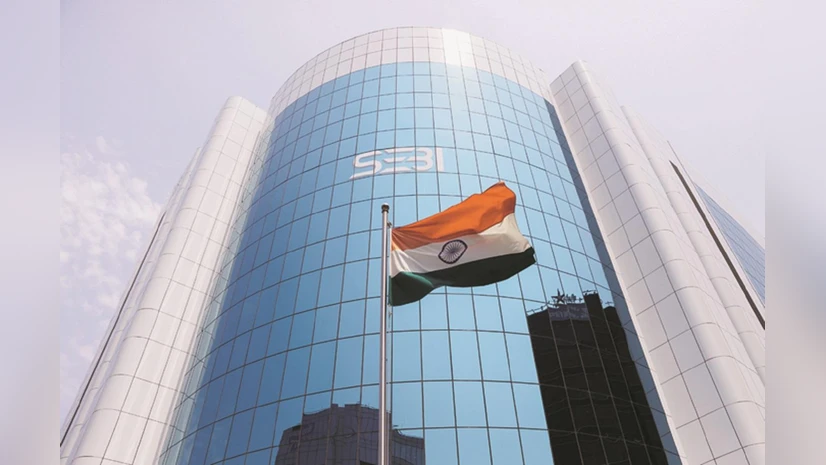
SEBI Eases AIF Rules: AI-Only Schemes and Exemptions for Large Value Funds Signal Growth Push
India’s market regulator, SEBI, has significantly eased regulations governing Alternative Investment Funds (AIFs), introducing a special scheme category exclusively for accredited investors and granting greater flexibility to Large Value Funds (LVFs). This new framework, effective immediately, reflects a regulatory intent to facilitate easier capital access for India’s growing institutional investor base while simultaneously reducing the compliance burden on high-value fund managers. This move is part of a broader policy to position India as a competitive alternative investment hub compared to global centers, catering to sophisticated investors seeking AI-based strategies and complex instruments beyond traditional equity or debt.

AIFs, which operate as pooled investment vehicles outside traditional mutual fund regulations, have grown into a $200 billion-plus industry managing pension, endowment, and ultra-high-net-worth portfolios. SEBI’s latest relaxations further enhance this ecosystem by permitting AI-exclusive schemes – funds that utilize artificial intelligence as the primary selection/allocation mechanism – with minimal regulatory hurdles for accredited investors. Concurrently, the LVF exemptions reduce documentation, audit, and governance requirements for funds managing large corpuses, recognizing that the sophistication of these investors obviates the need for the consumer protection safeguards applicable to the retail segment.
Understanding AIFs: India’s Alternative Investment Backbone
AIFs attract sophisticated capital seeking returns beyond equity/debt silos. Categories:
- Category I: Venture capital, SME funds, infrastructure—socially beneficial with tax incentives.
- Category II: Private equity, real estate—profit-focused, no social mandate.
- Category III: Hedge funds, derivatives-heavy—complex strategies for accredited investors.
India’s AIF industry swelled from $50B (2015) to $200B+ (2025) managing ~40,000 schemes across 2,000+ registrations. Yet regulatory friction—mandatory fund manager background checks, scheme filing delays, restrictive placement rules—constrained innovation. SEBI’s easing directly addresses bottlenecks.
AI-Exclusive Schemes: New Frontier for Alternative Investing
The new framework permits Category II/III funds to launch “AI-Only” schemes—portfolios where algorithms autonomously select/rebalance holdings based on machine learning models trained on historical data, sentiment analysis, derivative pricing, volatility patterns. Managers retain discretion but delegate execution to AI systems, reducing human bias theoretically.
Implications:
- Speed: Nano-second trades, optimal entry/exit timing.
- Scale: Simultaneous management of thousands of positions.
- Innovation: Strategies impossible manual oversight (high-frequency hedging, cross-asset arbitrage).
Risks:
- Model Risk: AI errors cascade; 2010 Flash Crash precedent warns.
- Opacity: Black-box algorithms difficult regulators to assess.
- Systemic: Correlated AI decisions trigger market shocks.
SEBI addressed via mandatory:
- Model governance protocols
- Backtesting standards
- Circuit breakers (auto-halt on volatility thresholds)
- Independent validation pre-launch
Yet enforcement gaps loom. AI audits nascent; India’s talent deficit in quant validation real.
Large Value Fund (LVF) Exemptions: Lightening Compliance Burden
LVFs—funds managing 500+ crore corpus with minimum ticket size 1 crore per investor—gain expanded exemptions:
| Requirement | Pre-Relaxation | Post-Relaxation |
|---|---|---|
| Audit Frequency | Annual | Biennial for funds >500 Cr |
| Fund Manager Certification | Mandatory SEBI exams | Waived if 10+ year track record |
| Valuation Committee | Required | Optional if independent custodian |
| Disclosure Requirements | Comprehensive | Tier-based (less for accredited portfolios) |
| Redemption Restrictions | Standard | Customizable per investor agreement |
Rationale: LVF investors sophisticated; understand liquidity, concentration risks; don’t require retail investor protections. Self-regulation via investor covenants replaces bureaucratic oversight.
Impact: Estimated 300-400 LVF schemes unlock administrative relief worth 2-3% operational cost reductions—translating to higher returns or lower fees, attracting capital inflows.
The Regulatory Philosophy Shift: Tiered Investor Protection
SEBI’s relaxation embodies global best practice: tiered regulation. Retail (high protection) → High-Net-Worth (medium) → Accredited (minimal). This reflects investor sophistication correlation with risk comprehension.
Counterargument: Accredited investor status (Rs 2 crore net worth, 10+ lakh annual income) insufficient guarantee of sophistication. 2008 financial crisis saw HNWIs obliterated by opaque derivatives. Regulatory capture risk: fund managers lobby exemptions, compress safeguards, eventually blow up.
SEBI’s implicit wager: India’s institutional investor quality sufficient to self-police; failures contained to sophisticated cohort, systemic contagion minimal.
Evidence mixed:
- Positive: NSEL scam (2013)—commodity fraud—triggered immediate reforms; market adapted.
- Negative: DHFL defaults (2019)—credit funds imploded; retail via MFs hit collaterally.
Verdict: Relaxation warranted conditionally; enhanced transparency, third-party audits critical.
Market Implications: Capital Flows and Competition
Liberalized AIF rules unlock dormant capital. Insurance companies, pension funds, corporates sitting on liquidity can now:
- Deploy via AI-driven Category III hedge funds
- Access LVF frameworks with lower friction
- Customize structures (liquid, long-lock, hybrid)
Expected inflows: $20-50B over 3 years as AIFs compete traditional assets. Mutual fund flows risk diversion—AIFs offering lower fees (exemptions reduce costs) or higher potential returns (leverage, derivatives).
Competition dynamics:
- Winners: Tech-savvy fund managers, quant funds, fintech platforms enabling AIF infrastructure.
- Losers: Retail-focused MF houses lacking institutional scale.
- Market: Deepened institutional participation, better price discovery, tighter spreads.
Global context: Singapore’s MAS, Hong Kong’s SFC pioneered tiered AIF regulation (2015-2020); capital flooded; wealth concentration accelerated; systemic risks debated. SEBI learning playbook; implementing cautiously yet boldly.
AI Ethics and Model Governance: SEBI’s Nascent Standards
The framework mandates AI governance protocols:
- Model Documentation: Explain training data, assumptions, limitations.
- Backtesting: Simulate 10+ years; stress-test extreme scenarios.
- Independent Validation: Third-party auditors assess model robustness.
- Bias Audits: Detect discriminatory patterns (e.g., exclusions of certain sectors).
- Circuit Breakers: Auto-halt trading if model confidence drops below thresholds.
Gaps:
- No specific standards for data freshness (how often retrain?).
- Model explainability not mandated (black-box permitted if backtested).
- Remediation procedures vague if model fails catastrophically.
Industry expects clarification guidance within months; SEBI’s fintech cell drafting supplementary circulars.
Systemic Risk Considerations: Contagion and Circuit Breakers
Concern: Correlated AI models amplify systemic shocks. If 10 Category III funds train models on similar datasets, similar market signals trigger synchronized selling—cascade risk.
SEBI’s circuit breaker framework:
- Individual fund level: Auto-halt if daily loss >5% or volatility 2σ above historical mean.
- Exchange level: Trading halts if index swings >10% intraday.
- Counterparty level: Credit exposure caps, margin requirements tightened.
Yet interconnectedness via derivatives, leveraged positions, creates hidden exposures. 2008 precedent: Lehman Brothers collapse triggered AIG, Bear Stearns, Merrill dominos—seemingly isolated failures cascaded systemically.
Regulators globally remain cautious: ECB’s 2024 AI risk report flagged systemic vulnerabilities in automated trading; Bank of England stress-tested AI banking scenarios. SEBI’s approach balanced—facilitate innovation while maintaining circuit breakers.
Implementation Timelines and Stakeholder Reactions
Framework effective immediately; however, practical rollout staggered:
- Q4 2025: First AI-exclusive schemes launch (pilot phase, capped at 100 Cr each).
- Q1 2026: LVF exemptions operationalized across existing 300+ schemes.
- Q2-Q3 2026: Full ecosystem participation (AIFs submit amended compliance documents).
Industry reactions mixed:
- Fund Managers: Euphoric—compliance costs drop 20-30%; AI schemes unlock innovation premiums.
- Investors: Cautiously optimistic—lower fees attractive; AI black-box risk concerning.
- Competitors (MF houses): Worried—AIF flows divert capital, compress margins.
- Regulators (globally): Watchful—India’s AI fintech move scrutinized; precedent-setting.
Parliamentary debates expected Q1 2026; opposition parties may question retail investor protection erosion. Yet ruling coalition backs growth agenda; relaxation survives scrutiny likely.
Comparative Global Context: India’s Competitive Position
| Jurisdiction | AIF Regulation | AI Schemes | LVF Exemptions |
|---|---|---|---|
| Singapore | Permissive | Pilot framework | Extensive |
| Hong Kong | Moderate | Limited | Moderate |
| UAE/Dubai | Very permissive | Encouraged | Extensive |
| India | Now permissive | Newly allowed | Newly expanded |
| US (SEC) | Restrictive | Proposed (2026) | Limited |
| EU (AIFMD) | Moderate | Nascent | Some |
India leapfrogged U.S./EU in permissiveness—regulatory arbitrage opportunity. Expect international capital flows as managers incorporate AI funds in India, accessing accredited investor pools globally via fintech platforms.
Risks and Mitigation Strategies Going Forward
Key Risks:
- Model Drift: Historical data may not predict future; regime changes trigger failures.
- Liquidity Illusion: LVFs redeemable illiquidity during crises; mark-to-market collapses.
- Leverage Spiral: Exempted LVFs increase leverage; market stress forces asset sales, contagion.
Mitigations:
- Mandatory model retraining quarterly; stress-testing regime changes.
- Liquidity reserve requirements; gate redemptions if outflows exceed thresholds.
- Leverage caps linked to volatility regimes; macro-prudential oversight.
SEBI signaled intent implementing these; detailed circulars pending.
Growth Engine or Regulatory Gamble?
SEBI’s relaxation of regulations reflects confidence in the sophistication and AI capabilities of India’s institutional investors. AIFs efficiently deploy institutional capital; AI schemes offer non-linear returns; and the LVF exemption reduces friction. The strategic bet: liberalization will propel the AIF industry to over $100 billion by 2030, rivaling Singapore and Hong Kong.
Nevertheless, risks have been acknowledged—model governance, systemic contagion, regulatory capture—requiring vigilant oversight. SEBI’s framework is balanced; its implementation is crucial.
For investors: AI-exclusive schemes offer innovation; LVF access expands options. For managers: compliance relief enables competitive pricing and investment in technology.
India’s alternative investment sector is entering a high-growth phase—one that is being carefully monitored, systematically observed, and ambitiously nurtured.
Click Here to subscribe to our newsletters and get the latest updates directly to your inbox