
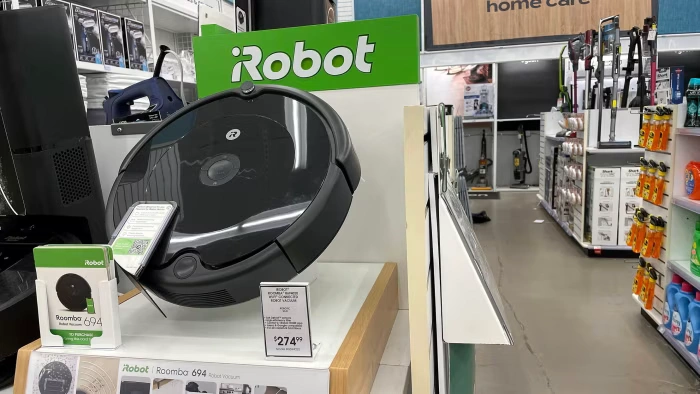
Roomba Maker iRobot Files for Bankruptcy: Here’s Why
iRobot, the company that once defined the robotic vacuum cleaner market, has filed for Chapter 11 bankruptcy protection, marking a dramatic fall for one of the pioneers of consumer robotics. The American firm, best known for its Roomba robotic vacuum cleaners, announced that it will be acquired by a subsidiary of its long-time Chinese supplier, Shenzhen-based Picea Robotics.
The filing brings to an end a turbulent few years for iRobot, which has struggled with declining sales, rising competition, and supply-chain disruptions. Once seen as a symbol of innovation and futuristic home automation, the company is now fighting for survival in a market it helped create.
From MIT Labs to Global Fame
iRobot was founded in 1990 by MIT roboticist Rodney Brooks and his students Colin Angle and Helen Greiner. The company began with a vision rooted in academic research, applying principles from biology and artificial intelligence to create practical robots. While iRobot initially worked on military and industrial robots, its biggest breakthrough came in the consumer market.
In 2002, the company launched the Roomba robotic vacuum cleaner. At a time when home robots were considered science fiction, Roomba captured the public imagination. It became a cultural phenomenon, appearing in movies, television shows, and everyday households. Millions of units were sold worldwide, and robotic vacuuming quickly became a mainstream concept rather than a novelty.
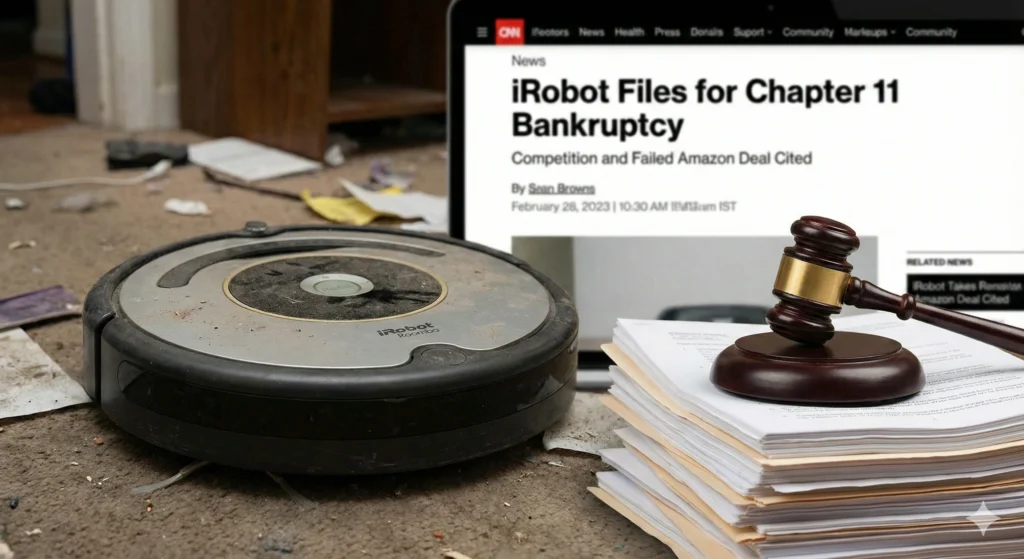
For years, iRobot dominated the market it had created, enjoying strong brand recognition and customer loyalty.
Pandemic Boom and a Short-Lived Peak
iRobot reached its financial peak during the Covid-19 pandemic. With people spending more time at home and investing in household conveniences, demand for robotic vacuum cleaners surged. In 2021, the company’s market valuation climbed to around $3.56 billion.
That success, however, proved temporary. As pandemic-driven demand faded, iRobot struggled to maintain momentum. The company was also facing a rapidly changing competitive landscape, with new players offering feature-rich robotic vacuums at lower prices.
The Failed Amazon Acquisition
In 2022, Amazon announced plans to acquire iRobot for $1.7 billion, a deal that would have been Amazon’s fourth-largest acquisition at the time. The announcement initially appeared to offer iRobot a lifeline, providing access to Amazon’s resources, ecosystem, and global reach.
However, the deal soon faced intense regulatory scrutiny, particularly in Europe. Regulators raised concerns about competition and data privacy, given that Roomba devices collect detailed maps of users’ homes. Critics feared that Amazon could combine this data with its existing consumer data, raising serious privacy issues.
After months of uncertainty, Amazon and iRobot terminated the deal in January 2024. Amazon paid a $94 million breakup fee, but the collapse of the acquisition left iRobot weakened and without a clear path forward. Today, the company’s valuation has fallen to roughly $140 million, a fraction of its pandemic-era peak.
Rising Competition and Market Pressures
One of the biggest challenges iRobot faced was intensifying competition. Over the past decade, Chinese manufacturers have entered the robotic vacuum cleaner market aggressively, offering products with advanced features such as lidar navigation, self-emptying bins, and app-based controls at significantly lower prices.
Brands like Roborock, Ecovacs, Dreame, and others have gained market share by moving faster on innovation and manufacturing efficiency. iRobot, meanwhile, struggled to keep pace while maintaining profitability.
Despite these challenges, Roomba still commands a strong presence in certain markets. It holds around 42 percent of the US robotic vacuum market and approximately 65 percent of the Japanese market. However, strong market share did not translate into financial stability.
Supply-Chain Dependence and Manufacturing Challenges
Another key factor behind iRobot’s decline has been its reliance on overseas manufacturing. Most of its products are manufactured in Vietnam, making the company vulnerable to global supply-chain disruptions, rising shipping costs, and geopolitical tensions.
As costs increased and competition intensified, iRobot found it increasingly difficult to protect its margins. Efforts to restructure operations and cut expenses failed to reverse the company’s financial losses.
Chapter 11 and the Chinese Acquisition
On Tuesday, iRobot announced that it had filed for Chapter 11 bankruptcy protection in Delaware. As part of the restructuring process, the company will be acquired by a subsidiary of Picea Robotics, its main supplier.
Picea Robotics is a major player in the robotic vacuum cleaner industry, with research, development, and manufacturing facilities in China and Vietnam. The company employs more than 7,000 people globally and has sold over 20 million robotic vacuum cleaners worldwide.
The acquisition is expected to allow iRobot to continue operating while restructuring its debts, but it also marks a significant shift in ownership and control.
Data Privacy and National Concerns
The takeover by a Chinese company has raised fresh concerns around data privacy and national security. As an American company, iRobot has long operated under US regulatory and legal frameworks. Under Chinese ownership, questions may arise about how user data—particularly detailed home maps collected by Roomba devices—will be handled.
Similar concerns were raised during Amazon’s attempted acquisition. Critics worried that access to such intimate household data could be misused, regardless of who controls the company.
Helen Greiner, one of iRobot’s co-founders, publicly criticized the restructuring plan. In a LinkedIn post, she said that placing the company under Chinese ownership was not good for consumers, employees, shareholders, or the United States.
What the Bankruptcy Means for Consumers
For existing Roomba users, the immediate impact is likely to be limited. The company has stated that it plans to continue operations during the bankruptcy process. However, long-term concerns remain around software updates, customer support, and data security.
Consumers may also see changes in product strategy, pricing, or regional availability as the new owner restructures the business.
A Cautionary Tale for Consumer Tech
iRobot’s downfall serves as a cautionary tale for consumer technology companies. Innovation alone is not enough to guarantee long-term success. Rapidly evolving markets, aggressive competition, supply-chain vulnerabilities, and regulatory risks can quickly erode even the strongest brands.
Once the undisputed leader in robotic home cleaning, iRobot now finds itself struggling to survive in the industry it helped build.
The Road Ahead for iRobot
Whether iRobot can regain stability under new ownership remains uncertain. The brand still holds value, particularly in mature markets like the US and Japan. However, rebuilding trust, profitability, and innovation momentum will require significant changes.
As the robotic vacuum cleaner market continues to grow, iRobot’s story stands as a reminder that being first does not always mean staying on top.
Click Here to subscribe to our newsletters and get the latest updates directly to your inbox