
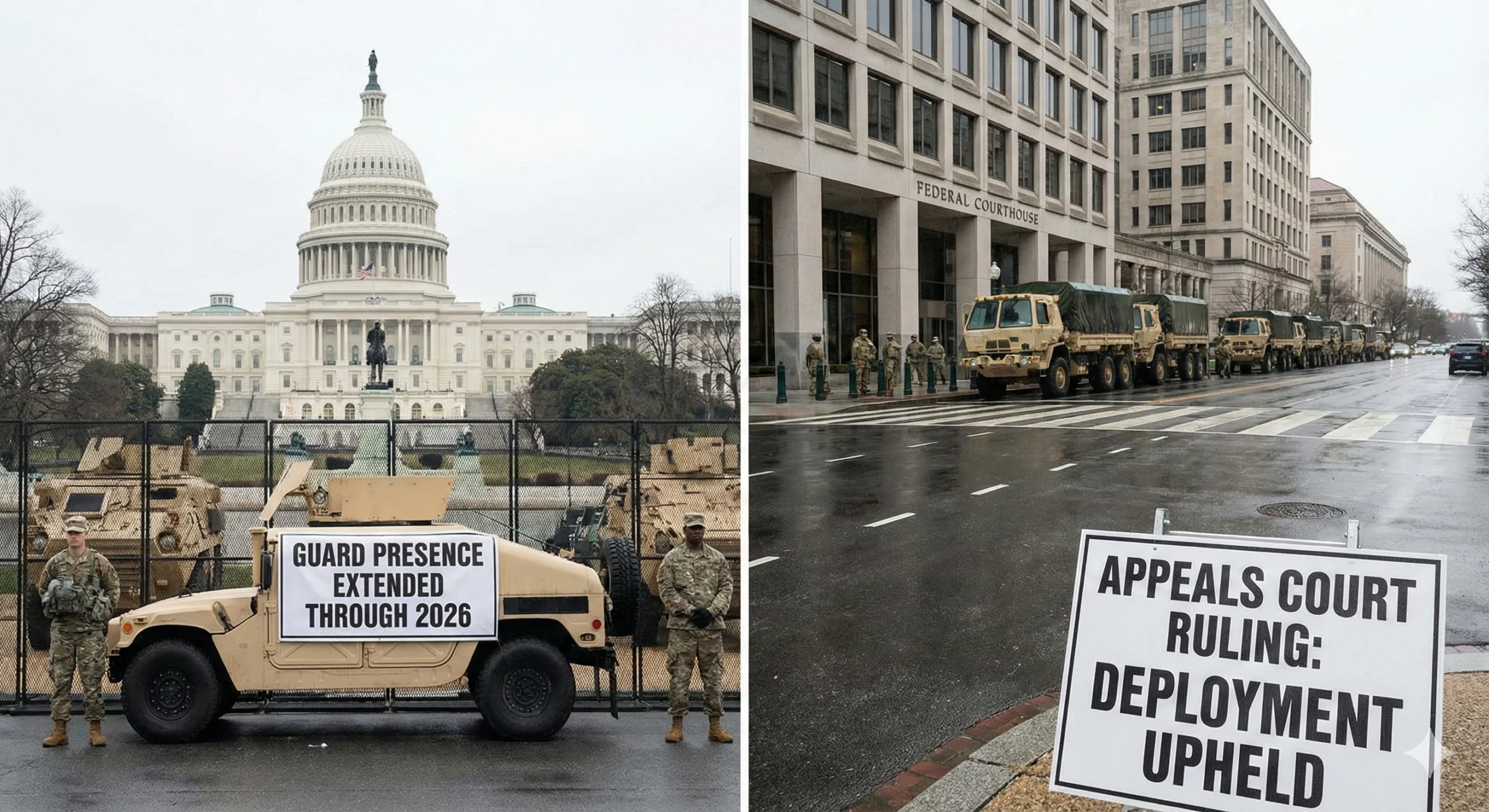
Trump’s National Guard Deployment in DC Gets Appeals Court Green Light: Troops Stay Through 2026
In a significant victory for the Trump administration, a federal appeals court has ruled that the National Guard’s presence in Washington, D.C. can continue for now. This decision reverses a lower court’s order to pull the troops out, ensuring that Guard members will remain a familiar sight in the nation’s capital well into 2026. It’s a story that highlights the ongoing tug-of-war between federal authority and local control, especially in a city grappling with crime waves.
The ruling came from a three-judge panel at the U.S. Court of Appeals for the District of Columbia Circuit. They stayed U.S. District Judge Jia Cobb’s November 20 opinion, which had deemed the deployment an illegal overreach into D.C.’s local law enforcement powers. For residents and visitors, this means business as usual—Guard troops patrolling streets, subways, and key areas around federal buildings.
The Backstory: From Executive Order to Court Battle
Everything kicked off in August 2025 when President Donald Trump issued an executive order declaring a “crime emergency” in Washington, D.C. Crime stats had been climbing, with reports of rising assaults, thefts, and even high-profile incidents near government sites. Within a month, over 2,300 National Guard troops from eight states and D.C. itself flooded the city. They’re under the command of the Army secretary, not local officials, and hundreds of federal agents joined the effort.
D.C. Attorney General Brian Schwalb wasn’t having it. He sued, arguing the deployment bypassed Mayor Muriel Bowser’s authority and violated statutes governing the D.C. National Guard. Schwalb wanted a court order barring further troops without the mayor’s nod. The case drew national attention, with dozens of states filing briefs—mostly along party lines, Republicans backing Trump, Democrats siding with D.C.
Judge Cobb initially agreed with Schwalb in part. She acknowledged the president’s power to protect federal property but ruled he couldn’t unilaterally deploy Guard units for general crime control or call in out-of-state troops. She ordered the troops home but paused enforcement for 21 days to let the administration appeal. An administrative stay followed on December 4, and now this unanimous 32-page decision keeps them in place.
Why the Appeals Court Sided with Trump
The judges didn’t mince words: Trump has a “strong case” on appeal. They emphasized the president’s “unique power” to mobilize the D.C. National Guard, given the district’s status as a federal enclave without full statehood. D.C. lacks a voting congressional delegation and can’t command its own Guard like states can—that authority rests with the president.
Other factors tipped the scales. The court highlighted the “disruption to the lives of thousands of service members” if troops were yanked suddenly. It also stressed the administration’s interest in safeguarding federal functions and property in the capital. Crucially, the panel found D.C. hadn’t proven “ongoing injury” to its statutory rights. In short, the balance favored keeping the status quo during litigation.
This isn’t a final win, though. The ruling is narrow—it dodges big questions like whether Guard units are breaking federal laws against military involvement in law enforcement (think Posse Comitatus Act vibes). A full merits decision could still shift things.
The Spark: Tragic Subway Ambush Near the White House
Timing matters, and this ruling lands just weeks after a gut-wrenching incident. On November 27, two West Virginia National Guard members—Spc. Sarah Beckstrom and Staff Sgt. Andrew Wolfe—were ambushed at a subway station three blocks from the White House. Beckstrom, a 24-year-old mother and dedicated soldier, died from her injuries. Wolfe is recovering but faces a long road.
The suspect, 29-year-old Afghan national Rahmanullah Lakanwal, faces murder charges and has pleaded not guilty. Details are still emerging, but the attack underscored the risks Guard troops face on patrol. The administration responded swiftly, calling for 500 more troops. Critics call it fearmongering; supporters see it as necessary deterrence.
Broader Implications: Federal Power vs. Local Autonomy
This case isn’t just about D.C.—it’s a flashpoint in debates over federalism. Washington operates under unique rules: Congress oversees its laws, and the president controls the Guard. Trump’s move echoes past uses, like post-January 6 deployments, but frames it as crime-fighting, not political theater.
For D.C. residents, it’s mixed. Polls show support for troops amid spiking metro crime, but many chafe at the optics of militarized streets. Schwalb’s office hasn’t commented yet, but expect more legal volleys. If the full appeal succeeds, it could set precedents for other cities seeking federal help with urban violence.
Nationally, it fuels partisan divides. Red states cheer expanded presidential tools against crime; blue ones warn of eroded local control. With 2026 midterms looming, this could become campaign fodder—Trump touting “law and order,” opponents crying overreach.
What Happens Next for D.C. and the Guard?
The appeals court stressed its decision is temporary. Full briefing on the merits could take months, potentially landing before the full D.C. Circuit or Supreme Court. Meanwhile, troops stay deployed, with that extra 500 possibly incoming post-shooting.
D.C. leaders might pivot to Congress for relief or push statehood bills to gain Guard control. Trump could expand the emergency declaration if crime persists. For service members, it’s a grind—extended tours disrupt families, but many view it as duty.
In a city symbolizing American power, this saga reminds us how fragile urban safety can be. Crime emergencies aren’t new—think 2020 riots—but federal boots on the ground raise stakes.
Safety First, But at What Cost?
The appeals court’s call keeps D.C. safer, at least in the short term, validating Trump’s aggressive stance. Yet it leaves thorny issues unresolved, from legal limits on military policing to D.C.’s quest for home rule. As 2026 unfolds, watch for escalations—more incidents, bigger deployments, fiercer court fights.
Click Here to subscribe to our newsletters and get the latest updates directly to your inbox