
India Signs Historic Trade Pact with Oman: Expanding West Asian Footprint Amid Global Headwinds
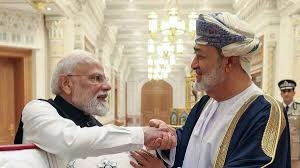
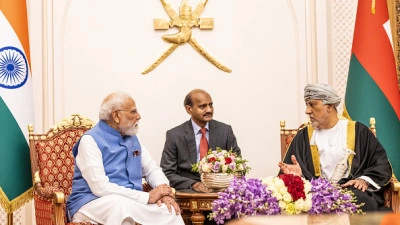
In a strategic masterstroke amidst a turbulent global trade environment, India signed a landmark Free Trade Agreement (FTA)—officially dubbed the Comprehensive Economic Partnership Agreement (CEPA)—with Oman on Thursday. The pact, inked in Muscat during Prime Minister Narendra Modi’s meeting with Sultan Haitham bin Tarik, marks India’s second major trade deal with a Gulf Cooperation Council (GCC) nation, following the 2022 agreement with the UAE.
Prime Minister Modi hailed the agreement as a “historic decision” that will echo for decades, describing it as a “blueprint for our shared future” destined to infuse the India-Oman partnership with 21st-century energy. But beyond the diplomatic niceties lies a hard-nosed economic strategy: India is aggressively pivoting to West Asia to secure alternative markets as protectionist walls rise in the West.
With the United States imposing steeper tariffs under a “America First” resurgence and the European Union rolling out carbon taxes that threaten Indian manufacturing, New Delhi is betting big on the Gulf. The India-Oman CEPA is not just about lower duties; it’s a gateway to the broader Arab region, a launchpad for Africa, and a critical diversification play for an export engine facing headwinds in traditional Western hubs.
Why Oman? Strategic Geography Meets Economic Necessity
At first glance, Oman—with annual imports of ~$40 billion—seems a modest prize compared to the UAE’s mammoth economy. However, its value to India is asymmetric and strategic.
1. The Gateway to Africa and the US:
Oman’s strategic location on the southeastern coast of the Arabian Peninsula makes it a logistics pivot. Ports like Sohar and Salalah are established transshipment hubs connecting Asian goods to East African markets. For Indian exporters, Oman isn’t just a destination; it’s a transit lounge for accessing the fast-growing economies of Africa.
Crucially, Oman holds a trump card: a Free Trade Agreement with the United States, effective since 2009. This allows Omani goods duty-free access to the US market. Indian firms, by setting up value-addition units in Oman’s free zones, can potentially bypass steep US tariffs on direct Indian exports. Industrial supplies, aluminum, and jewelry processed in Oman could flow into the US duty-free—a backdoor that Indian policymakers are keen to leverage, especially for sectors like gems and jewelry that face tariff stress.
2. Bypassing Western Non-Tariff Barriers:
The European Union’s Carbon Border Adjustment Mechanism (CBAM) and strict ESG standards are raising compliance costs for Indian exporters. West Asian markets like Oman operate with less stringent, yet robust, standards. This lowers the “cost of compliance” and removes non-tariff barriers (NTBs) that often choke Indian goods in Europe. Shifting focus to the Gulf allows Indian exporters to maintain volume growth while adapting to Western demands over a longer horizon.
3. Energy Security Diversification:
Oman is a key energy partner, exporting crude oil, LNG, and fertilizers (urea) to India. The CEPA secures these critical supply lines at zero or low duties, insulating India’s energy and agricultural sectors from global volatility. Chemical inputs like methanol and ammonia—vital for India’s industrial base—will also flow cheaper, boosting domestic manufacturing competitiveness.
What the Deal Delivers: Tariffs, Pharma, and Investment
The CEPA promises to slash duties on over 80% of Indian goods, which currently face an average 5% tariff in Oman. While modest, this margin reduction is critical in hyper-competitive sectors.
Key Export Winners:
- Machinery & Engineering: Already India’s top export driver to Oman ($6B annual exports, doubled in 5 years), this sector will see immediate gains.
- Textiles & Ceramics: Labor-intensive sectors facing sluggish demand in the West will find relief in the Gulf market.
- Gems & Jewellery: A priority sector for India, seeking to regain luster lost to high gold import duties and global slowdowns.
- Agriculture: Rice, fruits, and processed foods gain preferential access, vital for India’s farm income targets.
Pharmaceuticals:
The deal is expected to replicate the UAE model, fast-tracking approval for Indian drugs already cleared by US FDA or UK MHRA regulators. This regulatory “green channel” is a game-changer, potentially allowing Indian generics to capture market share in Oman’s healthcare system, though non-tariff barriers remain a hurdle to watch, as seen in the UAE experience.
Investment Nexus:
With over 6,000 India-Oman joint ventures and $7.5 billion in Indian investments already grounded in Oman (notably in Sohar and Salalah Free Zones), the CEPA provides legal certainty and investment protection. It encourages Indian companies to internationalize operations, using Oman as a manufacturing base rather than just an export market.
The Geopolitical Context: GCC Strategy Amid Western Protectionism
India’s push for the Oman pact follows the stalling of broader India-GCC bloc negotiations. By signing bilateral deals with the UAE and now Oman, India is effectively dismantling the GCC wall brick by brick, securing access to the most open economies in the bloc first.
This strategy aligns with a “Look West” economic policy. As the US imposes tariffs and the EU erects green barriers, the Gulf offers capital, energy, and a growing consumer market. The GCC countries are diversifying away from oil, building “post-oil” economies requiring exactly what India exports: construction materials, IT services, skilled labor, and machinery.
Prime Minister Modi’s personal diplomacy—meeting Sultan Haitham bin Tarik—signals that trade is the anchor of a deeper strategic partnership involving defense, maritime security (given Oman’s proximity to the Persian Gulf chokepoints), and diaspora welfare.
Challenges Ahead: Trade Deficits and Utilization
Despite the optimism, risks lurk.
- Trade Deficit Concerns: Post-CEPA with the UAE, India’s trade deficit widened threefold as gold and oil imports surged while exports grew more slowly. Oman, primarily an energy exporter, could see a similar trend. India will import high-value energy while exporting lower-value manufactured goods, potentially skewing the balance of trade further against New Delhi.
- Market Size Limitations: Oman is a small market (population ~5 million) compared to the UAE or Saudi Arabia. Sustained export growth depends not on Omani consumption, but on successfully using Oman as a re-export hub. If logistics connectivity to Africa/US doesn’t scale, gains may plateau.
- Non-Tariff Barriers: As seen with pharma in the UAE, tariff cuts don’t guarantee market share if regulatory NTBs persist. The CEPA’s success depends on the “Fine print” of regulatory harmonization.
A Blueprint for Resilience
The India-Oman CEPA is more than a trade deal; it is a defensive maneuver against a fracturing global trading order. By locking in duty-free access to West Asia, India is hedging against Western protectionism while deepening ties with a region critical for its energy security and diaspora remittances.
As PM Modi noted, this is a blueprint for the 21st century—a century where trade alliances are regional, strategic, and essential for survival in a multipolar world. For Indian exporters, the message is clear: The West is tightening, but the Gulf is opening. It’s time to look West.
Click Here to subscribe to our newsletters and get the latest updates directly to your inbox