
India-New Zealand FTA: Strategic Trade Pivot Amid US Tariff Crisis
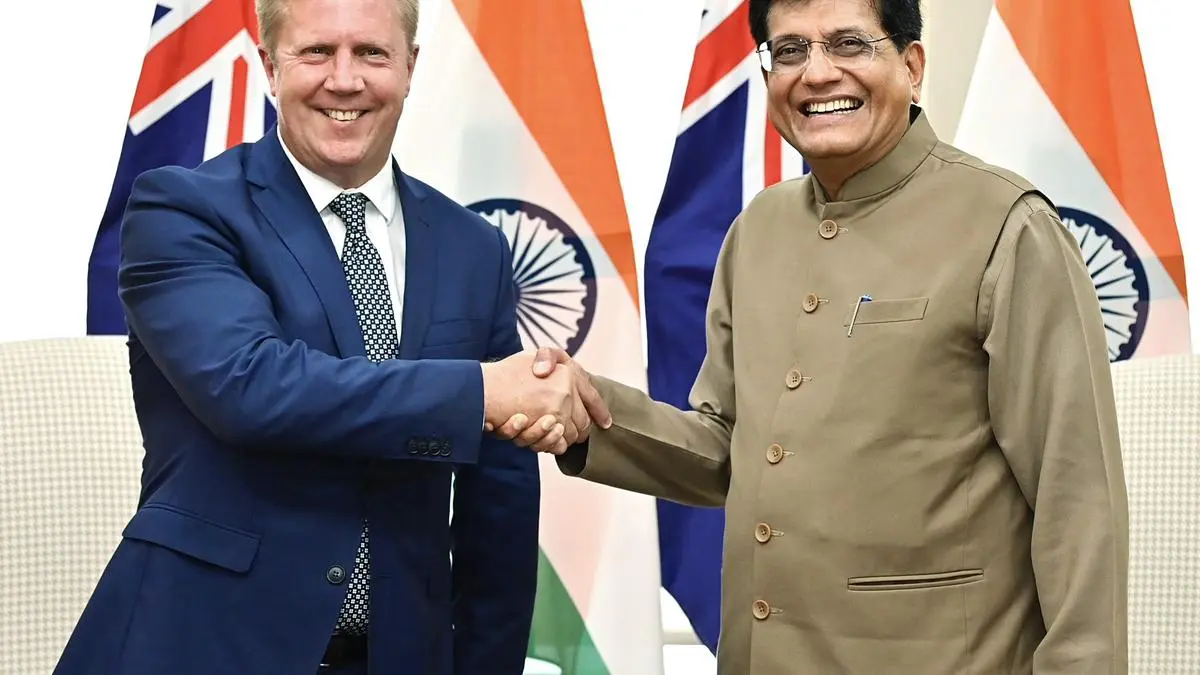
India announced the conclusion of a comprehensive Free Trade Agreement (FTA) with New Zealand on December 21-22, 2025. While this might sound like routine trade news, the timing reveals a country under pressure making bold strategic moves.
The backdrop is critical: In August 2025, the United States slapped 50 percent tariffs on Indian goods—a decision that sent shockwaves through India’s export-dependent industries. With the US being India’s largest market for goods like textiles, gems, jewelry, leather products, and seafood, this tariff shock threatened millions of jobs and billions in revenue. Faced with this crisis, the Indian government decided that waiting and negotiating with Washington wasn’t enough. Instead, it pivoted to a rapid-fire strategy of signing FTAs with multiple countries at once.
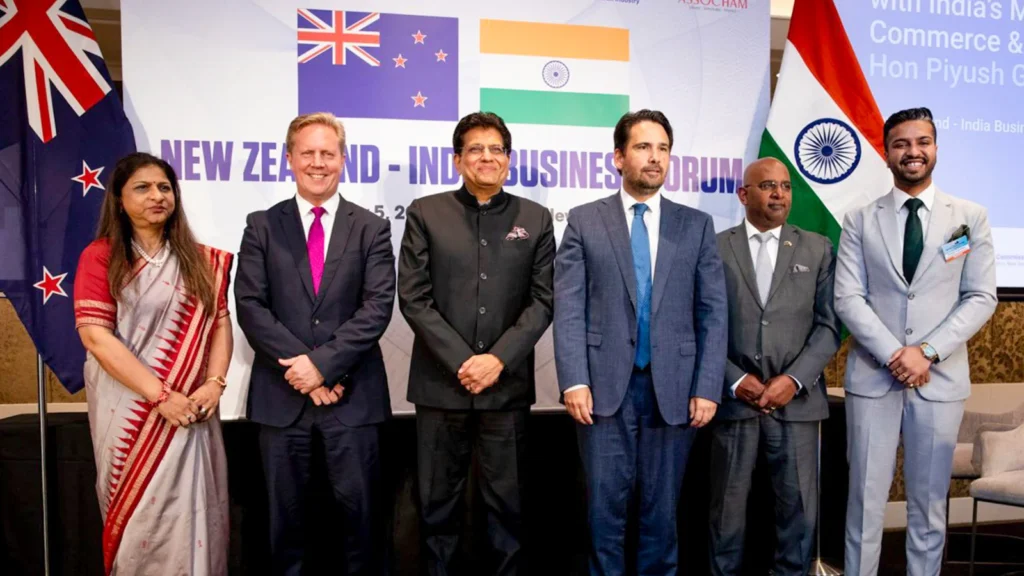
The New Zealand deal, signed in just nine months, is the third major FTA India completed in 2025 alone. Before New Zealand came Oman (December 18) and the United Kingdom (July). This flurry of activity tells you something important: India is deliberately diversifying its trade relationships to reduce its dependence on the US market.
Understanding the US Tariff Shock
To grasp why this New Zealand agreement matters, you need to understand the crisis that prompted it.
In August 2025, the Trump administration imposed tariffs on Indian goods, starting at 25 percent and then adding another 25 percent on top—bringing the total to 50 percent. The justification offered was India’s purchases of Russian oil, a geopolitical move that caught Indian policymakers off guard.
The numbers are staggering. These tariffs affect approximately 48.2 billion dollars of Indian annual exports. For industries like textiles, gems and jewelry, leather goods, and seafood, the impact has been devastating. Some sectors have seen export orders get cancelled entirely. Economic analysis suggests that certain product categories could see exports plummet by as much as 70 percent.
For India’s overall economy, the damage is real. Economists estimate that these sustained tariffs could reduce India’s GDP growth by 0.8 to 1 percentage point—a significant hit for an economy that relies heavily on exports to fuel growth.
The pharmaceutical industry got a partial reprieve. The Trump administration exempted pharmaceuticals and medical devices from additional tariffs, which helped somewhat since India’s pharma sector supplies over 40 percent of generic drugs to the American market.
But the core problem remained: India’s traditional export strengths—textiles, leather, gems, jewelry, and seafood—faced an existential threat in its largest market.
India’s Response: Export Diversification Strategy
Rather than trying to negotiate with the US in isolation or erect protective barriers at home, India pursued an aggressive strategy of export diversification. The government directed exporters to shift focus to 50 different countries across multiple regions: the European Union, Japan, South Korea, Australia, West Asia, and Southeast Asia.
Seafood exporters, for instance, were encouraged to cultivate relationships with buyers in Japan and the EU instead of relying so heavily on the US. Textile manufacturers were pushed to explore European and Southeast Asian markets.
The underlying logic is clear: an export-driven economy cannot be vulnerable to any single country’s tariff decisions. By spreading exports across many countries, India makes itself more resilient to future shocks. This is why India pursued three major FTAs in 2025—it was a deliberate strategy to build new trading relationships quickly.
What’s Actually in the India-New Zealand Deal?
The FTA covers multiple areas beyond just tariffs. Let’s break down what India and New Zealand actually agreed to:
Tariff Changes
India agreed to gradually lower its tariffs on New Zealand exports. The average Indian tariff rate of 16.2 percent will drop to 13.18 percent immediately when the deal takes effect, then decline further to 10.3 percent after five years, and eventually to 9.06 percent after ten years.
New Zealand, meanwhile, agreed to eliminate tariffs on 100 percent of Indian exports. That sounds impressive, but here’s the reality check: New Zealand already has some of the world’s lowest tariffs, averaging just 2 to 3 percent across most product categories. When tariffs are already that low, eliminating them doesn’t create huge competitive advantages. The real benefit lies elsewhere.
India has agreed to reduce tariffs on 95 percent of New Zealand’s exports, showing a balanced approach to market opening while protecting sensitive domestic sectors.
Services and Investment
Beyond goods, India opened up 106 services sectors to New Zealand businesses. This includes telecommunications, financial services, education, tourism, and digital services. Both countries benefit from having access to each other’s growing service sectors.
The investment component is where this deal becomes genuinely significant. New Zealand committed to invest significant capital in India over the coming years. This investment focus creates opportunities for technology transfer and supply chain integration that could grow over time.
People and Mobility
The agreement includes provisions for easier movement of professionals and workers between the two countries. While the scale may be modest, these programs often generate outsized long-term benefits through professional networking and cultural exchange.
The Reality: Why This Deal Has Limits
Here’s what the Indian government won’t emphasize too much: while this FTA is strategically important, its immediate impact on trade volumes will probably be modest.
First, remember that New Zealand’s tariffs are already incredibly low. When you’re eliminating tariffs that barely exist at 2-3 percent, you’re not creating dramatic competitive advantages. Indian exporters save money at the margins, but the real savings come in markets with high tariff walls—like the EU or India’s own domestic market.
Second, New Zealand is a small market. With a population of about 5 million people, it simply cannot absorb massive quantities of Indian exports. To put this in perspective, India exports over 86 billion dollars worth of goods to the United States each year. New Zealand’s bilateral trade with India is considerably smaller.
Third, there’s sectoral mismatch. New Zealand’s economy is built on agriculture (sheep, dairy, beef), forestry, and tourism. India’s export strengths are textiles, gems, jewelry, leather, and seafood. These sectors operate in different value chains, so there’s limited overlap where tariff elimination would dramatically boost trade.
Why This Matters Anyway
Despite these limitations, the India-New Zealand FTA matters for three important reasons:
It’s Part of a Larger Strategy: This isn’t just about New Zealand trade. It’s about building a portfolio of FTA partners across Asia-Pacific, the Middle East, and Europe so that India isn’t dependent on any single market.
Investment and Long-term Growth: Investment commitments create opportunities for technology transfer and supply chain integration that could grow over time. New Zealand could invest in Indian manufacturing, technology sectors, and value-added production.
Geopolitical Positioning: In a world where trade patterns are shifting, New Zealand provides India a stable, developed-country partner in the Indo-Pacific region—strategically important given broader geopolitical shifts.
The Bigger Picture
The India-New Zealand FTA demonstrates that Indian policymakers understand a hard truth: the days of export-dependent growth built on relying on a single market are over. The US tariff shock was a wake-up call.
By rapidly concluding FTAs with Oman, New Zealand, and the UK in 2025, India is constructing a more resilient trading architecture. It’s betting that by having preferential access to multiple markets across different regions, the country can maintain export growth even if one market becomes hostile.
Is this a complete solution to the US tariff problem? No. Will it immediately double bilateral trade with New Zealand? Probably not. But it represents a pragmatic, forward-thinking strategy to build economic resilience in uncertain times.
The real test will come in the next 12 to 24 months. As Indian exporters navigate the ongoing US tariff uncertainty, they’ll begin to understand whether this diversification strategy actually works. For now, what’s clear is that India’s government is moving fast and deliberately building alternatives to dependence on the American market.
Click Here to subscribe to our newsletters and get the latest updates directly to your inbox