
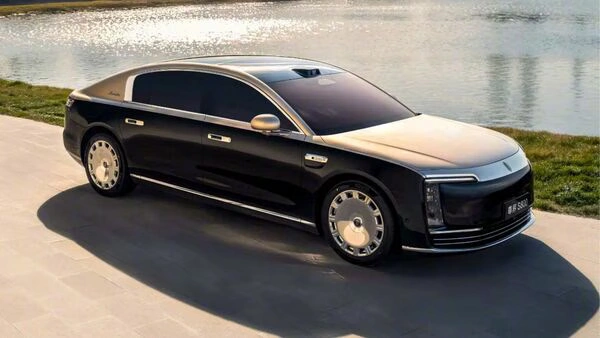
Huawei’s Maextro S800 Outsells Porsche Panamera in China’s Luxury Car Market
In a development that few traditional automakers would have predicted a decade ago, Huawei has emerged as a serious contender in China’s ultra-luxury car market. The company’s premium electric sedan, the Maextro S800, has reportedly overtaken established luxury benchmarks such as the Porsche Panamera, the BMW 7 Series, and the Mercedes-Benz S-Class in sales within China.
According to a Bloomberg report citing data from ECC Intelligence, nationwide Huawei dealerships have sold more Maextro S800 units since its launch in May than some of the most iconic names in global luxury motoring. For a company best known for smartphones, telecom equipment, and software ecosystems, this marks a striking shift—and potentially a structural change in China’s premium car market.
From Sanctions to Sedans: Huawei’s Unlikely Automotive Rise
Huawei’s entry into the luxury vehicle segment is remarkable given the challenges it has faced over the past several years. US sanctions significantly restricted the company’s access to advanced semiconductors and global supply chains, forcing it to rethink its long-term growth strategy.
Rather than retreating, Huawei doubled down on domestic innovation and diversification. Its push into smart vehicles—through software platforms, autonomous driving systems, and now complete premium cars—represents a broader ambition to become a cornerstone of China’s next-generation industrial ecosystem.
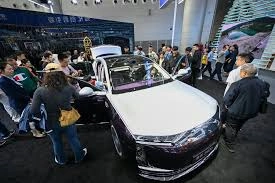
The Maextro S800 is not positioned as a mass-market electric vehicle. Instead, it directly targets high-income buyers who traditionally gravitated toward European luxury brands.
How the Maextro S800 Is Beating the Porsche Panamera
The Porsche Panamera has long been one of China’s best-selling ultra-luxury sedans, appealing to buyers who value performance, prestige, and German engineering. That a Chinese technology company’s sedan is outselling it signals a shift in consumer priorities.
Several factors appear to be driving the Maextro S800’s success:
First, the car is deeply integrated with Huawei’s software and digital ecosystem. From advanced infotainment and AI-assisted driving features to seamless smartphone connectivity, the vehicle appeals strongly to China’s tech-savvy luxury consumers.
Second, pricing and value perception matter. While still firmly in the luxury bracket, the Maextro S800 reportedly offers more advanced technology features at a more competitive price point compared to imported European rivals, which face higher costs and tariffs.
Third, national sentiment and trust in domestic brands have grown significantly. Chinese consumers are increasingly comfortable choosing homegrown premium products, especially when they rival—or exceed—foreign alternatives in innovation.
Outselling BMW and Mercedes-Benz: A Symbolic Milestone
Beyond Porsche, the Maextro S800 has also surpassed sales of the BMW 7 Series and Mercedes-Benz S-Class, two models that have long defined executive luxury in China.
This is symbolically important. The S-Class, in particular, has historically been seen as the gold standard for chauffeured luxury among Chinese executives and officials. Its displacement by a Chinese electric sedan underscores how quickly the definition of luxury is evolving.
Luxury is no longer just about leather seats and brand heritage. In China, it increasingly revolves around digital intelligence, software updates, autonomous capabilities, and integration with everyday digital life.
Why China’s Luxury Buyers Are Changing Preferences
The success of the Maextro S800 reflects deeper structural trends in China’s car market.
One key shift is generational. Younger wealthy buyers are less emotionally attached to European legacy brands. They are more willing to experiment, especially when domestic brands deliver cutting-edge technology and a sense of national pride.
Another factor is electrification. China has embraced electric vehicles faster than any other major market. Domestic companies, including Huawei’s automotive partners, have benefited from strong local supply chains, charging infrastructure, and policy support.
Imported luxury sedans, many of which are still heavily reliant on internal combustion engines or hybrid configurations, are increasingly perceived as less future-ready.
Assumptions That May Be Overstated
While the sales figures are impressive, it would be premature to conclude that European luxury brands are in irreversible decline in China.
One assumption is that early sales momentum will automatically translate into long-term dominance. Luxury car buyers are often conservative, and sustained brand loyalty takes years—sometimes decades—to build.
Another assumption is that technology alone defines luxury. While software and smart features are critical, long-term reliability, resale value, and global brand recognition still matter, especially for ultra-high-net-worth individuals.
Huawei will need to prove that it can offer consistent quality, after-sales service, and long-term support at the same level as established luxury automakers.
Strategic Implications for Global Automakers
The rise of the Maextro S800 sends a clear message to global carmakers: China’s luxury market can no longer be approached with incremental updates and brand nostalgia alone.
For Porsche, BMW, and Mercedes-Benz, this means accelerating their own digital transformation, expanding electric line-ups, and localising software development more aggressively for Chinese consumers.
For Huawei, success in the ultra-luxury segment strengthens its positioning as more than a tech supplier. It becomes a brand capable of competing head-on with century-old automotive giants—at least in its home market.
Huawei’s Broader Automotive Ambition
The Maextro S800 is unlikely to be a one-off experiment. It fits into Huawei’s broader strategy of embedding itself deeply into China’s smart mobility ecosystem, spanning autonomous driving software, vehicle operating systems, and cloud services.
Rather than becoming a traditional automaker, Huawei appears to be building a vertically integrated “tech-first” automotive model—one that could scale rapidly if consumer acceptance remains strong.
A Turning Point in China’s Luxury Auto Market
Huawei’s Maextro S800 outselling the Porsche Panamera, BMW 7 Series, and Mercedes-Benz S-Class is more than a headline-grabbing statistic. It reflects a fundamental shift in how luxury is defined in the world’s largest car market.
Whether this dominance proves sustainable remains an open question. But one thing is already clear: China’s luxury car landscape is no longer shaped solely by European heritage brands. Technology-led domestic players are now rewriting the rules—and global automakers will have to adapt faster than ever to keep up.
Click Here to subscribe to our newsletters and get the latest updates directly to your inbox