
Nvidia Strikes $20B Licensing Deal With AI Chip Startup Groq: What It Means Going Forward
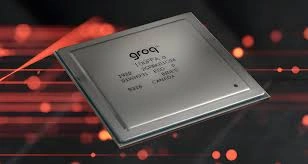
In one of the most unexpected moves in the semiconductor industry this year, Nvidia has agreed to pay a reported $20 billion to AI chip startup Groq to license its AI inference technology, while simultaneously recruiting several of Groq’s top executives—including founder Jonathan Ross.
If the reported figure holds, this becomes Nvidia’s largest technology licensing deal ever. More importantly, it signals a sharp strategic shift in how the world’s most powerful AI chipmaker sees the future of artificial intelligence hardware.
This is not just about chips. It’s about control, timing, and the next phase of AI dominance.
Why This Deal Matters More Than It Looks
At first glance, a licensing agreement sounds routine. But $20 billion is not routine—not for licensing, not for talent acquisition, and not for a company that already dominates AI accelerators.
The sheer size of the deal suggests Nvidia sees something in Groq’s inference-first architecture that cannot be replicated quickly in-house. Instead of outbuilding a competitor over years, Nvidia has chosen to buy time, talent, and access—immediately.
This also hints at a deeper concern inside Nvidia: training is no longer the only game in town.
Training vs Inference: The Real AI Battleground
For years, Nvidia’s GPUs have ruled AI training. Massive models are trained on huge clusters of Nvidia hardware, creating a near-monopoly.
Inference is different.
Inference is what happens after the model is trained—when it answers questions, generates images, or runs inside applications. This stage:
- Runs continuously
- Happens at massive scale
- Must be fast and cheap
- Determines real-world profitability
Inference is where cloud providers, enterprises, and consumer apps spend money long-term. And this is exactly where Groq built its reputation.
What Makes Groq’s Technology Special
Groq didn’t try to out-GPU Nvidia. Instead, it went in the opposite direction.
Its inference chips focus on:
- Deterministic execution (predictable latency)
- Lower power consumption
- High throughput per dollar
- Simpler software pipelines
This makes Groq chips attractive for real-time AI use cases like search, chatbots, and enterprise automation—areas where latency matters more than raw training horsepower.
Nvidia could eventually build similar chips. But “eventually” is a risky word in a market moving this fast.
Why Nvidia Chose Licensing Over Acquisition
Here’s where assumptions often break down.
Why not just acquire Groq outright?
Several reasons are likely:
- Regulatory scrutiny around mega-acquisitions
- Preserving Groq’s existing partnerships
- Faster integration through licensing
- Lower long-term legal complexity
A non-exclusive license also gives Nvidia flexibility. It gains access without assuming full operational responsibility.
But make no mistake: hiring Groq’s founder and leadership team is effectively a soft acquisition of the company’s brainpower.
The Talent Grab Is as Important as the Chips
Jonathan Ross is not just another executive. He previously worked on Google’s Tensor Processing Units (TPUs) and understands hyperscale AI infrastructure at a deep level.
By bringing Ross and key Groq leaders inside, Nvidia is:
- Absorbing institutional knowledge
- Reducing future competitive risk
- Accelerating internal inference roadmaps
This move quietly weakens Groq as an independent challenger, regardless of what happens with the license.
Strongest Arguments Against Calling This a Power Shift
To stay honest, there are reasons not to overhype the deal:
- Nvidia already dominates AI hardware revenues
- Licensing does not guarantee long-term product success
- Inference margins are lower than training margins
- Competitors like AMD and custom ASIC makers are still in play
From this angle, the deal could simply be Nvidia hedging—not pivoting.
Strongest Arguments For a Strategic Inflection Point
But the counter-arguments carry more weight:
- $20B is too large for a mere hedge
- Nvidia is acknowledging inference as a bottleneck
- Speed-to-market matters more than perfection
- Talent absorption weakens the ecosystem of rivals
In short, Nvidia is buying insurance against disruption.
What This Means for the AI Chip Industry
This deal sends a clear signal to startups and competitors:
- Inference is now prime real estate
- Specialised chips matter again
- Software efficiency is as important as hardware scale
- Independence has a price tag
Expect more licensing deals, talent raids, and quiet partnerships in the next 12–24 months.
Impact on Customers and Cloud Providers
For cloud providers and enterprises, this could be a net positive—at least in the short term.
Benefits may include:
- More inference-optimised Nvidia offerings
- Lower cost per AI query
- Better latency for real-time AI applications
The risk? Even greater dependence on Nvidia’s ecosystem.
The Bigger Picture: Nvidia’s Long Game
This move fits a pattern. Nvidia is no longer just selling chips. It is:
- Shaping AI software stacks
- Absorbing architectural innovation
- Setting industry direction through influence, not just products
The Groq deal is not defensive. It is pre-emptive.
Final Take
This $20 billion licensing agreement is not about Groq needing Nvidia—it’s about Nvidia refusing to be surprised.
Inference is where AI meets reality, cost constraints, and scale. Nvidia has recognised that dominance in training does not automatically guarantee dominance in deployment.
By licensing Groq’s technology and recruiting its leadership, Nvidia has effectively compressed years of competition into a single transaction.
Click Here to subscribe to our newsletters and get the latest updates directly to your inbox