
Indigenous AI Should Be Developed by Indian Talent on Indian Servers: PM Modi to Startups
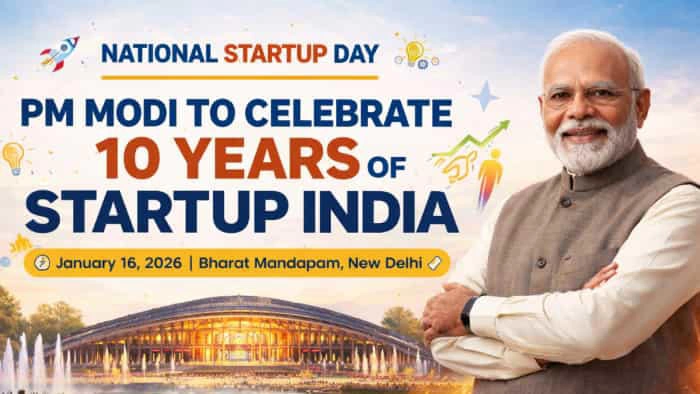
Prime Minister Narendra Modi has called on India’s startup ecosystem to take a more ambitious and self-reliant approach to artificial intelligence, urging founders to build indigenous AI solutions using Indian talent and Indian infrastructure. Speaking on the occasion of National Startup Day, which also marked 10 years of the government’s flagship Startup India programme, the Prime Minister laid out a clear vision for the next phase of India’s startup journey.
His message was direct: India should not merely participate in global technology trends but aim to lead them. For startups working in emerging areas such as AI, manufacturing, and deep technology, this means creating world-class products at home rather than relying on foreign platforms, servers, and ecosystems.
A Clear Push for Indigenous Artificial Intelligence
At the heart of the Prime Minister’s address was a strong emphasis on indigenous artificial intelligence. Modi stressed that AI solutions critical to India’s future should be built by Indian engineers, researchers, and entrepreneurs, and should run on servers located within the country.
This focus goes beyond technological pride. It reflects growing concerns around data sovereignty, national security, and long-term economic independence. As AI systems increasingly influence decision-making in sectors such as healthcare, finance, governance, and defence, control over data and infrastructure becomes strategically important.
By encouraging startups to develop AI on Indian servers, the government is signalling that future innovation must align with national interests, not just market convenience.
From Partnership to Global Leadership
One of the most striking aspects of Modi’s speech was his call for a mindset shift. He urged startups to move away from an ambition of being junior partners to global tech firms and instead aim for leadership roles in emerging technologies.
According to the Prime Minister, India’s goal should be to define new startup trends, not merely adopt them. This reflects a broader confidence in the maturity of India’s startup ecosystem, which has grown significantly over the past decade in terms of scale, funding, and global recognition.
The message was clear: Indian startups should think bigger, build original products, and compete at the highest global level.
Manufacturing Takes Centre Stage
In addition to AI, Modi placed strong emphasis on manufacturing. He called on startups to “double down” on building products in India, aligning innovation with production capabilities.
For years, India has been seen as a software and services powerhouse, while manufacturing-heavy innovation often took place elsewhere. The government now wants startups to bridge that gap by creating hardware, deep-tech products, and AI-driven manufacturing solutions domestically.
This push fits into broader national initiatives such as Make in India and Atmanirbhar Bharat, which aim to strengthen India’s position in global supply chains and reduce dependence on imports.
Why Indian Servers Matter
The Prime Minister’s reference to Indian servers is particularly significant in the context of AI. Modern AI systems rely heavily on data—personal, industrial, and governmental. Hosting AI workloads on foreign servers can raise questions about data control, compliance, and vulnerability to geopolitical risks.
By encouraging startups to use Indian data centres and cloud infrastructure, the government is pushing for greater control over sensitive information. This could also stimulate growth in India’s cloud, semiconductor, and data centre industries, creating a broader technology ecosystem rather than isolated innovation.
For startups, this may initially increase costs or complexity, but it also opens up opportunities to build trusted, India-first platforms.
The Evolution of Startup India After 10 Years
National Startup Day also marked a decade of the Startup India initiative. Over the past ten years, India has seen explosive growth in its startup ecosystem, with thousands of new ventures across fintech, edtech, healthtech, e-commerce, and SaaS.
Modi acknowledged this progress while signalling that the next decade must focus on quality, depth, and global impact. Rather than chasing valuations alone, startups were encouraged to build products that solve real-world problems and stand up to international competition.
This marks a shift from quantity-driven growth to outcome-driven innovation.
Indian Talent as the Core Strength
Another key theme of the Prime Minister’s speech was talent. Modi emphasised that India’s greatest strength lies in its young, skilled workforce. By building AI solutions locally, startups can harness contextual understanding that global players often lack.
AI systems built in India can be better tailored to local languages, social realities, regulatory environments, and user behaviour. This gives Indian startups a natural advantage in building solutions for both domestic and similar emerging markets worldwide.
The call to trust Indian talent is also a reminder that innovation does not need to be outsourced to be world-class.
What This Means for Startups Today
For founders and early-stage companies, Modi’s message carries both opportunity and responsibility. Government backing for indigenous AI could translate into policy support, funding incentives, and public-sector adoption for startups that align with this vision.
At the same time, the expectation to build globally competitive products means startups can no longer rely solely on cost advantages or domestic scale. Quality, security, reliability, and originality will matter more than ever.
Startups working in AI, manufacturing, robotics, and deep tech are likely to feel the strongest impact of this shift.
India’s Place in the Global AI Race
Globally, AI development is increasingly shaped by geopolitical considerations. Countries are racing to secure talent, data, chips, and infrastructure. Modi’s remarks position India as a country that wants to be a rule-maker, not a rule-taker, in this new landscape.
By insisting on Indian talent and Indian servers, the government is laying the groundwork for a sovereign AI ecosystem—one that can collaborate globally while retaining strategic autonomy.
For global investors and partners, this signals that India’s startup story is entering a more confident, self-defined phase.
A Message Beyond Technology
While the speech focused on startups and AI, its implications go beyond technology. It reflects a broader national ambition to shape the future on India’s own terms. The emphasis on leadership, manufacturing, and indigenous innovation ties economic growth to national capability.
For young entrepreneurs, the message is both inspiring and challenging: build not just for exits or partnerships, but for long-term impact.
Click Here to subscribe to our newsletters and get the latest updates directly to your inbox.