
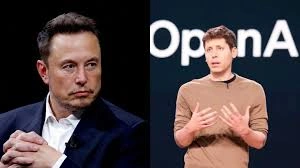
Elon Musk vs OpenAI: What Newly Unsealed Court Documents Reveal — and What They Don’t
The legal battle between Elon Musk and OpenAI has officially moved from speculation to courtroom reality. What began as a simmering dispute over values, control, and the future of artificial intelligence is now shaping up to be one of Silicon Valley’s most closely watched lawsuits.
At the heart of the case is a deceptively simple question: did OpenAI mislead Musk by accepting his funding as a non-profit organisation and later pivoting toward a for-profit structure? Newly unsealed court documents, made public after a ruling by US District Judge Yvonne Gonzalez Rogers, offer fresh insight into the origins of OpenAI, internal disagreements, and the motivations on both sides. At the same time, they leave many critical questions unanswered.
How the Dispute Began
When OpenAI was founded in 2015, it positioned itself as a non-profit research lab dedicated to developing artificial intelligence for the benefit of humanity. Musk was one of its earliest and most prominent backers, contributing tens of millions of dollars and lending credibility to the venture at a time when AI research required enormous financial support.
According to Musk’s 2024 lawsuit, his decision to fund OpenAI was rooted in its stated mission: to keep powerful AI systems out of the hands of any single profit-driven entity and to ensure transparency and openness in research. Musk argues that this promise was central to his involvement and financial backing.
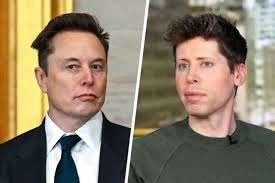
The lawsuit claims that OpenAI later abandoned this founding principle by creating a for-profit arm, forging deep commercial partnerships, and placing restrictions on access to its most advanced models.
What the Newly Unsealed Documents Show
The hundreds of pages of court filings, emails, and internal communications that have now been unsealed provide a clearer picture of early tensions within OpenAI’s leadership.
They suggest that debates over funding, scale, and sustainability began much earlier than previously known. As AI research grew more expensive, OpenAI leaders discussed the limitations of a purely non-profit model and the need for alternative funding mechanisms to remain competitive.
The documents also show that Musk was not entirely unaware of these pressures. In some exchanges, he appears to acknowledge that building cutting-edge AI would require far more capital than initially anticipated. This has become a key point in OpenAI’s defence: that its evolution was driven by necessity, not deception.
The Shift to a For-Profit Model
One of the central points of contention is OpenAI’s transition to a “capped-profit” structure, which allowed it to raise billions of dollars while still claiming to uphold its broader mission.
OpenAI argues that this structure was designed to balance ethical considerations with financial reality. Without access to large-scale investment, the organisation claims it would have fallen behind competitors and failed to achieve its goals.
Musk, however, contends that this shift fundamentally altered the nature of the organisation he supported. In his view, OpenAI became exactly what it was meant to prevent: a powerful AI company driven by commercial incentives and closed systems.
ChatGPT and Commercial Success
The rise of ChatGPT has amplified the stakes of the dispute. What started as a research project has become one of the most commercially successful AI products in history, embedded into enterprise tools, consumer platforms, and developer ecosystems.
Musk’s lawsuit points to ChatGPT and related products as evidence that OpenAI is now operating as a profit-focused technology company. OpenAI counters that commercial success does not negate its mission, but rather enables it to fund further research and safety efforts.
The court documents do little to settle this philosophical divide. They show internal awareness of commercial opportunities but stop short of proving deliberate misrepresentation at the time Musk provided funding.
Why the Judge Allowed the Case to Go to Trial
Judge Yvonne Gonzalez Rogers ruled that the evidence presented was sufficient for the case to proceed to trial. Importantly, this does not mean the court has sided with Musk; it means that the claims raise factual questions that cannot be resolved without deeper examination.
The judge pointed to the volume of internal communications and the complexity of OpenAI’s organisational evolution as reasons why a trial is warranted. This ensures that witnesses will be examined under oath and that decisions made years ago will be scrutinised in detail.
For Silicon Valley, this is significant. It signals that courts are increasingly willing to examine the governance structures and ethical claims of AI companies, not just their financial performance.
What the Documents Don’t Reveal
Despite their volume, the unsealed documents leave several critical questions unanswered.
They do not clearly establish whether OpenAI explicitly promised Musk that it would never pursue any form of profit-oriented structure. Nor do they definitively show that Musk was intentionally misled or excluded from key decisions.
There is also little clarity on how binding the early mission statements were meant to be. Were they legal commitments or aspirational goals? This distinction could prove decisive in court.
In other words, the documents provide context, not conclusions.
Broader Implications for AI Governance
Beyond the personalities involved, the case raises larger questions about how AI organisations should be structured and governed. As AI systems become more powerful and influential, the tension between ethical commitments and financial sustainability is likely to intensify.
If Musk’s arguments gain traction, it could set a precedent that limits how non-profit tech organisations evolve over time. If OpenAI prevails, it may reinforce the idea that mission-driven companies must adapt pragmatically to survive.
Either way, the outcome could influence how future AI labs are funded, structured, and regulated.
Why This Case Matters Now
The timing of the trial is crucial. Governments around the world are racing to regulate AI, investors are pouring money into generative technologies, and public trust in big tech is increasingly fragile.
This lawsuit places those issues under a legal microscope. It forces uncomfortable questions about transparency, accountability, and whether lofty ethical missions can coexist with billion-dollar business models.
For Musk, the case is about principle and control. For OpenAI, it is about survival, scale, and relevance in a fiercely competitive industry.
A Legal Battle With No Simple Villain
What the newly unsealed documents make clear is that this is not a story of clear heroes and villains. It is a story of ambition colliding with reality, of ideals meeting exponential costs, and of relationships breaking under the weight of transformative technology.
As the case moves to trial, more details will emerge, and more narratives will be challenged. What remains uncertain is whether the courtroom can deliver a clean answer to a question that sits at the heart of modern AI development: who gets to decide how powerful technology is built, owned, and used?
Click Here to subscribe to our newsletters and get the latest updates directly to your inbox