
‘Mother of All Deals’: EU Chief Signals Historic Trade Agreement With India Soon
The European Union and India may be on the verge of sealing what EU leaders are calling a historic trade agreement, potentially reshaping economic ties between two of the world’s largest and fastest-growing markets. The optimism was voiced by Ursula von der Leyen, who described the proposed pact as the “mother of all deals”, underscoring both its scale and strategic importance.
If concluded, the agreement would mark a major breakthrough after years of stalled negotiations and could redefine how Europe and India cooperate on trade, technology, climate policy, and global supply chains in an increasingly fragmented world economy.
Why This Deal Matters Right Now
The renewed push for an EU–India trade agreement comes at a time when global trade patterns are undergoing rapid change. Rising geopolitical tensions, supply chain disruptions, and growing protectionism have forced economies to rethink their dependencies.
For the European Union, India represents a massive growth opportunity. With a population exceeding 1.4 billion and a fast-expanding middle class, India offers long-term demand at a time when European growth remains sluggish. For India, deeper access to European markets brings investment, technology transfer, and integration into high-value global supply chains.
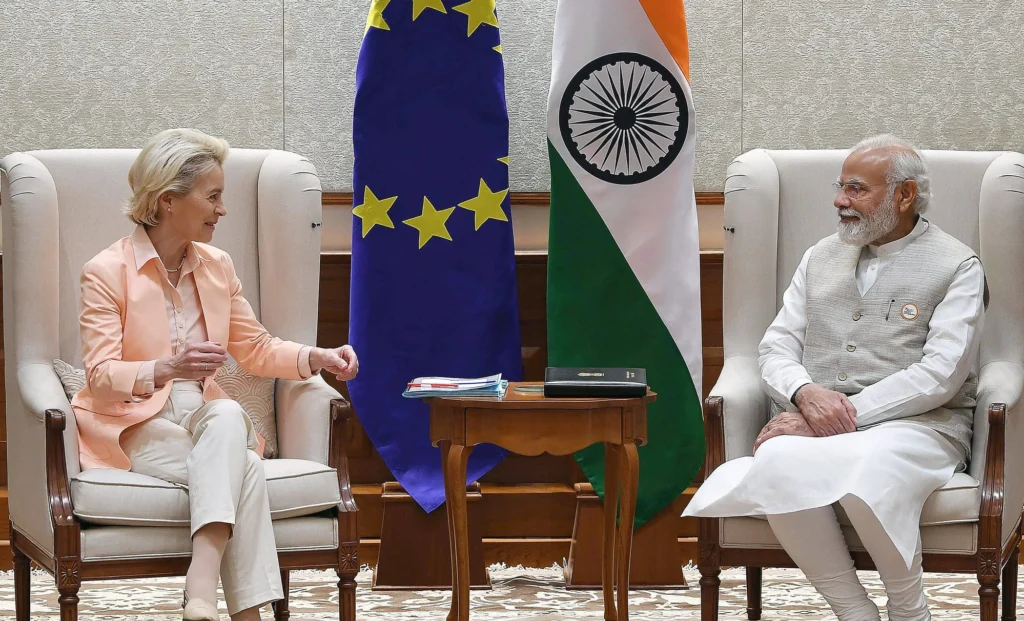
Von der Leyen’s comments suggest that both sides now see strategic urgency—not just economic advantage—in closing the deal.
A Long and Difficult Negotiation
Trade talks between India and the EU date back more than a decade. Negotiations were launched in 2007, stalled in 2013, and only formally resumed in 2022. The delays stemmed from disagreements over tariffs, market access, regulatory standards, and labour and environmental norms.
India has traditionally sought to protect sensitive sectors such as agriculture and dairy, while the EU has pushed for stronger commitments on sustainability, intellectual property rights, and labour standards. Bridging these differences has required political will on both sides.
The recent shift in tone suggests compromises may finally be taking shape.
What Could Be Included in the Agreement
While final details are yet to be made public, the proposed deal is expected to go far beyond tariff reductions. It is likely to cover goods, services, investment, digital trade, and regulatory cooperation.
Key areas of interest include automobiles, pharmaceuticals, textiles, chemicals, and machinery. The EU is also keen on expanding access for its services firms, while India wants greater mobility for skilled professionals.
Beyond trade, the agreement may include chapters on sustainable development, climate cooperation, and resilient supply chains—reflecting how modern trade deals increasingly extend into policy coordination.
Strategic Significance Beyond Economics
The agreement is not just about commerce. It also carries significant geopolitical weight. As the EU looks to diversify away from overdependence on China, India is emerging as a preferred strategic partner.
For India, closer ties with Europe strengthen its position as a global manufacturing and investment destination, aligned with its broader ambitions to play a leadership role in the global economy.
The deal also signals a shared commitment to rules-based trade at a time when multilateral systems like the World Trade Organization are under strain.
Political Momentum on Both Sides
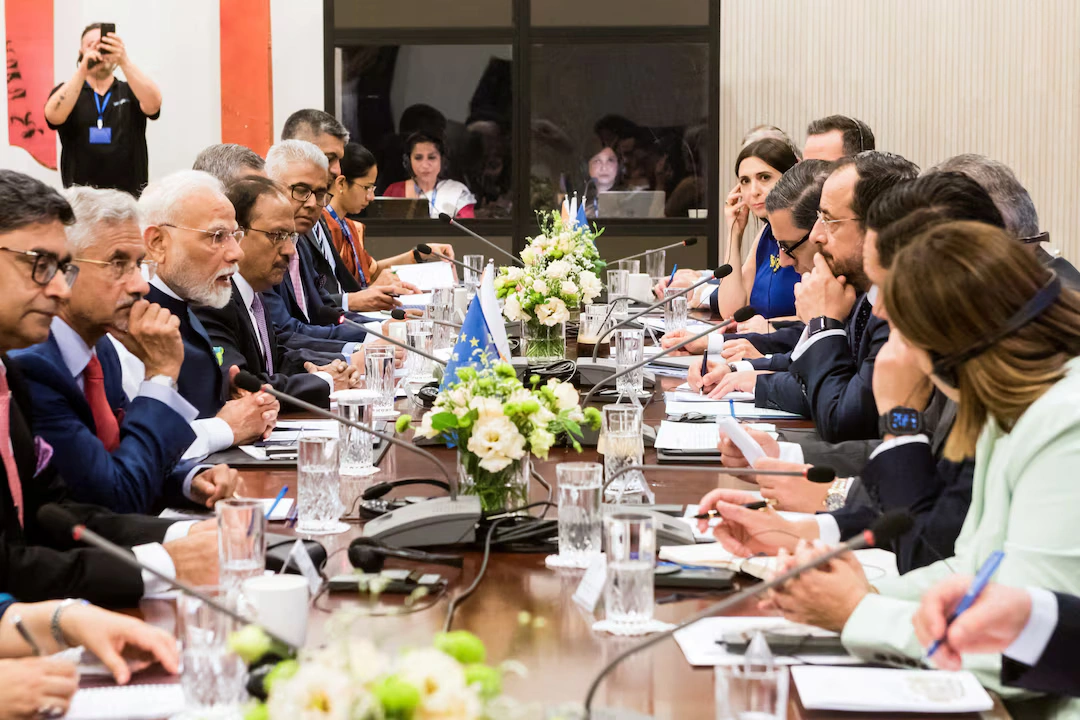
Political leadership has been a key factor behind the renewed momentum. Senior officials on both sides have held multiple high-level meetings in recent months, signalling seriousness about reaching an agreement.
Von der Leyen’s strong language suggests the European Commission is willing to invest political capital to push the deal through, even as EU member states balance domestic concerns.
On the Indian side, the government has increasingly shown openness to selective trade liberalisation, particularly when it aligns with long-term economic and strategic goals.
Challenges That Still Remain
Despite optimism, hurdles remain. Tariff reductions on automobiles and spirits remain sensitive issues. Regulatory alignment, especially around data protection and sustainability standards, could still prove contentious.
There is also the challenge of ratification. Any final agreement would require approval from EU member states and the European Parliament, where political opposition could emerge from groups concerned about labour rights, environmental impact, or domestic industry protection.
India, too, will need to balance export opportunities against concerns from local producers.
What It Means for Businesses
For businesses on both sides, a comprehensive trade agreement could unlock significant opportunities. European firms could gain easier access to India’s fast-growing consumer market, while Indian exporters could benefit from reduced tariffs and clearer regulatory pathways into Europe.
Sectors such as manufacturing, renewable energy, digital services, and pharmaceuticals stand to gain the most. Increased investment flows could also accelerate technology transfer and job creation.
For global companies, the deal could simplify operations across two major markets under a more predictable trade framework.
Timing and Global Context
The sense of urgency is amplified by global uncertainty. Trade wars, sanctions, and regional conflicts have exposed vulnerabilities in existing supply chains. Both the EU and India are seeking partners that offer scale, stability, and shared values.
Concluding a trade agreement now would send a strong signal that large democracies can still cooperate on ambitious economic integration, even as globalisation faces pushback.
A Potential Turning Point in EU–India Relations
If the agreement is finalised as expected, it would represent one of the EU’s most significant trade deals in recent years and India’s most ambitious bilateral economic partnership.
Calling it the “mother of all deals” is more than rhetorical flourish. It reflects the breadth of issues involved, the scale of the markets, and the strategic recalibration taking place on both sides.
Whether the optimism translates into signatures will depend on the final stretch of negotiations—but for the first time in years, a breakthrough appears genuinely within reach.
Click Here to subscribe to our newsletters and get the latest updates directly to your inbox