
President Trump’s Bold Move: Rebranding the Gulf of Mexico as the “Gulf of America”
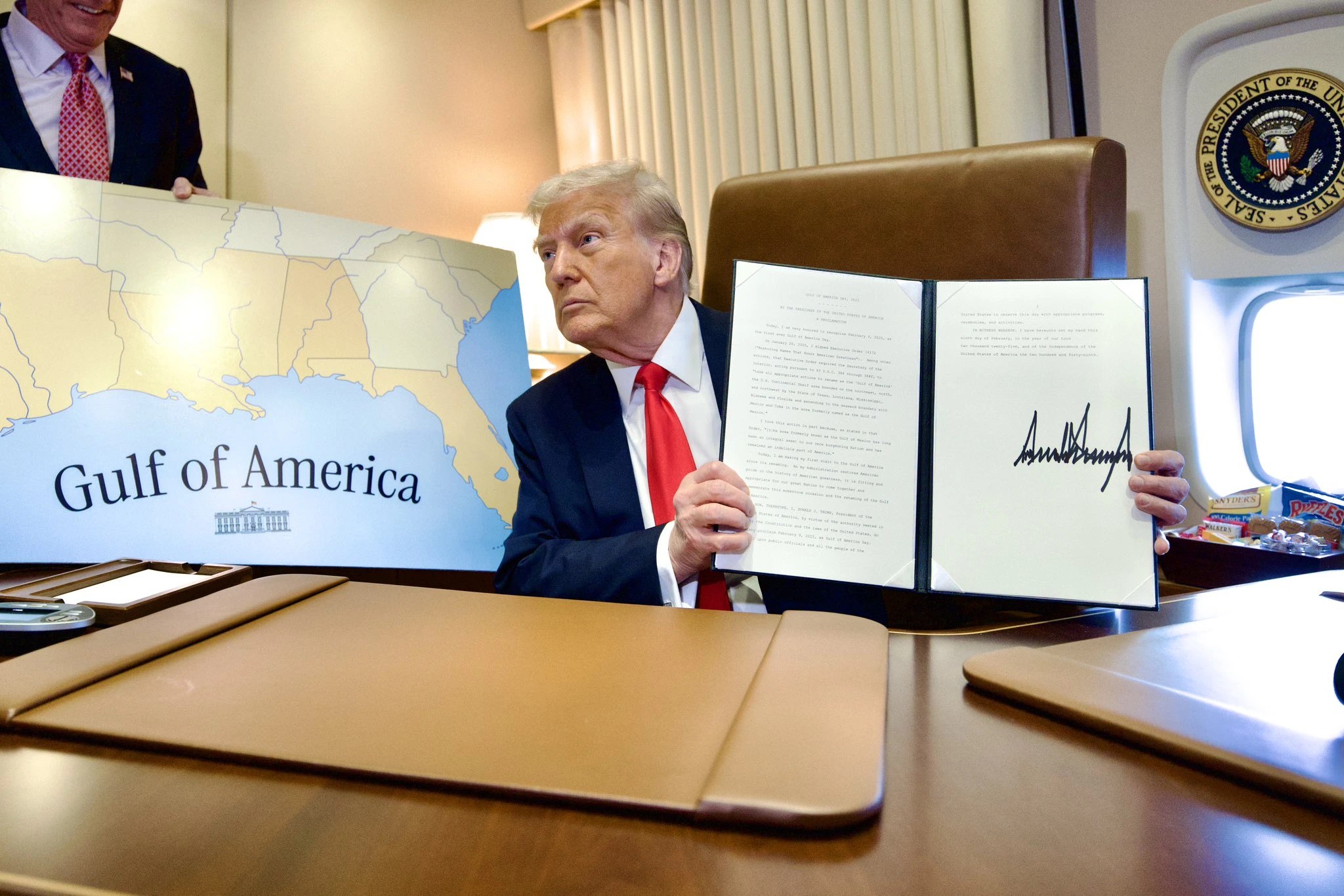
In a move that has both brought applause and outrage, former President Donald Trump recently signed a proclamation to rename the Gulf of Mexico as the “Gulf of America.” The decision was made public at a ceremony held at Mar-a-Lago surrounded by supporters and policymakers, which further adds another page to the history of President Trump’s legacy as a man who prioritizes symbolic nationalist gestures. While the administration frames the change as a celebration of American sovereignty, critics argue it’s a divisive act with far-reaching diplomatic and logistical consequences. Let’s unpack the implications, reactions, and historical context of this controversial decision.
The Proclamation: A Patriotic Gesture or Political Provocation?
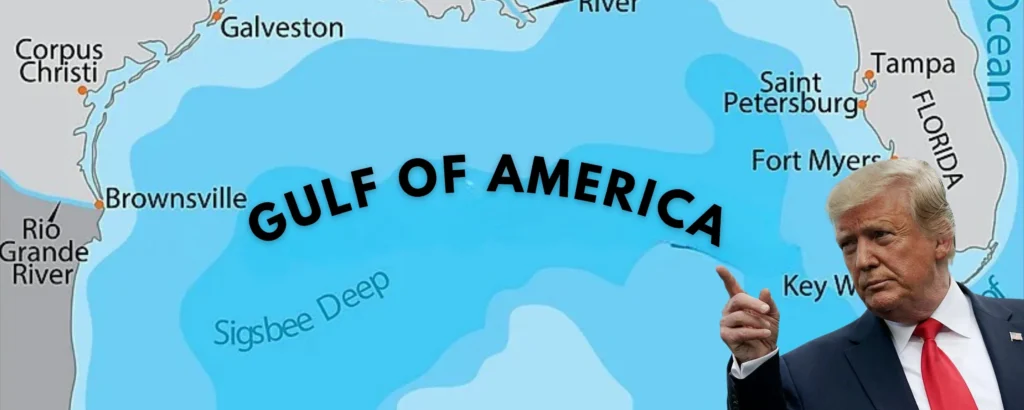
A body of water shared with Mexico and Cuba by the United States, the Gulf of Mexico has borne its name since the 16th century when European explorers charted the area. It comes from the Spanish Golfo de México, the name paying homage to Mexico’s coastline over more than 1,500 miles. With Trump’s declaration, he would reframe that history.
At the signing, President Trump briefed the audience in the Gulf to be a necessity for the strategy of the country, stating the fact that oil was sourced up to 30% from U.S. because it was needed as a hub for trade transactions and also brought security to America. “For too long, this vital American waterway has borne a name that doesn’t reflect our nation’s contributions, he said. “Today, we reclaim our heritage as a maritime power by honoring it as the Gulf of America.”
Supporters, including prominent figures like Senator Ted Cruz, hailed the move as “long overdue.” Conservative commentator Tucker Carlson called it “a win for American pride,” while Florida Governor Ron DeSantis praised the decision as a nod to the Gulf’s economic significance to states like Florida, Texas, and Louisiana.
International Backlash: Mexico’s Fury and Global Skepticism
As expected, Mexico acted swiftly and thoroughly. Its President Andrés Manuel López Obrador brands the step an “insult to our history and sovereignty” and said that it will be opposed with measures of diplomacy. Mexican Foreign Minister Marcelo Ebrard referred to the step as an “unilateral act of cultural erasure.” More than three centuries of Mexican stewardship over the resource and the ecosystem on the Gulf were the years he called attention to.
Beyond Mexico, the decision drew criticism from geopolitical analysts and international bodies. The United Nations expressed concerns over violating naming conventions, while Cuban officials labeled it “another example of U.S. imperialism.” Even U.S. allies, such as Canada and the EU, questioned the practicality of altering a centuries-old name recognized in international treaties and maritime law.
Historical Precedents: When Politics Renames Geography
Renaming geographical features for political reasons isn’t unprecedented. In 2016, Iran threatened legal action against airlines using “Arabian Gulf” instead of “Persian Gulf.” Similarly, Turkey’s push to rebrand the Eastern Mediterranean as “Mavi Vatan” (Blue Homeland) reflects nationalist territorial claims.
From the historical perspective, St. Petersburg turned out to be Petrograd in 1914 for it was carrying with German connotations, and Bombay turned into Mumbai in 1995 to regain an identity with indigenous origins. However, these changes came at the hands of the nations involved with the names. Trump’s declaration is across a shared international waterway without a modern-day counterpart.
Hurdles Legal and Logistical: Will the Name Stick?
Legally, the U.S. Board on Geographic Names (BGN) oversees domestic place names, but international bodies like the International Hydrographic Organization (IHO) govern maritime nomenclature. While the U.S. could adopt “Gulf of America” federally, global recognition is unlikely without Mexico’s consent.
Practically, it will cost a fortune to update maps, textbooks, and navigation systems. Google Maps, NOAA charts, and even school curricula would have to be changed, according to one logistics expert who described this as “a bureaucratic nightmare.” Maritime businesses also fear that there will be confusion in shipping contracts and insurance policies, which are attached to the current name of the Gulf.
”Stay ahead of the curve—subscribe now for expert insights and latest news –>Click Here