
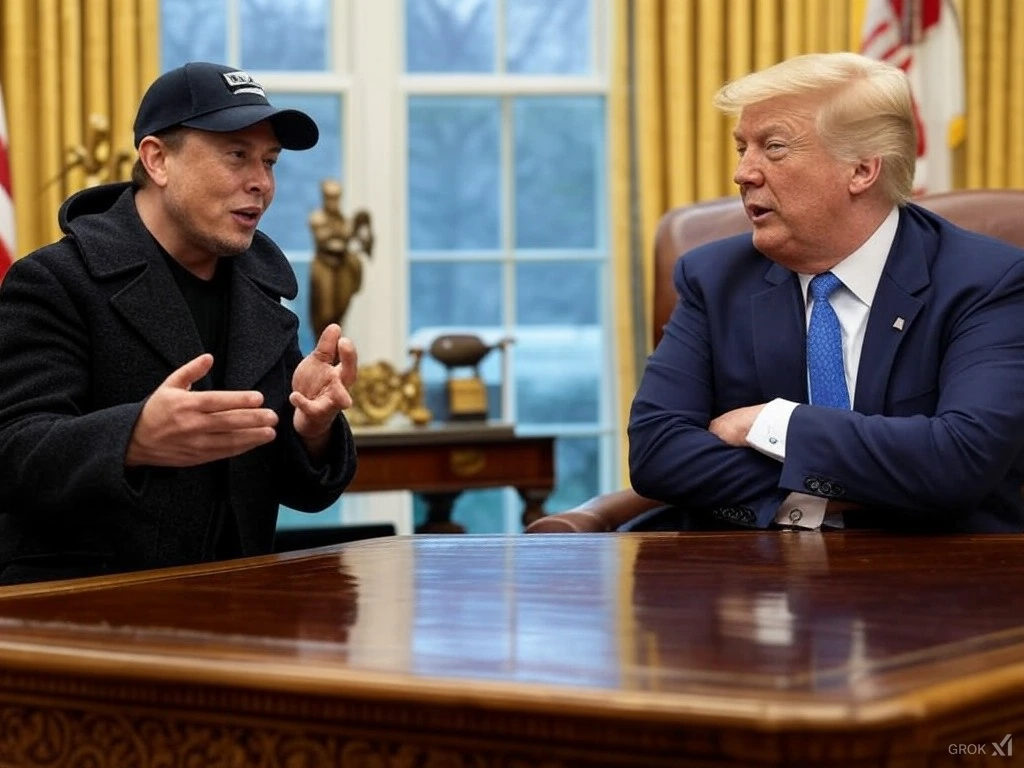
Trump and Musk Overhaul IS Bureaucracy: A Beginner’s Guide to Reset Federal
In recent history, the U.S. federal government has undergone transformations led by President Donald Trump and businessperson Elon Musk. The exercise has involved the laying off of approximately 10,000 federal workers, and it is a monumental change in the country’s administrative terrain. This handbook tries to provide a concise and informative overview of such changes, their reasons, and their likely influence.

The Formation of the Department of Government Efficiency (DOGE)
In September 2024, addressing the Economic Club of New York, President Trump indicated his aim to establish a “government efficiency commission” to review and re-define federal activity. This had been under consideration as a result of brainstorming with Elon Musk, who had offered to lead such a commission. In November 2024, it was established in the form of the Department of Government Efficiency (DOGE) with Musk at its helm.
Objectives of DOGE
DOGE’s main objective is to conduct a thorough financial and performance audit of the federal government. This entails reviewing areas of wasteful spending, duplicative programs, and inefficiencies. Its ultimate goal is to suggest and implement drastic reforms to eradicate duplications and excesses and make government leaner and cheaper.
The Layoffs: Scope and Execution
Targeted Workforce Reduction
As part of its mandate, DOGE launched a series of cuts in the federal workforce across various federal agencies. On February 14, 2025, over 9,500 federal employees were laid off, predominantly targeting probationary workers who had not yet achieved full civil service protections. The layoffs were shared across a number of departments, including Interior, Energy, Veterans Affairs, Agriculture, and Health and Human Services. citeturn0news23
Voluntary Buyout Programs
In addition to the outright firings, the administration initiated the “Fork in the Road” buyout program, which encouraged employees to resign voluntarily for cash payment. Approximately 77,000 employees participated in the program, but it failed to achieve the administration’s objective of a 10% decline in the federal workforce.
Motivations Behind the Overhaul
Addressing National Debt and Deficit
One of the primary drivers of these reforms is the increasing national debt, which stands at $36 trillion, and a $1.8 trillion deficit. The administration believes that reducing the number of federal workers and consolidating is an important first step toward economic stability and fiscal prudence.
Streamlining Government Operations
Apart from fiscal issues, there is a broader objective to streamline government functions. By cutting bureaucracy and embracing an “AI-first strategy,” the administration aims to enhance the responsiveness and effectiveness of federal services. The strategy has been criticized, however, as possibly resulting in overreach and undermining democratic processes
Reactions and Controversies
Internal Administration Tensions
Inside the White House, there have been also disagreements regarding how Musk has been conducting the overhaul. The senior aides such as Chief of Staff Susie Wiles have complained that Musk’s staff were not working and communicating with them in a coordinated way. Unilateral decisions being made and published publicly without first going through vetting have been part of the internal clashes.
Legal Challenges and Public Criticism
The rapid implementation of these reforms has been met with legal challenge and public outcry. Democrats and unions argue the layoffs and restructuring are an overreach of legislative authority and undermine essential public services. Federal judges have intervened in some cases, temporarily blocking some of the layoffs and restructuring actions, a testament to the controversial nature of the program.
President Trump’s and Elon Musk’s partnership in transforming the U.S. federal bureaucracy is a sweeping and polarizing move to reform government processes. While intended to lower debt and make it more efficient, the plan and the speed of implementation have triggered ferocious backlash, court cases, and doubts about the fate of public services and democratic governance. As the reforms continue to shape themselves, their complete import on the political and bureaucratic terrain of the country will increasingly become clear.
Click Here to subscribe to our newsletters and get the latest updates directly to your inbox