
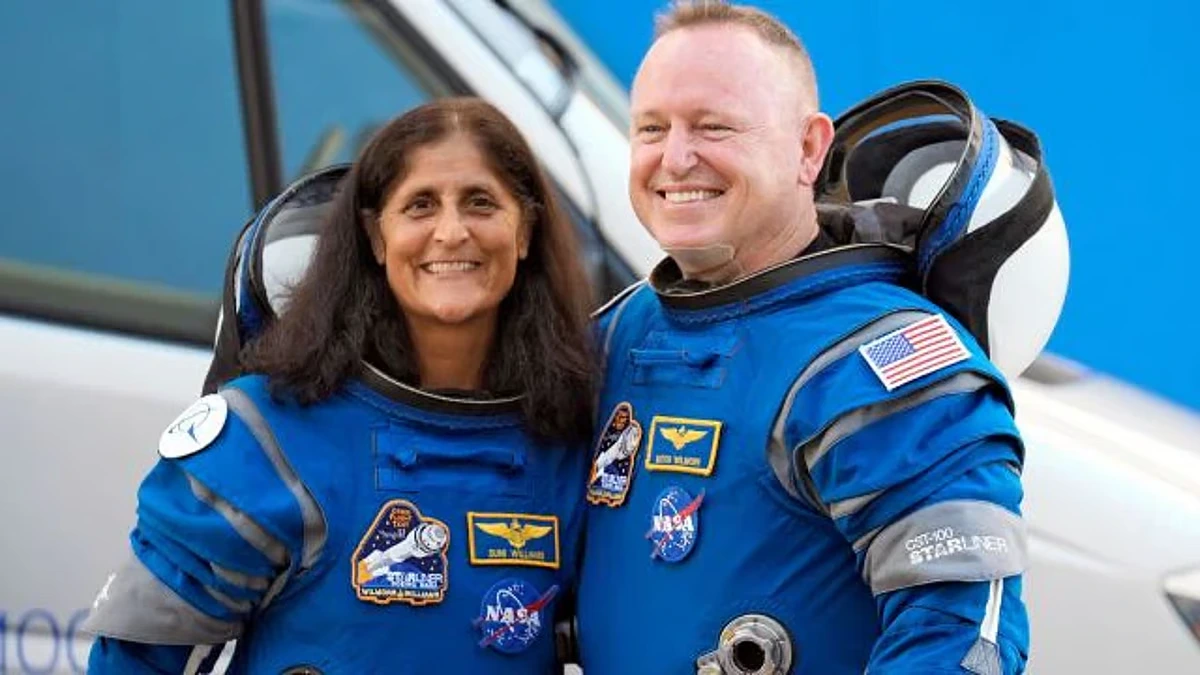
Sunita Williams’ Historic Return: How to Watch the SpaceX Crew-9 Splashdown Live
Historic Return Home: Sunita Williams’ Journey from Space to Earth after 286 Days in Space
After a record-breaking 286-day stay on the International Space Station (ISS), NASA astronauts Sunita Williams and Butch Wilmore are to return to Earth, ending one of the longest crewed missions in history. The pair, being a part of NASA’s SpaceX Crew-9 mission, detached from the ISS on the Crew Dragon spacecraft on Tuesday at 1:05 AM EST (10:35 AM IST) for a 17-hour journey that will conclude in a splashdown off Florida’s coast. Reserved at 5:57 PM EST on Tuesday (3:27 AM IST on Wednesday), the event is not only a conclusion to an orbital marathon but also showcases the endurance of human space exploration.
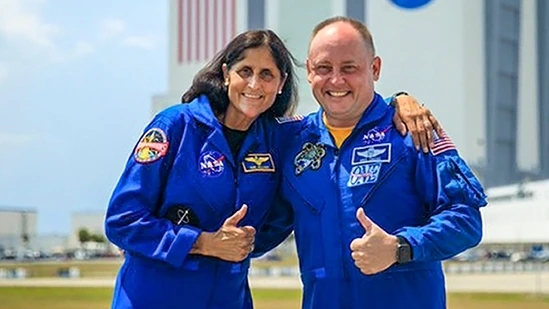
Countdown to Splashdown: Key Timings and How to Watch Live
NASA has rolled out comprehensive live coverage for this historic return, ensuring space enthusiasts worldwide can witness the Crew Dragon’s fiery re-entry and ocean landing. Key timings include:
- Hatch Closure Preparations: Coverage begins at 10:45 PM EST on Monday (8:15 AM IST on Tuesday), detailing final checks before undocking.
- Undocking: Successfully completed at 1:05 AM EST (10:35 AM IST Tuesday).
- Re-Entry and Splashdown: Live streaming starts at 4:45 PM EST (2:15 AM IST Wednesday), with the capsule expected to hit the Gulf of Mexico at 5:57 PM EST (3:27 AM IST Wednesday).
Viewers can tune in via NASA TV, NASA+, the agency’s YouTube channel, or its official website. The broadcast will feature expert commentary, real-time telemetry, and stunning visuals of the spacecraft’s descent.
The Crew Dragon’s Voyage: A 17-Hour Journey Through the Cosmos
The return of the Crew Dragon is an expertly choreographed engineering and physics ballet. After undocking, the capsule spent hours separating from the ISS, followed by a vital deorbit burn to slow down and align its path with the Earth’s atmosphere. When re-entering the atmosphere, the spacecraft will face temperatures of more than 3,500°F (1,927°C) as it plunges through the atmosphere at 17,500 mph (28,000 km/h). It will be slowed by four parachutes to splash down softly at 15-20 mph (24-32 km/h).
“Every second counts,” said a NASA flight director. “From undocking to splashdown, precision is key to safeguarding our crew.”
Behind the Scenes: NASA’s Decision to Adjust the Return Schedule
Originally scheduled for Wednesday, the flight was advanced one day due to adverse weather, including high winds and rough seas in the Gulf of Mexico. NASA’s flight crews prefer “weather-ready” windows to limit risks on recovery activities. “Safety drives all our decisions,” emphasized NASA’s Commercial Crew Program manager, Steve Stich. “We prefer to shift timelines rather than compromising the safety of our astronauts.”.
Sunita Williams: A Trailblazer’s Legacy in Space Exploration
Sunita Williams, at age 58, records another benchmark in her illustrious career. Having logged two prior ISS missions, she is the record holder for most cumulative spacewalk time by a female (50 hours and 40 minutes). On this flight, she helped with more than 200 science experiments, such as research on the effects of microgravity on aging and plant growth. Williams, of Indian-Slovenian descent, is now an international icon, motivating millions with her motto: “Dream big, work hard, and stay curious.”
Colleague astronaut Butch Wilmore, a retired Navy captain, supplemented her skills with his engineering experience, keeping the ISS’s systems running smoothly during their time.
Challenges of Re-Entry: The Science Behind a Safe Splashdown
Re-entry into the Earth’s atmosphere is one of the most dangerous stages of space travel. The heat shield of the Crew Dragon, composed of next-generation carbon composite materials, has to resist intense thermal stress. At the same time, onboard computers control the capsule’s angle to avoid overheating or skipping off the atmosphere—a process that might toss the vehicle back into space. Upon passage through the atmosphere, precise parachute deployment is essential. A 2020 test failure resulted in a parachute failure, which led SpaceX to redesign its systems—a reminder of the high stakes.
Global Eyes on Florida: The Significance of Crew-9’s Mission
Crew-9 mission illustrates the achievement of NASA’s Commercial Crew Program, which collaborates with private industry partners such as SpaceX to save money and increase innovation. Such collaboration has transformed the way people travel into space, made longer missions possible and encouraged international collaboration. ISS, an icon of world unity, depends on such missions to continue its function from climate research to planning for future Mars missions.
How to Tune In: Platforms and Tips for Viewing the Splashdown
To catch the action live:
- NASA TV: Available on the agency’s website and cable/satellite providers.
- NASA+: A free streaming service offering ad-free coverage.
- YouTube: NASA’s official channel provides high-definition streams with live chat.
- Social Media: Follow NASA and SpaceX on X (formerly Twitter) for real-time updates.
Pro tip: Set reminders for the splashdown timeline, as re-entry visuals—especially the plasma trail created by superheated air—are a breathtaking spectacle.
What’s Next for NASA and SpaceX? The Future of Crewed Missions
With Crew-9 back on Earth, NASA and SpaceX turn their attention to future missions, including Crew-10 and the Artemis mission for lunar exploration. Breakthroughs developed on this mission, such as enhanced life-support systems and radiation protection, will be used for future deep-space missions. SpaceX is meanwhile perfecting its Starship rocket, intended to support eventual Martian colonization.
Celebrating a Milestone in Human Spaceflight
Sunita Williams and Butch Wilmore’s return is not just a technical achievement—it’s an ode to human determination and curiosity. As viewers all over the world witness the Crew Dragon landing, we’re reminded of humanity’s ability to do great things when science, bravery, and teamwork come together. For Williams, this homecoming is both an end and a new start: “Space teaches you to appreciate Earth,” she once said. “But it also makes you want to get back to the stars.”
Tune in, witness history, and join millions in applauding the giants who dare to explore the unknown.
Click Here to subscribe to our newsletters and get the latest updates directly to your inbox