
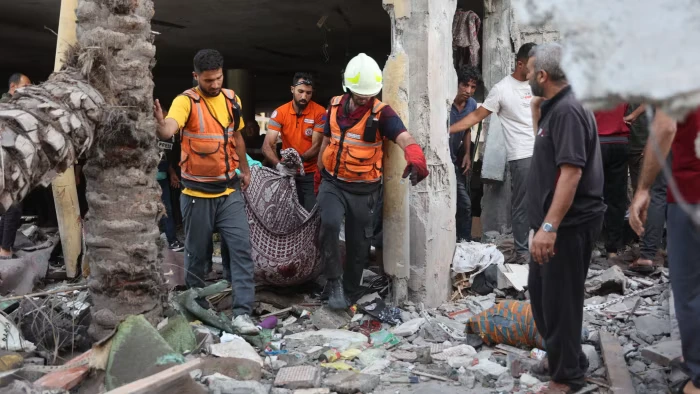
Escalation in Gaza: Israeli Airstrikes Kill 326 in Deadliest Assault Since Ceasefire
During the early hours of Tuesday, Israeli air raids destroyed the Gaza Strip, killing a minimum of 326 Palestinians, including more than 120 children and 80 women, Gaza’s Health Ministry reported. This is the deadliest one-day attack since a fragile ceasefire went into effect on January 19, disintegrating amid stalled talks and heightened violence. The bombing, which Israel said was meant to target Hamas infrastructure, has rekindled international outrage and exacerbated one of the deepest humanitarian crises in contemporary history.
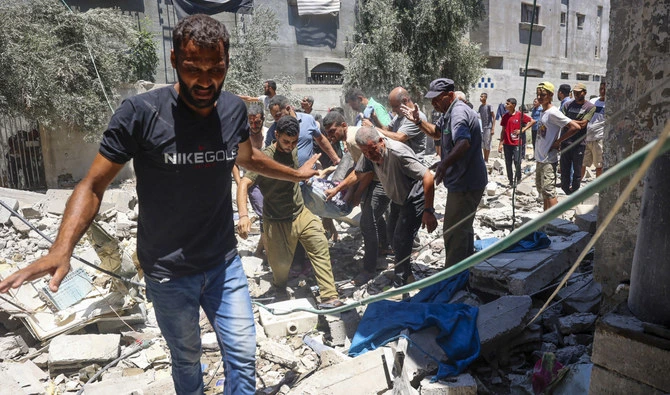
Details of the Attack: Urban Centers Reduced to Rubble
The Israeli military launched a multi-front attack on Gaza, hitting residential neighborhoods, refugee camps, and critical infrastructure. Rafah, Khan Younis, and Gaza City were worst affected. In Rafah’s Tal al-Sultan district, a row of displaced family homes was flattened, and 47 died. “We pulled bodies from the rubble all night—children, mothers, whole families,” said Ahmed Abu Selmia, a Gaza Civil Defense volunteer.
Survivors described images of chaos. “The sky turned orange and the ground shook. My neighbors were screaming for help, but nobody could reach them,” Mariam Al-Khatib, a three-child mother from Deir al-Balah, explained. Hospitals, already filled to 300%, were struggling to triage victims. Doctors at Al-Aqsa Martyrs Hospital in downtown Gaza described bad burns and amputations due to collapsed buildings.
The Israeli Defense Forces (IDF) stated that the mission targeted Hamas command centers, rocket launch sites, and tunnels. “We struck 120 terror targets overnight, including weapons storage facilities and operatives’ hideouts,” said IDF spokesperson Lt. Col. Peter Lerner. But satellite imagery reviewed by Amnesty International showed there were strikes less than 50 meters from UN-run schools housing displaced families.
Ceasefire Collapse: From Truce to Turmoil
The Egyptian-Qatari-mediated January 19 ceasefire had put on hold a three-month Israeli attack that was launched in response to Hamas’ October 7 attacks, which killed 1,200 Israelis. The truce had daily humanitarian breaks and prisoner exchanges but fell apart over irreconcilable differences: Israel demanded that Hamas disarm, while Hamas demanded a permanent ceasefire and full Israeli withdrawal from Gaza.
Efforts to rekindle the talks collapsed last week. A Hamas delegation left Cairo in anger blaming Israel for “negotiating in bad faith,” and Israeli Prime Minister Benjamin Netanyahu vowed to “annihilate Hamas, whatever the cost.” The US-backed strategy for incremental ceasefire and hostage exchange collapsed, as Netanyahu rebuffed Hamas’ refusal to relinquish political control of Gaza.
Humanitarian Catastrophe: No Safe Haven
Medical Infrastructure Collapse
Gaza’s healthcare system, decimated by months of siege, is nearing total collapse. Only 12 of 36 hospitals remain partially functional, with severe shortages of anesthesia, antibiotics, and blood bags. At Al-Shifa Hospital, Dr. Marwan Al-Hams reported performing surgeries by flashlight. “We’re using vinegar as disinfectant. Patients are dying from infections, not just wounds,” he said.
Displacement and Desperation
Over 1.7 million Gazans—75% of the population—are now internally displaced, many sheltering in overcrowded tents or UN schools. The UN Relief and Works Agency (UNRWA) warned that famine looms, with 90% of families skipping meals daily. “My children cry for bread, but I have nothing to give them,” said Um Mohammed, displaced in Rafah.
Children in the Crossfire
UNICEF reports that 600,000 children in Gaza face “catastrophic levels of deprivation.” Schools have been closed for months, and 85% of children show signs of severe psychological trauma. “They flinch at the sound of birds—they think it’s another drone,” said a teacher in Jabalia.
International Outcry: Divisions and Double Standards
UN Security Council Deadlock
Gaza’s healthcare system, decimated by months of siege, is nearing total collapse. Only 12 of 36 hospitals remain partially functional, with severe shortages of anesthesia, antibiotics, and blood bags. At Al-Shifa Hospital, Dr. Marwan Al-Hams reported performing surgeries by flashlight. “We’re using vinegar as disinfectant. Patients are dying from infections, not just wounds,” he said.
Global Civil Society Reacts
Human Rights Watch charged that Israel was employing starvation as a weapon of war by imposing limits on aid-laden trucks. Protests flashed around the world—from London to Jakarta—with protesters crying “Free Palestine” and “Ceasefire Now.” Progressive lawmakers in the U.S. launched legislation to suspend military aid to Israel, although it has little chance of becoming law.
Regional Escalation: A Tinderbox Ignites
The fighting has the potential to escalate into a regional war. Hezbollah has launched 60 rockets at northern Israel, and IDF aircraft responded with strikes on southern Lebanon. Houthi rebels in Yemen said they stood with Gaza, threatening Red Sea shipping lines unless Israel ceases its assault. The U.S. Navy sent more ships into the area, indicating it is prepared to defend against Houthi aggression.
Calls for De-escalation: Diplomacy on Life Support
Egypt and Qatar are racing to broker, offering a three-day humanitarian ceasefire to enable aid delivery and hostage negotiations. Hamas, however, is calling for guarantees of a permanent ceasefire, while Israel is calling for the release of all remaining hostages before negotiations.
Palestinian Authority President Mahmoud Abbas called on the ICC to speed up its war crimes probe, accusing Israel of “deliberate targeting of civilians.” ICC Prosecutor Karim Khan acknowledged his staff is collecting evidence but is running into logistical challenges because of the blockade.
A Cycle of Violence with No Endgame
While Gaza is laying to rest its dead, the way to peace remains shrouded. Netanyahu’s government, with its dependence on hard-right coalition allies, is under domestic pressure to press on with the attack. The exiled Hamas leadership, however, perceives survival as resistance, counting on foreign pressure to pressure Israeli concessions.
The inaction of the international community continues to fuel the bloodshed. Absent a political resolution to underlying causes—occupation, blockades, and Palestinian self-determination—the cycle will continue. For Gaza’s 2.3 million people, hope is a war casualty. While the world deliberates, they live a nightmare with no dawn in view.
Click Here to subscribe to our newsletters and get the latest updates directly to your inbox