
Helicopter Engaged in South Korean Wildfire Response Crashes in Uiseong
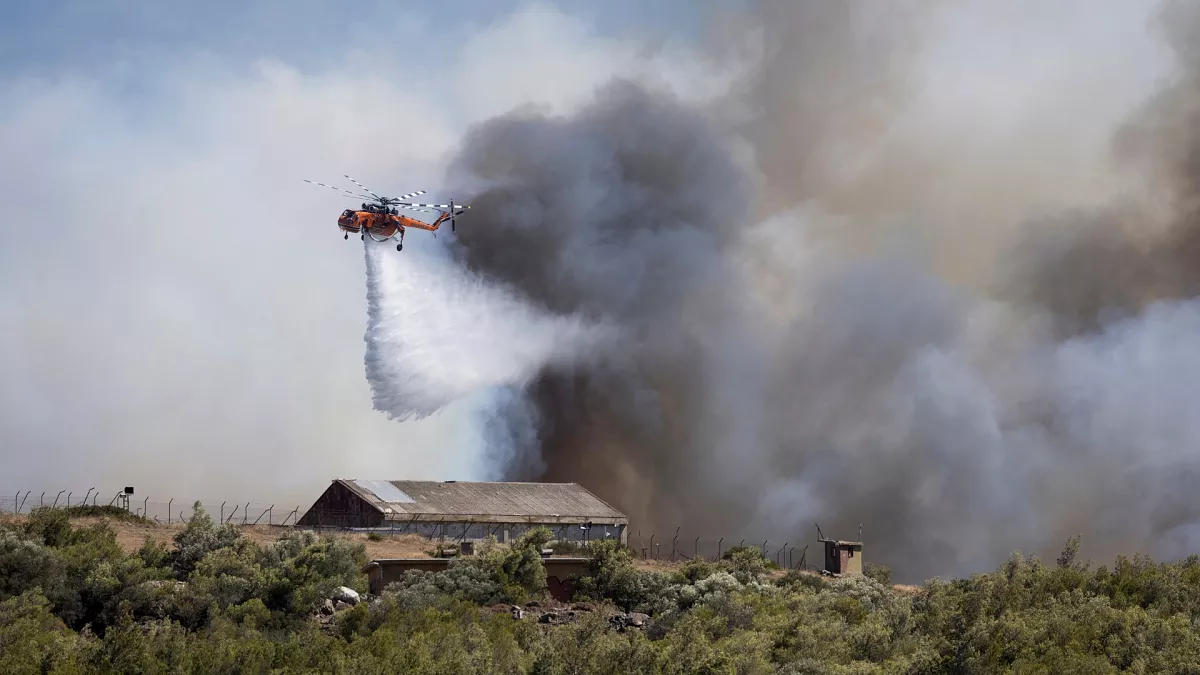
A helicopter sent to fight out-of-control wildfires in southeastern South Korea crashed on Wednesday, officials said, as a tragic setback in the fight to contain blazes that are endangering villages and forests. The Korea Forest Service said the accident took place in Uiseong, a countryside town in North Gyeongsang Province, where firefighters have been fighting fires stoked by parched conditions and blustery winds. Rescue efforts are currently underway at the site of the crash, though the condition of the pilot remains unreleased. Preliminary information indicates that a solo pilot manned the plane, with no other crewmembers on board. The incident highlights the danger involved with air tanker attacks and the immediate concerns surrounding safety measures as climactic catastrophes continue to spread throughout the world.
The Incident: A Race Against Time
Wildfires erupted in Uiseong early this week, fed by record temperatures and dry conditions—a pattern linked to climate change in South Korea. The blaze had already consumed hectares of woodland by Wednesday and endangered nearby villages, with troops and aircraft deployed. The helicopter, of the Korea Forest Service’s disaster relief team, was carrying out water drops to contain the conflagration when it crashed.
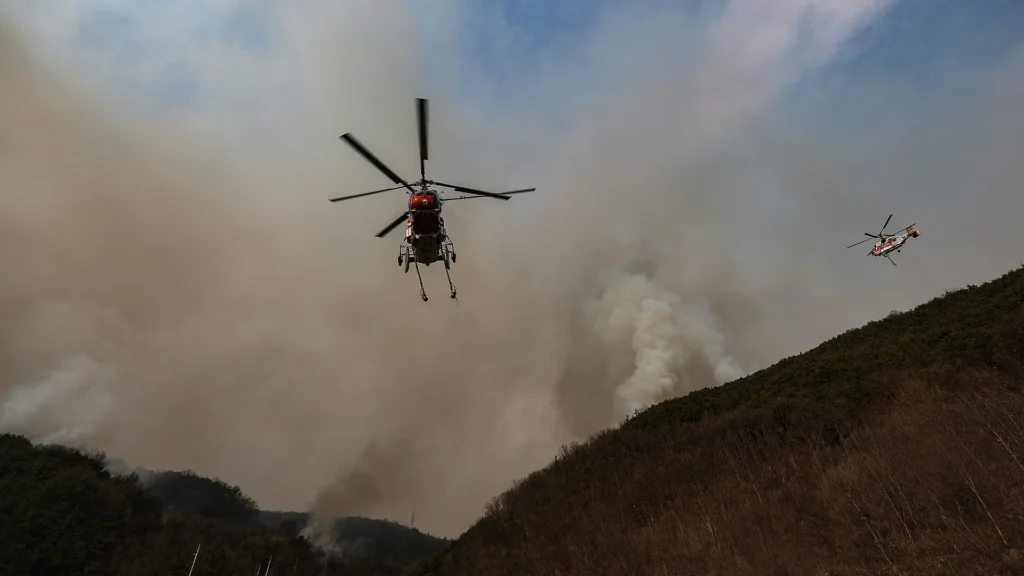
Witnesses reported seeing the plane drop suddenly before being consumed by a smoke-filled hillside. “There was so much smoke, you couldn’t look up and see the sky,” said local Park Min-ho, evacuating his family at the time. Responders were doubled-up in efforts: navigating treacherous terrain to reach the wreck site while continuing efforts to contain the wildfire from burning more lands.
The cause of the crash remains unclear as of Thursday morning. Mechanical failure, pilot disorientation due to poor visibility, or sudden changes in the wind—a common risk in air firefighting—have not been ruled out by the authorities. A probe has been launched by the Korea Forest Service with the help of aviation officials and has identified that recovery of the flight data recorder of the plane will be crucial in determining the reason behind the accident.
Aerial Firefighting: High-Risk Heroism
Helicopters are essential tools in fire fighting, capable of making precise water drops into remote locations. South Korea’s mountainous landscape, which covers nearly 70% of the nation, makes aerial operations particularly vital. But the job is dangerous. Pilots must fly low through the churning columns of smoke, searing heat, and erratic gusts—flying heavy loads of water or fire retardant.
“It’s among the most dangerous civilian aviation jobs,” says retired fire-fighting pilot Captain Lee Ji-hoon, who flew for more than 15 years. “Within seconds, the visibility can reach zero, and a gust of wind can spin the plane. It’s always a gamble against physics.” Both home-made and imported helicopters constitute the South Korean fleet, though older equipment and gaps in maintenance have intermittently provoked criticism. In 2019, a government report revealed “inconsistent safety checks” in the Forest Service’s aerial activities, though officials claim that reforms ensued.
Aircraft crashes of firefighting helicopters are unfortunately common all over the world. One took place in Turkey in 2021 and killed eight crew members, and California had multiple aviation incidents throughout its 2020 fire season. South Korea’s most recent serious large-scale firefighting helicopter crash occurred in 2012 when two pilots died in Gangwon Province.
Uiseong Wildfires: A Climate Warning
The Uiseong fire is the most recent in a series of wildfires exacerbating South Korea’s exposure to climate change. The nation has seen a 30% rise in extreme fire-risk days since the last decade, based on the National Institute of Forest Science. Spring, historically a dry period, has become warmer and longer, while winter snowpack has melted sooner and left forests on tinder footing.
President Yoon Suk Yeol, addressing the disaster Wednesday, pledged “all available resources” to protect lives and property. Over 500 firefighters, 40 vehicles, and six helicopters have been mobilized, with the military placed on standby. Yet residents criticize response times, arguing that rural areas like Uiseong lack adequate infrastructure to handle escalating disasters. “We’ve been asking for more firebreaks and equipment for years,” said Uiseong councilmember Kim Hye-jin. “But budgets always prioritize cities.”
The Human Toll: Sacrifice on the Frontlines
While the pilot’s status remains unclear, the accident has brought attention to the risks faced by those responding to wildfires. Firefighters and pilots often work 16-hour days during tragedies, getting little rest between missions. Mental illness, including PTSD, is prevalent but rarely openly discussed due to stigma.
“Those crews are heroes, but they are not invincible,” says Dr. Seo Eun-kyung, a trauma psychologist specializing in disasters. “The physical exhaustion, the shock of seeing devastation—it takes no training can fully prepare them for.” South Korea’s fire departments have begun introducing mental health support programs, but activists call for more root-level reforms, such as better pay and advanced safety technologies like real-time terrain awareness and artificial intelligence-based flight systems.
Investigation and Accountability
As rescue teams work at the crash site, eyes turn to accountability. The Korea Forest Service is being asked if maintenance breakdowns or procedural errors caused the accident. Aviation experts point out that helicopters used in fire suppression require aggressive, specialty maintenance due to the strain of heavy lifting and heat-and-corrosive ash exposure.
“Aircraft are not taxis—they’re subject to extreme stress,” says aviation engineer Choi Min-jae. “A single missed inspection on a rotor blade or an engine valve can be catastrophic.” South Korea’s Transport Ministry has vowed to inspect all its firefighting helicopters nationwide, while opposition lawmakers demand parliamentary hearings.
Global Lessons in an Era of Megafires
The Uiseong crash has echoes far beyond South Korea. With climate change speeding up wildfire occurrence and intensity, nations everywhere are trying to weigh rapid response against crew safety. Australia’s 2019–2020 “Black Summer” fires saw over 200 aircraft, including massive air tankers, deployed, and Canada’s record 2023 season prompted calls for global pilot-sharing arrangements to alleviate pressure.
Technological innovations, such as drone monitoring and AI fire prediction systems, could reduce risk to human crews. But finances and deployment lag behind in most regions. “We are fighting 21st-century disasters with 20th-century machinery,” warns climate policy expert Dr. Han Ji-woo. “Without immediate investment in technology and human capital, such tragedies will keep on repeating themselves.”
Community Resilience and the Road Ahead
In Uiseong, meanwhile, the short-term priority is to contain the wildfire and find the pilot of the crashed helicopter. But for survivors, recovery will take a long time. Wildfires leave enduring wounds—ravaged ecosystems, agricultural economies damaged in financially reliant towns, and emotional trauma.
Local non-governmental organizations and national agencies are working together to provide relief, including temporary shelter and economic assistance to displaced families. Environmental organizations meanwhile call for anticipatory action, such as planting fire-resistant tree species and establishing community-based fire response networks. “We can’t prevent every disaster,” activist Kang Soo-bin says, “but we can create systems that reduce damage and save lives.”
Honor the Fallen, Protect the Living
The South Korea firefighting helicopter crash is a stark reminder of the human price of climate-related disasters. While authorities work to determine the cause, the larger imperative is obvious: countries need to ensure that they prioritize not just sophisticated firefighting tactics but also the health and safety of those who brave the front lines.
For the moment, Uiseong residents wait for answers—and for their pilot’s safe return. In Mayor Jeong Tae-sik’s words: “This tragedy must galvanize us to do better. For the brave souls who fight our fires, and for the communities they vow to protect.”
Click Here to subscribe to our newsletters and get the latest updates directly to your inbox.