

Global Outcry Erupts as Canada’s PM Slams Trump’s Auto Tariffs: A Deep Dive into International Reactions
U.S. President Donald Trump’s announcement this week of sweeping 25% tariffs on imported cars and auto parts, which Canadian Prime Minister Mark Carney called a “direct attack” on Canada, rocked the world economy. World leaders have strongly condemned the tariffs, which are scheduled to go into effect on April 3, rekindling concerns about a protracted trade war. This blog analyzes the growing backlash, from Ottawa to Berlin, Tokyo to Mexico City, and looks at how countries are getting ready to respond, negotiate, or weather the storm as markets tremble and diplomats rush.
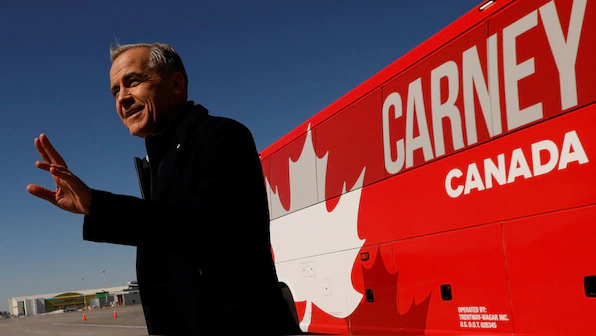
Canada’s Defiant Stand: Carney’s “Direct Attack” Declaration
During a contentious election campaign, Prime Minister Mark Carney quickly denounced Trump’s tariffs as an insult to Canada’s economy and its long-standing trade relationship with the United States. Carney declared, “This is not just a policy disagreement—it’s a direct attack on Canadian workers, businesses, and our shared prosperity,” and he promised to stand up for Canadian interests “without hesitation.”
Why Canada Is Hit Hard
With more than $50 billion in yearly exports, Canada is the biggest supplier of automobiles and auto parts to the United States. Large automakers like Ford and General Motors depend on cross-border integrated supply chains, where parts frequently cross several times before being assembled. This symbiosis could be upset by the tariffs, which could result in job losses in Quebec’s parts industry and Ontario’s manufacturing heartland.
Political Calculus
Voters respond favorably to Carney’s forceful rhetoric as elections draw near. His promise of “dollar-for-dollar” retaliation is similar to Canada’s 2018 steel tariff response, in which Ottawa levied $12.8 billion in counter-tariffs on American products like dairy, whiskey, and orange juice. This time, targets might broaden to include industries vital to Republican-leaning states, like agriculture or aerospace.
Statements from Industry
The largest auto union in Canada, Unifor, issued a warning about “catastrophic” effects, while the Canadian Vehicle Manufacturers’ Association advocated for discussion rather than escalation. However, Carney’s administration is under pressure to take decisive action while striking a balance between political posturing and economic pragmatism.
European Union: Unity in Outrage
The EU, which is already involved in a sour trade dispute with the US over steel, condemned the auto tariffs as “economically damaging and legally questionable.” Indicating potential tariffs on popular American exports like bourbon, Harley-Davidson motorcycles, and agricultural products, European Commission President Ursula von der Leyen promised “swift and proportionate measures” if implemented.
Germany’s Alarm
Germany, the automotive powerhouse of Europe, is extremely vulnerable. Nearly 500,000 cars are exported to the United States each year by BMW, Mercedes-Benz, and Volkswagen, many of which come from factories in states that support Trump, such as South Carolina. German automakers employ more than 118,000 Americans, and Chancellor Olaf Scholz referred to the tariffs as “a betrayal of fair competition.”
France’s Strategic Push
“We cannot remain dependent on U.S. market whims,” President Emmanuel Macron said, framing the tariffs as a wake-up call for EU autonomy. Our need for an independent industrial strategy is accelerated by this. Behind the scenes, France is mobilizing support for EU-wide subsidies to increase the production of electric vehicles to challenge Chinese and American hegemony.
Asia’s Mixed Responses: From Diplomacy to Defiance
Japan’s Diplomatic Disappointment
Japanese Prime Minister Fumio Kishida voiced “deep concern,” pointing out that 24 plants run by Toyota, Honda, and Nissan in the United States support 1.6 million jobs. Japan may contest the tariffs at the WTO while discreetly pleading with U.S. officials for exemptions. Japan exports $40 billion worth of automobiles to the United States each year.
South Korea’s Quiet Leverage
By highlighting its 2018 renegotiated trade agreement with the United States, which already included auto concessions, Seoul adopted a conciliatory stance. Despite lawmakers’ warnings of “necessary measures” if its exports decline, Hyundai, which is investing $12.6 billion in U.S. EV plants, hopes to avoid criticism.
China’s Sharp Retaliation
Wang Wentao, the minister of commerce, promised to “defend Chinese interests with all necessary tools” after Beijing denounced the tariffs as “reckless unilateralism.” In addition to increased attempts to control EV markets, analysts forecast retaliatory tariffs on Boeing orders and U.S. agricultural exports (pork, soybeans).
Mexico: A Partner Caught in the Crossfire
Mexico, the second-largest supplier of auto parts in the United States, is severely disrupted. In reference to the 2020 trade agreement intended to stabilize North American trade, President Claudia Sheinbaum referred to the tariffs as “a betrayal of USMCA principles.” Mexico’s retaliatory actions might target American energy, dairy, or corn products, but Sheinbaum stressed communication: “We built USMCA to prevent this.” We won’t allow it to fall apart.
Industry Realities
40% of all U.S. auto imports come from Mexican factories, where well-known brands like Ford and GM are produced. Reshoring to the United States is still expensive and slow, and it runs the risk of causing supply chain chaos, but tariffs may force production shifts.
Historical Echoes: Lessons from Past Trade Wars
Trump’s tariffs bring to mind his trade wars in 2018 and 2019, which cost American consumers $19 billion a year and necessitated a $28 billion farm bailout. Although those tariffs put pressure on China, they also caused retaliation and alienated allies.
The 1980s Precedent
Lessons learned from the Reagan era tariffs on Japanese motorcycles and semiconductors are mixed: while they boosted consumer prices and strained relationships, they also protected certain industries. The globalized supply chains of today increase the risk of broad tariffs.
Economic and Political Fallout: What’s Next?
Market Jitters
Global auto stocks fell, with GM and Ford down 5% after the announcement. Inflation is made worse for consumers by price increases of 10–15% on imported automobiles.
Global Supply Chain Chaos
30,000 parts from more than 30 countries are needed for modern cars. Tariffs may force automakers to absorb losses or pass them on to customers, delay production, and raise costs.
Electoral Repercussions
Trump’s gamble could mobilize his supporters before elections, but it also runs the risk of offending moderates and import-dependent industries. On the other hand, Carney’s disobedience might help him in the close race in Canada.
A World on Edge
Prime Minister Mark Carney of Canada is leading the international outcry against Donald Trump’s auto tariffs. The threat of a full-scale trade war looms as countries consider retaliation, negotiation, or adaptation; such a conflict could destabilize economies, splinter alliances, and alter international trade standards. It is unclear if this crisis will lead to a shift toward protectionism or multilateral reform. The world waits, observes, and gets ready for the next move for the time being.
Click Here to subscribe to our newsletters and get the latest updates directly to your inbox.