

Iran Defies Trump’s Threats, Rejects Direct Nuclear Talks Amid Escalating Tensions
In a defiant response to U.S. President Donald Trump’s threat of military action, Iran’s newly elected President Masoud Pezeshkian has categorically rejected direct negotiations with the United States over its nuclear program. The announcement, made on Sunday, marks Tehran’s first formal reaction to Trump’s incendiary letter last week, in which he warned of a potential bombing campaign against Iran if it refuses to reengage in nuclear talks. While dismissing face-to-face diplomacy, Pezeshkian left the door open to indirect discussions mediated by Oman, a longtime regional intermediary. This high-stakes standoff underscores the fragility of global nonproliferation efforts and raises fears of a dangerous escalation in a region already teetering on the brink of conflict.
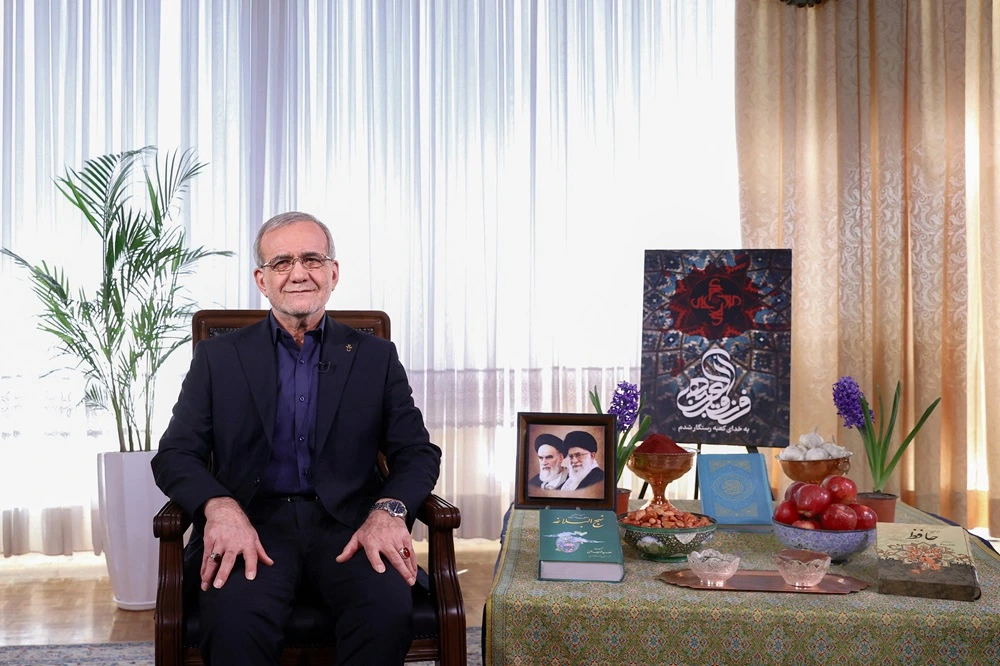
The Trump Ultimatum: A Threat of “Obliteration”
The crisis broke out on July 15, when Trump wrote a letter to Iranian leaders through Oman, saying he would “bomb Tehran into oblivion” if Iran did not come to immediate negotiations with the United States regarding its nuclear program. The letter, which Iranian authorities termed “reckless and provocative,” cited Iran’s recent uranium enrichment progress and accused the Islamic Republic of “dragging its feet” in restarting the 2015 Joint Comprehensive Plan of Action (JCPOA), known as the Iran nuclear deal.
Trump’s letter reactivated his administration’s “maximum pressure” tactics, which had previously included withdrawing from the JCPOA in 2018 and imposing crushing sanctions on Iran. But the direct threat of war represented a higher level of intensity. Experts interpret Trump’s bold stance as an attempt to strengthen his domestic political position in the lead-up to U.S. elections while forcing Iran to surrender to Washington’s demands.
Iran’s Response: No Direct Talks, But a Glimmer of Diplomacy
President Pezeshkian, a moderate who assumed office in June after the passing of hardliner Ebrahim Raisi, adopted a cautious but firm tone in his speech. “The days of bullying and threats are over,” he asserted. “Iran will not negotiate in the shadow of bombs.” He made it clear that Tehran is still committed to diplomacy but insisted any talks must honor Iran’s sovereignty and deal with the “illegal” U.S. sanctions that have ruined its economy.
Most importantly, Pezeshkian verified that Iran had sent a counteroffer to Washington via Oman, proposing indirect negotiations brokered by the Gulf sultanate. Oman, which was instrumental in clandestine U.S.-Iran talks that resulted in the initial JCPOA, has long been a self-styled impartial mediator in regional conflicts. The Omani foreign ministry verified that it had received Iran’s reply and vowed to “facilitate constructive dialogue.”
The Ghost of the JCPOA: A Deal in Tatters
To grasp the present standoff, one has to go back to the breakdown of the JCPOA. The 2015 deal, negotiated during the Obama administration, had Iran significantly reduce its uranium enrichment in return for sanctions relief. Trump’s withdrawal from the agreement and reimposition of sanctions—followed by Iran’s incremental abandonment of its obligations—left the deal in shambles.
Since 2021, attempts to restore the JCPOA under President Biden have hit a roadblock, each side blaming the other for bad faith. Iran is seeking assurances that future administrations in Washington will not leave it again, while Washington is demanding that Tehran first backtracks on its nuclear gains, including the enrichment of uranium to 60% purity—close to weapons-grade levels.
Trump’s recent threat complicates this standoff even further. “By threatening war, Trump has undercut the whole basis of diplomacy,” stated Trita Parsi, executive vice president of the Quincy Institute. “Iran can’t be viewed as negotiating under coercion, and the U.S. runs the risk of driving away allies opposed to another war in the Middle East.
Oman’s Role: Can Mediation Prevent Catastrophe?
Oman’s return as a mediator provides a tenuous glimmer of hope for de-escalation. The sultanate’s peculiar position—keeping good relations with both Iran and Western countries—has rendered it essential in previous crises. In 2013, Omani diplomats covertly traveled between Washington and Tehran for months, setting the stage for the JCPOA.
Yet today’s climate presents unprecedented challenges. Unlike ten years ago, Iran’s nuclear program is much more developed, and Tehran hardliners are more cynical about Western assurances. In the meantime, Trump’s belligerent style has provoked criticism even from European allies. French President Emmanuel Macron branded the threat of bombing “irresponsible,” and Germany’s foreign ministry called for “restraint on all sides.
Regional and Global Repercussions
The standoff has sent shockwaves across the Middle East and beyond:
- Israel’s Hardline Stance: Israeli Prime Minister Benjamin Netanyahu praised Trump’s “strength,” reiterating that “all options are on the table” to prevent a nuclear Iran. Israel has long advocated for military strikes on Iranian facilities.
- Gulf Arab Anxiety: Saudi Arabia and the UAE, despite their rivalry with Iran, fear a regional war could disrupt oil shipments and destabilize their economies. Both nations have quietly urged Washington to pursue dialogue.
- Russia and China’s Calculated Moves: Moscow and Beijing condemned Trump’s threat, with China’s foreign ministry urging the U.S. to “abandon its Cold War mentality.” Russia, meanwhile, has strengthened military and economic ties with Iran, supplying advanced drones used in Ukraine.
The Human Cost: Sanctions and Suffering
Aside from geopolitics, the crisis has inflicted a devastating impact on ordinary Iranians. U.S. sanctions have cut Iran’s oil exports by 90%, unleashed hyperinflation, and crippled healthcare imports. A 2023 UN report established that 40% of Iranians live under the poverty line, as cancer patients have died for want of medicines.
Foreigners say that they’re interested in human rights, but sanctions kill our kids,” Tehran nurse Parisa Mohammadi wrote. Though Pezeshkian has pledged to focus on economic growth, his power to do so relies on the release of sanctions—something that has yet to occur as tensions intensify.
Military Posturing: How Real Is the Threat of War?
Trump’s threat has set alarm bells ringing for a possible replay of the 2020 Iranian General Qassem Soleimani assassination that almost led to all-out war. Recent movements by the US military indicate a readiness for conflict:
- The Pentagon confirmed the deployment of B-52 bombers to Qatar.
- The USS Gerald Ford aircraft carrier strike group has been repositioned near the Strait of Hormuz.
- Israel conducted air defense drills simulating missile attacks from Iran.
Yet experts caution that a U.S. strike against Iran’s nuclear centers would be risky. “Iran’s nuclear centers are dispersed and bunker-hardened. A bombing campaign would delay, not destroy, their program—and trigger a regional war,” retired General David Petraeus cautioned.
Pathways to De-escalation: Is Diplomacy Still Possible?
Despite the rhetoric, avenues for dialogue persist:
- Omani Mediation: Indirect talks could allow both sides to save face. A potential first step might involve Iran freezing uranium enrichment at 60% in exchange for limited sanctions relief.
- EU Bridging Proposals: European nations, desperate to avoid another migration crisis fueled by war, are drafting incentives to revive the JCPOA, including escrow accounts for Iranian oil revenue.
- Backchannel Communications: U.S. and Iranian officials reportedly held secret talks in Oslo last month, though neither side has acknowledged progress.
A Test of Leadership in a Divided World
The U.S.-Iran confrontation is more than a two-way dispute—it is a test of international diplomacy in an age of resurgent authoritarianism and declining confidence. The test for Pezeshkian the president is to protect national honor while negotiating relief for his beleaguered people. For Trump, the risk is whether to play chicken and try to extract concessions without provoking disaster.
The eyes of the world are on Jerusalem, as lessons of the past hang heavy over us: War tends to be initiated by misjudgments, but peace takes courage, sacrifice, and foresight. According to UN Secretary-General António Guterres, “Dialogue is not a sign of weakness, but the only path to survival.”
Click Here to subscribe to our newsletters and get the latest updates directly to your inbox.