
Meta Whistleblower Accuses Company of Collaborating with China on Censorship
In a shocking congressional testimony, a former executive at Meta has emerged with damning accusations against the social media behemoth. Sarah Wynn-Williams, formerly Facebook’s worldwide public policy director, accused Meta of sacrificing U.S. national security in favor of an $18 billion Chinese business opportunity. Her testimony portrays a disturbing vision of the company’s interactions with the Chinese regime and has fueled controversies surrounding corporate accountability and international influence.
Serious Allegations at Capitol Hill
Wynn-Williams made her comments at a Senate judiciary subcommittee hearing on Wednesday. She alleged Meta leaders made deliberate choices to give the Chinese Communist Party access to information from Meta’s enormous user network — including American citizens.
Such decisions, she said, were part of Meta’s plan to grow its presence in China, where the company does not currently operate its core social products because of long-standing regulatory hurdles. Notwithstanding this, Wynn-Williams claims that Meta continued to seek business interests in the country, including advertising partnerships that potentially involved complying with Beijing’s severe censorship requirements.
Meta Pushes Back
Meta has strongly denied the claims. Company spokesperson Ryan Daniels said that Wynn-Williams’ testimony was “riddled with false allegations” and “divorced from reality.” He emphasized that CEO Mark Zuckerberg has been upfront about being interested in making inroads in China but reinforced that Meta presently doesn’t operate its services in the country.
But while Facebook and Instagram are blocked in China, Meta reportedly earns significant advertising revenue from Chinese companies seeking to reach overseas audiences. This business model has fueled suspicions that Meta may be treading a fine ethical line on the topics of content regulation and data privacy.
Alleged Collaboration with Beijing
Perhaps the most incendiary claim from Wynn-Williams’ testimony was that Meta collaborated “hand in glove” with Chinese officials to build censorship technology. That technology, she contended, was to stifle criticism of the Chinese Communist Party — even from outside China.
One of the most striking instances was that of Chinese dissident Guo Wengui, who lives in the United States. Wynn-Williams alleged Meta buckled under pressure from Beijing by suspending Guo’s Facebook account. The firm, however, said Guo’s page was suspended for breaking its Community Standards, and there was no outside influence on the decision.
Nevertheless, the symbolism of the gesture wasn’t lost on the public or lawmakers. “One thing the Chinese Communist Party and Mark Zuckerberg have in common is that they both want to silence their critics,” Wynn-Williams said to the committee. “I can say that from personal experience.
A Memoir Sparks Legal Battle
Wynn-Williams’ new memoir, Careless People, adds fuel to this drama. The memoir provides an insider’s perspective on her experience at Meta and contains a series of scathing criticisms of the company’s internal culture and global business.
Soon after release, Meta obtained an emergency court order to suspend her from advertising the memoir temporarily. The company branded the book as “false and defamatory,” claiming that it breached a separation agreement she entered into when she left in 2017.
The fight in court has provoked debate over how much freedom former employees have to comment on their experience, particularly when national security and public interest are involved.
Political Pressure and Legal Threats
Senator Josh Hawley, a Missouri Republican and outspoken Big Tech critic, presided over Wednesday’s hearing. He accused Meta of attempting to silence Wynn-Williams and questioning the motives behind the company’s decision to sue her.
“Why is Facebook so anxious to keep this witness from speaking out about what she knows?” Hawley inquired. He continued to claim that Meta threatened Wynn-Williams with $50,000 in punitive damages for every public reference made to the firm — whether true or not.
Meta subsequently clarified to the BBC that it only referred to breaches of the separation agreement and not to congressional testimony, to which she was entitled to provide by law. But the company refused to say if it would pursue penalties for anything she said during the hearing.
Wynn-Williams acknowledged that the experience had been very hard for her. “The last four weeks have been very difficult,” she replied. “Even the decision to come and talk to Congress is incredibly hard.”
A Growing List of Dissenters
Wynn-Williams is not the first Meta whistleblower to emerge from the shadows. Frances Haugen and Arturo Béjar have both previously publicly complained about practices inside the tech behemoth, raising concerns about everything from user safety to algorithmic manipulation.
The repetition of high-profile whistleblowers from Meta indicates an underlying cultural problem within the company — one that values growth and expansion into markets, occasionally at the expense of transparency and ethics.
Zuckerberg Under Scrutiny
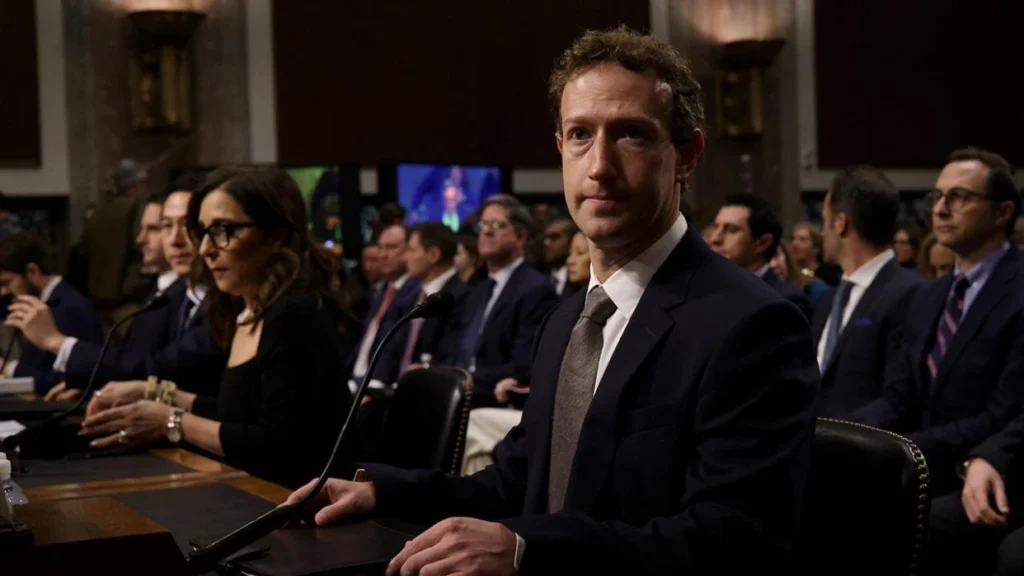
Mark Zuckerberg has also been increasingly criticized, particularly after a January 2024 hearing at which he was called upon to apologize to those families harmed by toxic content on social media. At that wrenching session, families whose children had self-injured or passed away due to content viewed on Meta platforms sat directly behind the CEO.
Zuckerberg offered a public expression of sympathy, telling them, “No one should go through what you’ve gone through.” Still, many believe his company’s actions — or inactions — speak louder than words.
Looking Ahead
As the dust settles from this latest testimony, some questions linger. Did Meta really collaborate with Chinese officials to stifle dissent overseas? Are whistleblowers being silenced by legal intimidation? And perhaps most importantly — how do lawmakers and the public hold tech giants accountable for actions that may erode democratic principles?
For the time being, Meta insists that it has done nothing wrong. But Sarah Wynn-Williams’ testimony has brought new scrutiny to the company’s global strategy, particularly as it pertains to authoritarian governments and freedom of expression.
Congress is now left to decide whether these allegations are worthy of further investigation — and whether new laws are necessary to curb the unregulated power of Silicon Valley’s most influential companies.
Click Here to subscribe to our newsletters and get the latest updates directly to your inbox.