
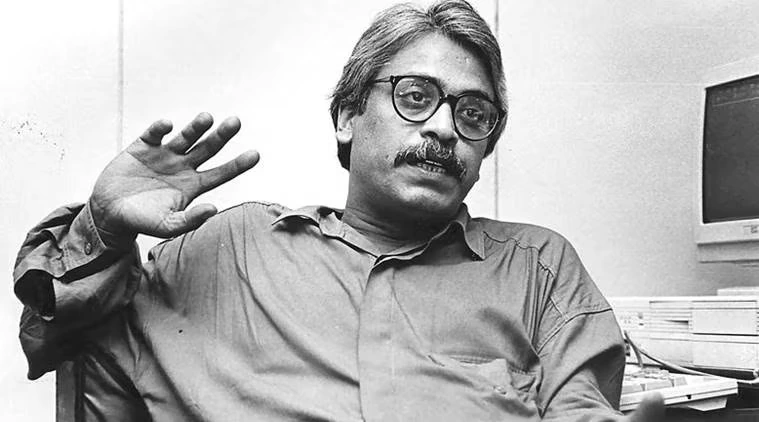
Daud Haider: The Exiled Voice of Conscience Who Redefined Bengali Resistance Poetry
Literary circles lament the death of Daud Haider, the groundbreaking Bangladeshi poet and author who was in exile for almost half a century, as he passed away in Berlin on July 13, 2024, aged 73. A pioneer of dissent in Bangladesh after independence, Haider’s life and works were marked by an uncompromising critique of extremism, authoritarianism, and social hypocrisy—a position that made him lose his country but etched his legacy as an unfaltering recorder of truth.
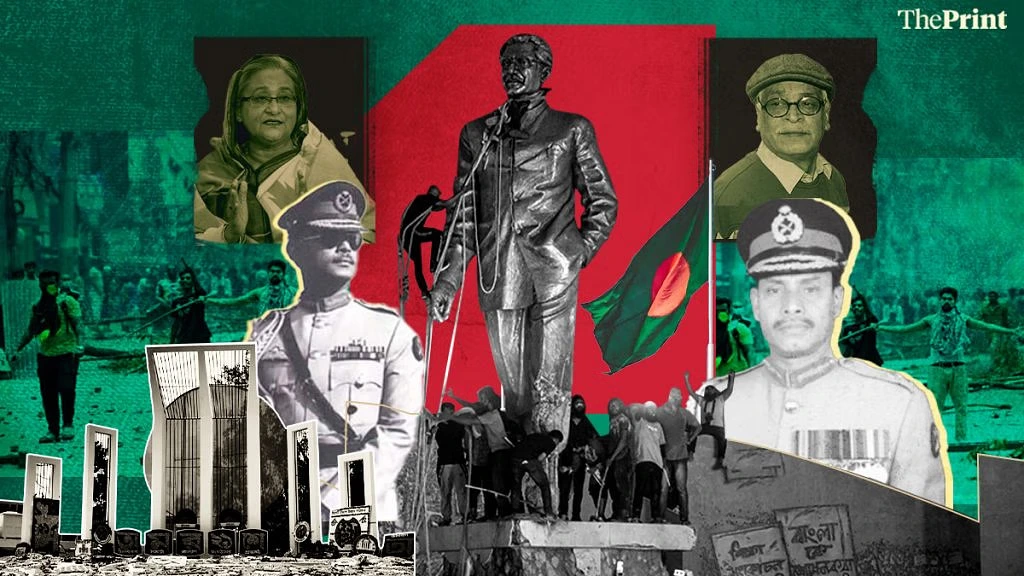
Early Life: The Making of a Revolutionary Poet
Born in 1951 in the East Pakistan village of Khulna, Haider was raised in the midst of cultural ferment surrounding the language movement of Bengali and the rising nationalism that would find its climax in the 1971 Liberation War of Bangladesh. His early work, heavily influenced by the work of icons such as Nazrul Islam and Jibanananda Das, was a mix of romanticism and incisive social commentary. By his early twenties, he was a well-known figure in Dhaka’s literary circles, writing for major Bangla dailies such as Sangbad and Dainik Bangla.
Haider’s poetry—raw, reflective, and unapologetically political—reflected the disillusionment of a generation with the promises and pitfalls of independence. His 1973 collection, Kalbela (A Time of Chaos), reflected the angst of a war-torn country trying to balance its secular ideals with increasing religious conservatism.
The Poem That Shook a Nation: Exile and Its Aftermath
In 1974, a year following Bangladesh’s inaugural general election, Haider wrote Shongkhonil Karagar (The Bloodstained Prison), a poem in Dainik Bangla that would change his life. The poem, a vitriolic denunciation of religious intolerance and state oppression, was claimed to have included imagery that was blasphemous to influential Islamist forces. Under increasing pressure, the government of Prime Minister Sheikh Mujibur Rahman—earlier celebrated as the creator of secular Bangladesh, indicted Haider on charges of “hurting religious sentiments” under the Penal Code, a step widely interpreted as appeasing conservative elements.
Confronted with death threats and possible imprisonment, Haider escaped to India in 1974, starting a 13-year exile in Kolkata. Unlike subsequent exiles like Taslima Nasreen (1994) or Salman Rushdie (1989), Haider’s case was Bangladesh’s first repression of free speech, a concerning precedent for dissent.
Life in Exile: A Poet Without Borders
In India, Haider took shelter among Kolkata’s intellectual circles, such as poets Sunil Gangopadhyay and Shakti Chattopadhyay. Even with the trauma of exile, his imagination bloomed. Pieces such as Nihsanga Biswasher Gaan (Songs of Lonely Faith, 1980) and Bidesh Jemon Achhey (The Way Abroad Is, 1985) wrestled with questions of identity, alienation, and the moral decline of power.
In 1987, Haider moved to Germany, where he became a cultural ambassador between South Asia and Europe. He settled in Berlin and wrote columns for diaspora newspapers such as Shomoyer Alo and Prothom Alo, both denouncing Western neoliberalism and Bangladesh’s democratic slide. His 2003 memoir, Ami Bijoy Dekhechhi (I Have Seen Victory), was a poignant meditation on exile: “A poet’s homeland is his language. I carry Bangladesh in my syllables, even if its maps deny me.”
Literary Legacy: The Price of Dissent
Haider’s oeuvre is a testament to the power—and peril—of words in authoritarian contexts:
- Themes: His poetry dissected religious hypocrisy, militarism, and the betrayal of Bangladesh’s founding secular ideals.
- Style: Merging modernist abstraction with folk rhythms, his work resonated with both intellectuals and the masses.
- Influence: Writers like Humayun Azad and Taslima Nasreen cite Haider as a precursor in challenging dogma through art.
Yet, his exile rendered him a spectral figure in Bangladesh. While his books were unofficially circulated, public discourse on his contributions remained muted until the 2000s, when a new generation of activists reclaimed his work as a manifesto for free thought.
Exile in Context: Before Rushdie and Nasreen
Haider’s persecution prefigured international struggles over artistic liberty. Ten years prior to The Satanic Verses affair, his case demonstrated how post-colonial nations used blasphemy laws to silence their critics. Unlike Rushdie or Nasreen, however, Haider’s exile did not receive international publicity, a testament to the Global South’s peripheral status in literary geopolitics.
In Bangladesh, his destiny served as a lesson. Escalating violence during the 1980s and ’90s against secular intellectuals came to a peak with the attack on Humayun Azad in 1999 and the assassination of filmmaker Humayun Ahmed in 2004. Haider’s life followed the country’s own struggle to balance its pluralist heritage with growing fundamentalism.
Final Years: An Unyielding Voice
Even from Berlin, Haider was an outspoken critic of the direction of politics in Bangladesh. His collection of essays in 2019, Dharmo Amar Mrito Shorir (Religion Is My Dead Body), excoriated the compromises of the Awami League with Islamist forces. Even in poor health, he cooperated with diasporic artists on works seeking to cross-pollinate Bengali and German avant-garde traditions.
His death was announced, and tributes issued by world literary names. Bangladeshi novelist Anisul Hoque stated: “Haider taught us that exile is not a geography but a state of conscience.” German cultural minister Claudia Roth, in turn, described him as “a bridge between revolutions.”
Daud Haider’s life encapsulates the paradox of the exiled artist: erased from his homeland’s official narrative, yet immortalized in its cultural subconscious. His defiance paved the way for later dissidents, while his poetry remains a mirror to Bangladesh’s unhealed wounds.
Click here to subscribe to our newsletters and get the latest updates directly to your inbox.