

Google Rolls Out Emergency Location Service in India, Enhancing UP Police 112 Response
In a significant boost to India’s emergency response infrastructure, Google has officially activated its Emergency Location Service (ELS) in India for the first time. The feature has been rolled out in partnership with the Uttar Pradesh Police, enabling emergency responders to receive more accurate, real-time location data from Android users who call or send an SMS to the national emergency helpline number, 112.
The move marks a crucial step in modernising emergency services in one of the world’s most populous regions, where delays in identifying a caller’s location have historically hampered rapid response efforts.
What Is Google’s Emergency Location Service (ELS)?
A built-in Android feature called Emergency Location Service is intended to automatically provide emergency responders with precise location information during distress calls or messages. Advanced location technologies, such as GPS, Wi-Fi, mobile networks, and onboard sensors, are momentarily activated when an Android user calls an emergency number, like 112, in order to ascertain the most precise position.
Authorities can locate callers even if they are unable to provide a clear description of their location thanks to the direct sharing of this location data with emergency control rooms.
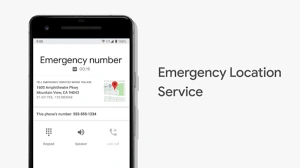
Crucially, ELS runs in the background without making any noise. In an emergency, users don’t have to install an app, manually activate location sharing, or navigate complicated settings. The location sharing automatically ends when the emergency interaction is over.
Why Uttar Pradesh Was Chosen for the First Rollout
Uttar Pradesh is India’s most populous state and handles one of the highest volumes of emergency calls in the country. The sheer scale of operations, combined with diverse urban and rural geographies, makes accurate caller location identification especially challenging.
By adopting ELS, the UP Police aims to address long-standing issues such as:
- Callers panicking and failing to communicate their location clearly
- Rural areas lacking well-defined addresses or landmarks
- Highway accidents where victims are unsure of their exact position
The integration has been implemented with technical support from Pert Telecom Solutions, ensuring that the emergency call centres can receive, interpret, and act on ELS location data in real time.
How ELS Improves 112 Emergency Response
Traditionally, emergency response systems rely heavily on verbal communication. Call handlers often need to ask multiple follow-up questions to identify a caller’s location, which consumes valuable time—especially during medical emergencies, accidents, or crimes in progress.
With ELS enabled, this process changes fundamentally:
- Location data is shared automatically as soon as the call or SMS is initiated
- Control room operators can view the caller’s position on a digital map
- The nearest police unit, ambulance, or fire service can be dispatched faster
This shift reduces dependency on manual explanations and significantly shortens response times, which can be critical in life-threatening situations.
SMS-Based Emergencies: A Crucial Inclusion Feature
One of the less discussed but highly impactful aspects of ELS is its support for emergency SMS messages. This is particularly important for:
- Individuals with speech or hearing impairments
- Situations where making a phone call is unsafe or impractical
- Victims attempting to discreetly seek help
By ensuring that location data is shared even through SMS, the system becomes more inclusive and better suited to real-world emergency scenarios.
Addressing Privacy and Data Security Concerns
The introduction of any location-based service inevitably raises questions around privacy. Google has clarified that Emergency Location Service is designed with strict safeguards.
ELS only activates during an emergency call or message. Location data is shared exclusively with emergency responders and is not continuously tracked or stored once the emergency interaction ends. The feature does not provide law enforcement with ongoing access to a user’s location.
That said, as ELS expands to more states, transparency and periodic audits will be essential to maintain public trust and ensure that the system is used strictly for emergency response purposes.
A Major Step, But Not a Complete Solution
While ELS is a powerful technological upgrade, it is not a standalone fix for all emergency response challenges in India.
Accurate location data addresses one critical bottleneck, but overall outcomes still depend on several factors, including:
- Availability of trained emergency personnel
- Infrastructure quality, such as roads and medical facilities
- Coordination between different emergency departments
Without parallel improvements in these areas, the full potential of ELS may not be realised.
What This Means for India’s Emergency Infrastructure
India has long sought to unify and modernise its emergency response systems under the 112 framework. The adoption of ELS represents a meaningful alignment between global technology standards and local governance needs.
Given Android’s widespread adoption in India, ELS has the potential to benefit millions of users. If the Uttar Pradesh deployment proves successful—measured through reduced response times and improved emergency outcomes—other states are likely to follow.
States such as Maharashtra, Karnataka, Delhi NCR, and Tamil Nadu could be natural candidates for future rollouts.
Google’s Broader Strategy in Public Safety Technology
Beyond its immediate benefits, the ELS rollout signals a broader strategic approach by Google. Strengthening Android’s role in public safety enhances trust in the platform and deepens partnerships with governments and emergency agencies.
Rather than a high-profile consumer feature, ELS is a quiet, infrastructure-level upgrade—one designed to function when users are at their most vulnerable.
Technology That Matters When Seconds Count
Google’s activation of Emergency Location Service in India is a reminder that meaningful technological progress does not always arrive with fanfare. By enabling UP Police to receive precise location data during 112 emergency calls and messages, ELS has the potential to save lives by reducing response times when every second matters.
If implemented responsibly and expanded thoughtfully, this system could become a foundational component of India’s emergency response framework—proving that technology, when aligned with public need, can deliver real and lasting impact.
Click Here to subscribe to our newsletters and get the latest updates directly to your inbox