
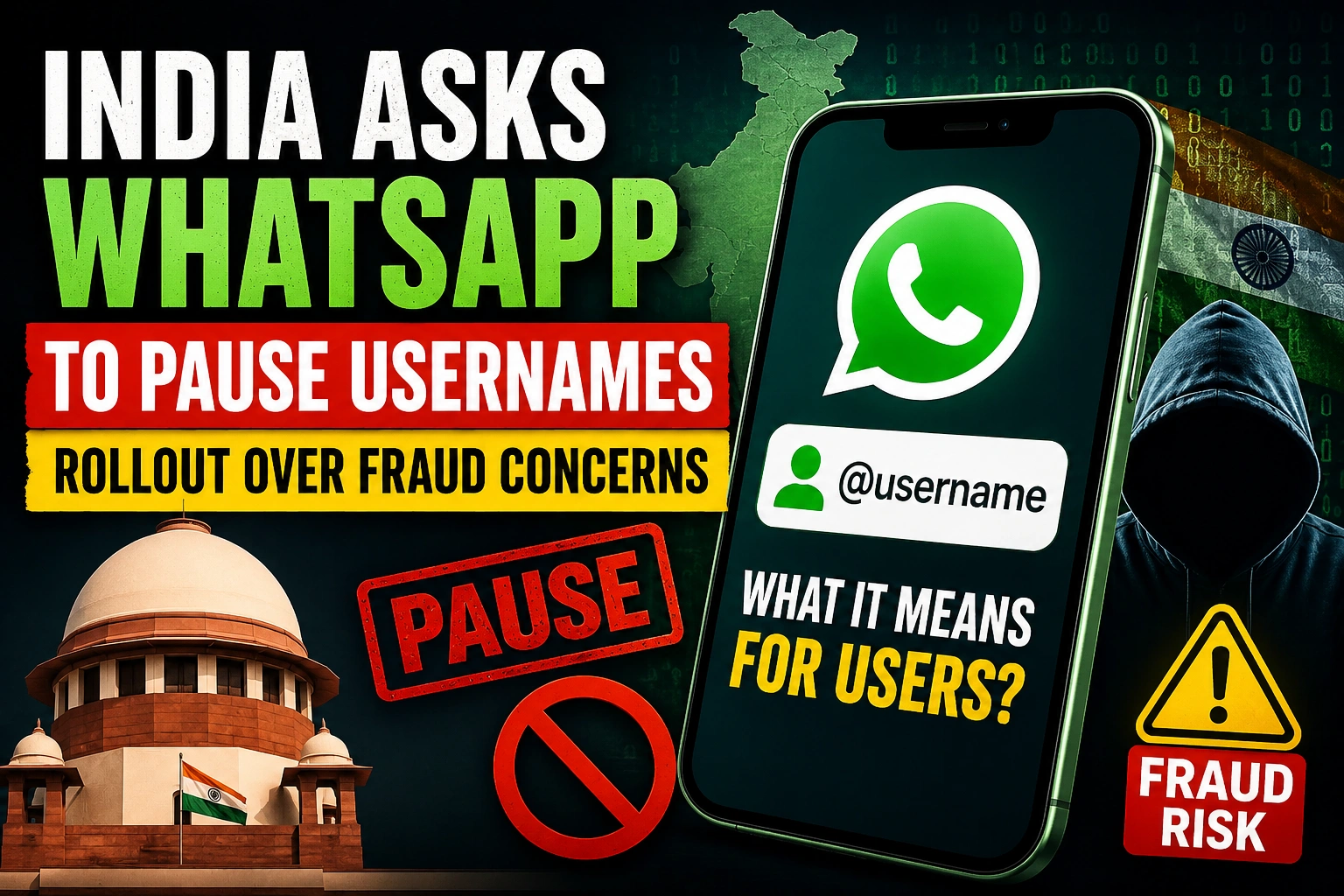
WhatsApp Usernames Paused in India Over Fraud Concerns
WhatsApp Usernames have come under scrutiny after the Indian government asked Meta to pause the feature’s rollout over concerns about fraud, phishing, and impersonation.
According to an official communication from the Ministry of Electronics and Information Technology (MeitY), WhatsApp has been directed not to launch the feature in India until discussions with government officials are completed. Authorities have also asked the company to explain within three days why regulatory action should not be considered over the proposed feature.
The move highlights India’s growing focus on online safety as digital fraud cases continue to increase across the country.
What Are WhatsApp Usernames?
WhatsApp recently announced that it is developing a usernames feature that will allow people to connect without sharing their mobile phone numbers.
Instead of giving someone a phone number, users will be able to share a unique username. The person initiating the conversation will need to know the exact username, as the system will not include a public directory or searchable database.
The feature is designed to improve privacy by allowing users to keep their phone numbers hidden while still communicating on the platform.
Although Meta has officially announced the feature, it has not yet been rolled out to users anywhere.
Why India Wants to Delay WhatsApp Usernames?
The Indian government believes that allowing users to contact others through usernames instead of phone numbers could create new opportunities for cybercriminals.
Officials are particularly worried that scammers could create usernames that resemble those of banks, government agencies, businesses, or well-known individuals. Such impersonation attempts could make phishing attacks more convincing and increase financial fraud.
Authorities also pointed to the growing number of “digital arrest” scams, where fraudsters impersonate police officers, government officials, or law enforcement agencies to threaten victims into transferring money.
The ministry believes anonymous communication features may make identifying scammers more difficult during investigations.
Government Asks WhatsApp to Delay Launch
According to the official notice, MeitY has instructed WhatsApp not to introduce the usernames feature in India until consultations with the government are completed.
Officials have also requested that the company explain how it plans to address concerns related to fraud, privacy, identity verification, and user safety.
At this stage, the government has not banned the feature. Instead, it has asked for additional discussions before any public rollout takes place.
The outcome of those consultations could determine whether modifications or additional safeguards are required before Indian users gain access to usernames.
WhatsApp Says Safeguards Are Already Built In
WhatsApp has responded by saying that the usernames feature has been designed with several security measures intended to reduce misuse.
According to the company, certain usernames associated with public figures, government organizations, celebrities, and verified Meta accounts have already been reserved. This means other users cannot claim those identities or create confusingly similar versions.
The company also stated that users will still need a valid phone number to create and use a WhatsApp account, meaning usernames will not replace account verification.
Meta says these measures are intended to reduce impersonation attempts while allowing users to enjoy greater privacy.
Additional Protection Against Scams
WhatsApp says several layers of protection will accompany the usernames feature when it eventually launches.
The company plans to limit how many new people an account can contact within a certain period, making it more difficult for scammers to send large numbers of unsolicited messages.
The platform will also monitor suspicious behavior, including repeated attempts to guess usernames or imitate other users.
If abnormal activity is detected, WhatsApp says it will take action against accounts showing signs of impersonation or abuse.
These protections are designed to reduce the risk of fraudulent activity while preserving user privacy.
New Context Information Before You Reply
One feature intended to improve safety is the additional information users will see when receiving a message from someone using a username.
WhatsApp says users may be shown details such as whether the sender is already in their contacts, whether they share mutual groups, whether the account is newly created, or whether the sender appears to be located in another country.
This extra context is designed to help users decide whether a message appears trustworthy before responding.
Security experts believe contextual information can help reduce successful phishing attempts by encouraging users to verify unknown contacts.
Privacy and Security Must Work Together
The discussion surrounding WhatsApp usernames highlights a growing challenge for technology companies.
Users increasingly want stronger privacy protections, including the ability to communicate without revealing personal phone numbers.
At the same time, governments and cybersecurity agencies are working to reduce online fraud, financial scams, and identity theft.
Finding a balance between protecting privacy and maintaining public safety has become one of the biggest issues facing messaging platforms around the world.
Many countries are now examining how new privacy features could affect digital investigations and cybercrime prevention.
Similar Questions Raised About Other Messaging Apps
The government’s concerns come shortly after reports that Indian authorities also examined anonymous communication features available on Telegram.
Officials have argued that privacy-focused features can sometimes make it more difficult to identify individuals involved in cybercrime, financial fraud, and illegal content distribution.
As digital fraud continues to evolve, regulators are paying closer attention to how messaging platforms verify identities while protecting user privacy.
The WhatsApp usernames feature has now become part of this broader national conversation about online safety.
What Happens Next?
For now, WhatsApp’s usernames feature remains unavailable in India.
The company says it still plans to introduce the feature gradually later this year, but its launch in India will likely depend on ongoing discussions with government officials.
Whether additional safeguards are introduced or the rollout timeline changes will become clearer after consultations between Meta and Indian regulators are completed.
Until then,
WhatsApp usernames remain unavailable in India while Meta and the government continue discussions on privacy and fraud prevention.
Click Here to subscribe to our newsletters and get the latest updates directly to your inbox.