

Google Adds ‘Preferred Sources’ Feature to AI Search to Give Users More Control
Google has introduced a new feature called “Preferred Sources” for its AI-powered search experience, allowing users to choose which websites and publishers they want to see more frequently in search results.
The update is part of Google’s ongoing effort to improve AI Search while addressing growing criticism around content attribution, publisher visibility, and trust in AI-generated answers.
According to the company, users will now be able to select trusted websites through search personalization settings. Once enabled, Google may prioritize content from those preferred sources when relevant to a user’s search query.
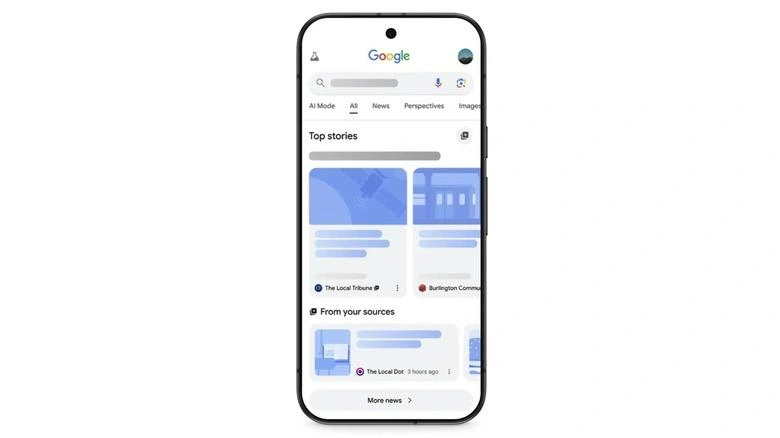
The selected websites will also receive visible labels inside AI-powered search results, making it easier for users to identify content from sources they already trust.
Google Is Trying to Make AI Search More Personal
The new feature shows how Google is slowly changing the way people interact with search engines.
Traditional Google Search mainly focused on ranking websites based on relevance, authority, and popularity. But AI-powered search works differently because answers are often generated directly inside AI summaries instead of only showing links.
That shift has created concerns among publishers who worry that users may stop visiting websites directly if AI systems summarise everything inside search results.
By introducing Preferred Sources, Google appears to be trying to balance AI convenience with user choice and publisher visibility.
The company wants users to feel more control over where information comes from.
Preferred Sources Could Change Content Discovery
Under the new system, users can tell Google which publications or websites they prefer seeing inside AI Search experiences.
For example, if someone regularly trusts a certain technology website, news publication, or sports platform, Google may prioritise articles and information from those sources more prominently in AI Overviews and AI Mode.
The feature works somewhat similarly to how users follow favorite creators or channels on social media platforms.
This could gradually make AI Search feel more personalised instead of showing the same information layout to every user.
It also helps users quickly recognise information from publishers they already know and trust.
AI Search Has Faced Growing Criticism
Google’s AI-powered search tools have received both praise and criticism since launch.
AI Overviews were designed to provide quick summaries directly inside search results using artificial intelligence. While many users appreciate faster answers, publishers and content creators have raised concerns about reduced website traffic and unclear attribution.
Some critics argue that AI-generated summaries often:
- Reduce clicks to original websites
- Mix information from multiple sources
- Make source visibility weaker
- Increase misinformation risks
Google’s new Preferred Sources feature appears partly designed to respond to those concerns.
By clearly labeling trusted sources and giving users more influence over content selection, Google may be trying to improve trust in AI-generated search experiences.
Publishers Are Fighting for Visibility in AI Search
The relationship between publishers and AI companies has become increasingly tense over the past year.
News organizations, bloggers, and media companies are worried that AI search systems could eventually reduce direct traffic to websites by answering questions without requiring users to visit original articles.
This matters financially because many publishers depend heavily on:
advertising revenue, subscriptions, affiliate traffic, and search visibility.
As AI-generated answers become more common, publishers want stronger attribution systems that still encourage users to click through to source websites.
Google’s latest update may help reduce some of those concerns by making publisher branding more visible inside AI-generated search interfaces.
Google Is Also Competing With Other AI Platforms
The update also reflects growing competition in the AI search market.
Companies including OpenAI, Microsoft, and several AI startups are all trying to redefine how people search for information online.
Traditional search engines are now competing not only on speed and relevance, but also on:
- Trust
- Personalisation
- AI transparency
- Source credibility
- User control
Google’s Preferred Sources feature directly targets those concerns.
The company likely understands that users may become uncomfortable if AI systems feel too anonymous or disconnected from trusted human publishers.
Users May Start Building Personalised Search Ecosystems
One interesting possibility is that users may eventually create highly personalised AI search experiences.
Instead of relying on generic search rankings, people could slowly build custom ecosystems of trusted sources across topics like:
technology, finance, health, politics, gaming, and entertainment.
This may change how information discovery works online.
Search could become less universal and more individually tailored based on user preferences and trust patterns.
That shift could benefit well-known publishers with loyal audiences while making it harder for smaller websites to gain visibility organically.
Public Reaction Has Been Mostly Positive So Far
Initial public reaction to the feature has been largely positive.
Many users like the idea of having more control over AI-generated search results, especially at a time when misinformation concerns are growing across the internet.
Some people also see the feature as a way to avoid low-quality AI-generated spam websites that have increasingly flooded search engines in recent years.
However, some critics argue the system could also create “information bubbles” where users mainly see content from sources they already agree with.
That concern already exists heavily on social media platforms and recommendation algorithms.
AI Search Is Still Rapidly Evolving
Google’s AI Search experience is still changing quickly.
Over the past year, the company has repeatedly updated:
AI Overviews, citation systems, article carousels, source labels, and personalization tools.
The Preferred Sources feature is another sign that AI-powered search is still in an experimental phase.
Companies are trying to understand how to combine:
AI-generated convenience with trust, transparency, and fair visibility for publishers.
That balance may become one of the biggest challenges for the future of search itself.
Search Engines Are No Longer Just Search Engines
The bigger story here is that search engines are transforming into AI-driven information assistants.
Instead of simply showing links, platforms are now trying to:
Summarize information, recommend sources, personalize answers, and predict user intent directly.
That changes the entire relationship between users, publishers, and technology companies.
Google’s new feature suggests the company understands that trust and source identity will remain extremely important even in an AI-first internet.
People may enjoy fast AI answers, but they still want to know where information actually comes from.
Click Here to subscribe to our newsletters and get the latest updates directly to your inbox.