
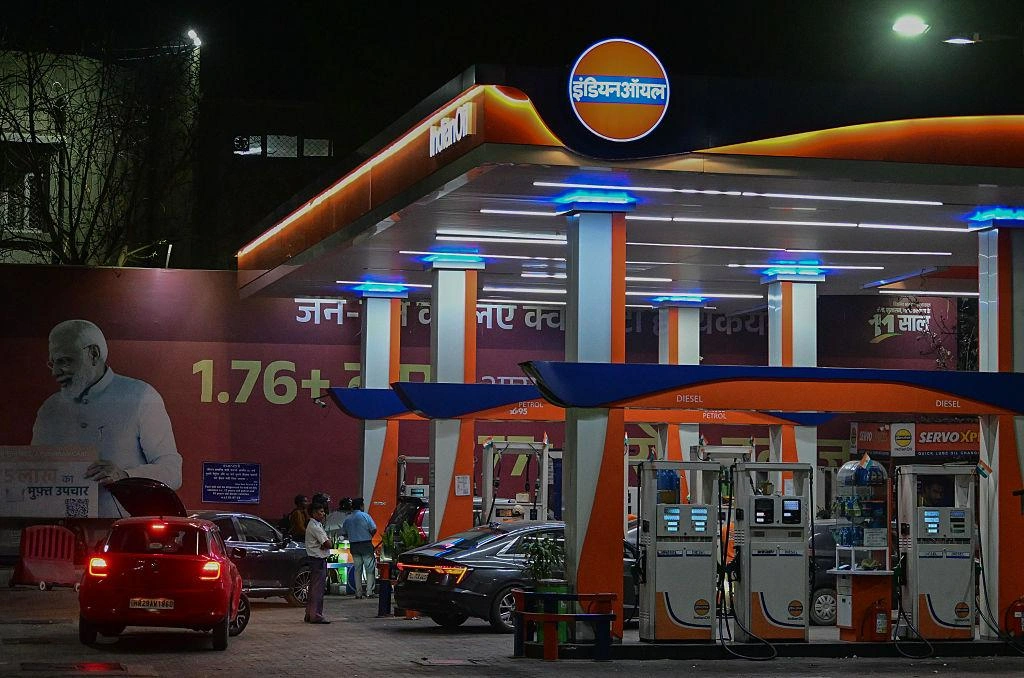
Fuel Price Freeze Costs Indian Oil Companies Rs 30,000 Crore Every Month Amid Global Oil Surge
India’s state-owned oil marketing companies are reportedly losing around Rs 30,000 crore every month as petrol, diesel, and cooking gas prices remain frozen despite rising global crude oil prices.
According to senior Petroleum Ministry official Sujata Sharma, the country’s three major state-owned fuel retailers — Indian Oil Corporation, Bharat Petroleum Corporation Limited, and Hindustan Petroleum Corporation Limited — are facing severe financial stress due to mounting under-recoveries.
Under-recovery refers to the gap between the actual import cost of fuel and the retail selling price charged to consumers.
The situation has intensified as the ongoing West Asia crisis continues pushing global oil prices higher.
Why Oil Companies Are Losing Money
India imports a large portion of its crude oil requirements from international markets. When global crude prices rise sharply, oil companies must pay more to import and refine fuel.
Normally, rising costs are passed on to consumers through higher petrol and diesel prices. But in the current situation, retail fuel prices have remained largely unchanged.
This means oil companies are effectively selling fuel below market-linked costs.
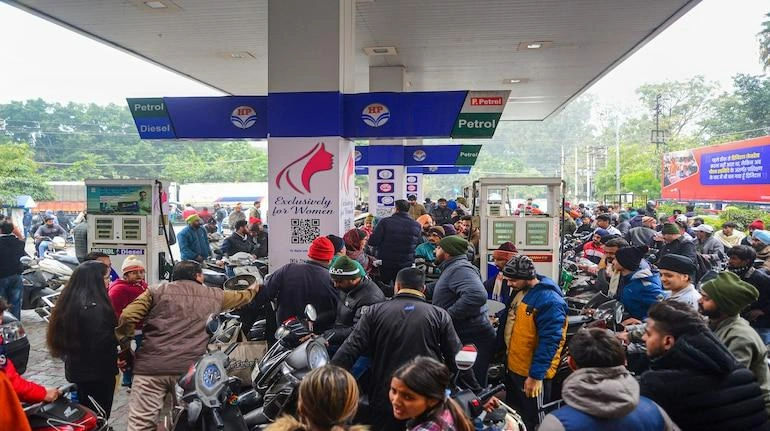
The result is massive financial losses accumulating every month.
According to government estimates, the combined losses on:
- Petrol
- Diesel
- Cooking gas (LPG)
have reached nearly Rs 30,000 crore monthly.
Losses linked to aviation turbine fuel (ATF) for domestic flights are also increasing, although exact figures have not yet been disclosed.
West Asia Crisis Driving Oil Prices Higher
The ongoing tensions in West Asia have significantly disrupted global energy markets.
Concerns around shipping disruptions, supply instability, and geopolitical uncertainty have pushed crude oil prices sharply upward in recent months.
The Strait of Hormuz, one of the world’s most important oil shipping routes, remains under heavy focus as instability in the region affects global supply chains.
Because India is heavily dependent on imported oil, any global price increase immediately impacts domestic energy costs.
Official Statement From Petroleum Ministry
Speaking about the situation, Sujata Sharma said oil marketing companies are facing “severe stress” because retail fuel prices have not been increased despite rising international prices.
The comments highlight growing pressure within the energy sector and increasing concern over how long companies can continue absorbing such losses.
So far, the government has not announced any immediate compensation package for oil companies.
Why Petrol and Diesel Prices Have Not Increased
Fuel pricing in India is not only an economic issue — it is also politically sensitive.
Higher petrol and diesel prices directly affect:
- Transportation costs
- Food prices
- Inflation
- Household expenses
Keeping fuel prices stable helps the government control inflation and avoid public backlash during periods of economic uncertainty.
However, this stability comes at a financial cost for oil companies.
Analysts say the current approach reflects a balancing act between protecting consumers and maintaining the financial health of energy companies.
Public Reaction Across India
Public reaction to the situation has been mixed.
Many consumers are relieved that petrol and diesel prices have not risen despite the global oil surge. Stable fuel prices provide short-term financial relief for households already dealing with inflationary pressures.
However, there is also growing concern that a sharp price hike could eventually become unavoidable if global crude prices remain elevated.
On social media, some users argued that oil companies should not continue bearing the burden indefinitely, while others said protecting consumers during a global crisis is necessary.
The debate reflects the broader tension between economic stability and market realities.
Financial Pressure on Oil Companies Growing
For state-owned oil companies, prolonged under-recoveries create major financial challenges.
Continuous losses can impact:
- Profitability
- Infrastructure investment
- Operational efficiency
- Expansion plans
If the situation continues for a prolonged period, companies may need government support or future price revisions to stabilize their finances.
Energy sector analysts warn that sustained losses at this scale are difficult to absorb long term, even for large public sector firms.
Aviation Fuel Losses Add Another Layer of Stress
In addition to petrol, diesel, and LPG, oil companies are also reportedly losing money on aviation turbine fuel supplied to domestic airlines.
Jet fuel prices for international flights have seen more market-linked adjustments, but domestic aviation pricing has remained relatively restrained.
This has added another layer of pressure to the already strained financial position of oil retailers.
Bigger Impact on the Indian Economy
The fuel pricing issue extends beyond oil companies alone.
Energy prices influence almost every sector of the economy, including:
- Transportation
- Manufacturing
- Agriculture
- Aviation
- Logistics
A sharp increase in fuel prices can trigger broader inflation, which affects businesses and consumers alike.
At the same time, forcing oil companies to absorb losses indefinitely can weaken the energy sector financially.
This creates a difficult policy challenge for the government.
What Happens Next?
The future direction of fuel prices in India will largely depend on:
- Global crude oil prices
- Developments in West Asia
- Government policy decisions
- Supply chain stability
If international prices remain elevated, experts believe some form of price revision or government support may eventually become necessary.
For now, however, the government appears focused on maintaining retail price stability.
The Bigger Strategic Reality
India’s current fuel pricing challenge highlights a larger structural issue:
the country’s heavy dependence on imported crude oil.
Any global geopolitical crisis immediately affects domestic energy economics.
This is why policymakers have increasingly emphasized:
- Renewable energy expansion
- Strategic oil reserves
- Domestic energy production
- Alternative fuel development
Reducing import dependence remains one of India’s long-term strategic priorities.
Final Insight
The freeze on petrol and diesel prices may be providing short-term relief to consumers, but it is creating massive financial pressure on India’s oil marketing companies.
With losses estimated at Rs 30,000 crore every month, the current model is becoming increasingly difficult to sustain.
As global oil prices remain volatile, the government may soon face a difficult choice:
protect consumers from inflation or allow fuel prices to reflect market realities.
And whichever path is chosen, the economic impact will be significant.
Click Here to subscribe to our newsletters and get the latest updates directly to your inbox.