
Google I/O 2026: Gemini AI Agents, Smart Glasses and Android XR Take Center Stage
Google used Google I/O 2026 to send a very clear message to the technology industry: artificial intelligence is no longer just a feature inside products. It is becoming the foundation of the entire Google ecosystem.
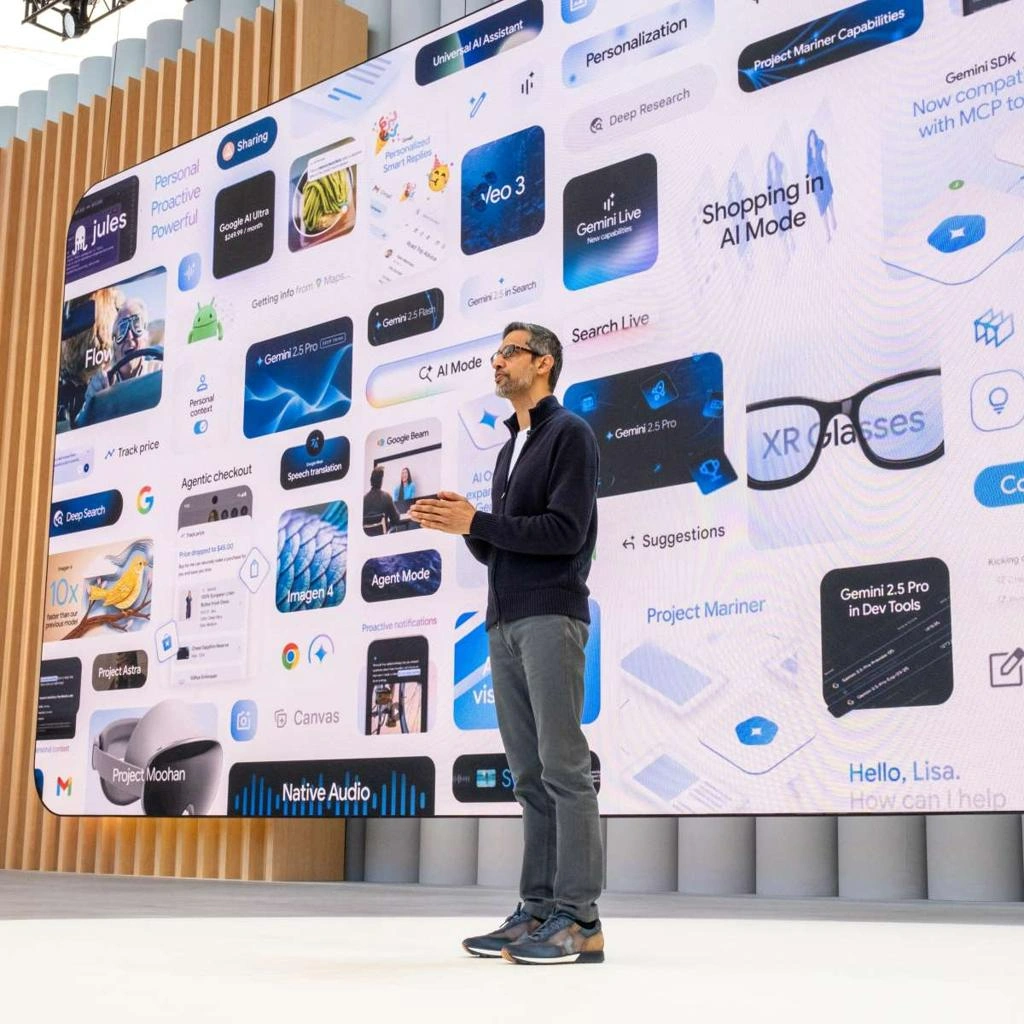
This year’s event was one of Google’s most AI-focused conferences ever, with nearly every major announcement revolving around Gemini-powered systems, intelligent automation, and what the company calls “agentic AI.” From futuristic smart glasses and advanced AI agents to creative video tools and AI-enhanced search, Google positioned Gemini at the center of almost everything it plans to build going forward.
The scale of the announcements reflected how aggressively the company is trying to compete in the rapidly intensifying global AI race against rivals such as OpenAI, Microsoft, and Meta Platforms.
But beyond the competition, Google I/O 2026 revealed something even bigger:
Google wants AI to evolve from a chatbot into a deeply integrated digital operating layer that surrounds users throughout their everyday lives.
Gemini 3.5 Flash Becomes Google’s Fastest AI Model Yet
One of the biggest announcements at the event was the introduction of Gemini 3.5 Flash, which Google described as one of its fastest and most efficient AI models so far.
The company said the new model focuses heavily on speed, multimodal understanding, and real-time responsiveness. Google demonstrated how Gemini 3.5 Flash can process text, images, voice, and video more fluidly while also improving reasoning capabilities and workflow automation.
Executives at the event repeatedly emphasized that Gemini is no longer being developed simply as an assistant. Instead, Google now views Gemini as the intelligence layer connecting Search, Android, Workspace, commerce tools, and future hardware products together.
That shift may ultimately become one of the most important strategic changes in Google’s history.
Gemini Spark Introduces Agentic AI Experiences
Another major highlight was the unveiling of Gemini Spark, an AI system designed to perform complex multi-step tasks autonomously.
Unlike traditional AI assistants that respond only to prompts, Gemini Spark is being positioned as an “agentic AI” system capable of proactively carrying out workflows, researching information, managing tasks, and interacting across applications with minimal user input.
Google demonstrated examples where the AI agent handled shopping comparisons, travel planning, document organization, and workflow management almost independently.
This reflects one of the biggest emerging trends in artificial intelligence right now:
the move from reactive AI toward autonomous digital agents.
Many analysts believe agentic AI systems could become the next major platform shift in consumer computing.
Google Search Receives Its Biggest AI Upgrade Yet
Search also received major upgrades during the event.
Google showcased a more conversational AI-powered Search experience capable of generating summaries, handling follow-up questions and interacting more dynamically with users.
The company is clearly trying to defend its core Search business as AI-generated answers increasingly change how people access information online.
However, this transition also creates difficult challenges.
Publishers, creators and SEO professionals continue raising concerns that AI-generated answers inside Search may reduce website traffic and fundamentally reshape the open web ecosystem.
Google acknowledged the importance of transparency and source attribution during the event, although many questions remain unanswered regarding how AI-driven Search will affect the broader internet economy.
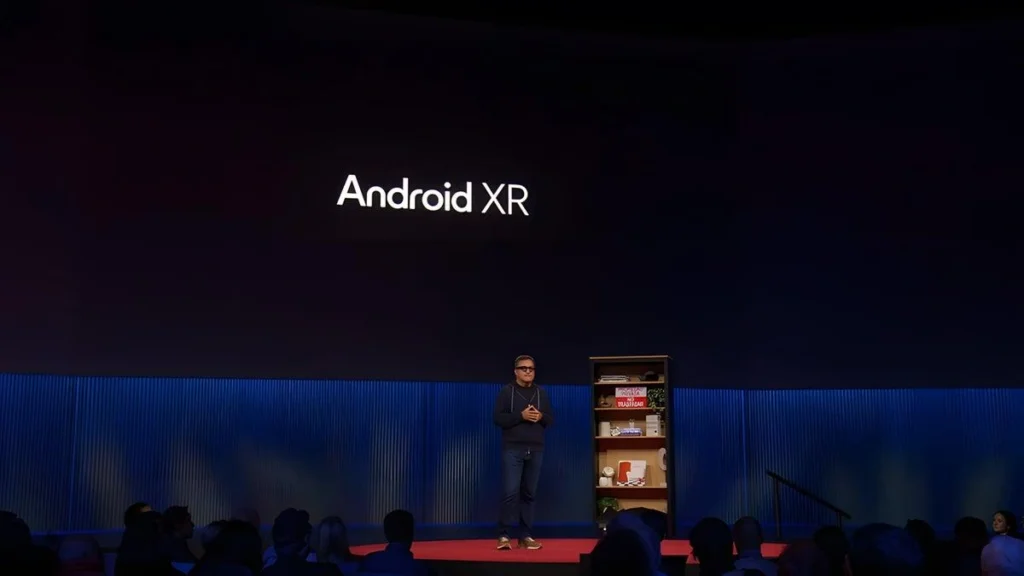
Android XR Smart Glasses Signal Google’s Big Hardware Return
Perhaps the most futuristic announcement from Google I/O 2026 was the renewed push into smart glasses through Android XR.
Google demonstrated lightweight AI-powered glasses capable of:
- Real-time translation
- Navigation assistance
- Contextual information overlays
- AI conversations
- Hands-free digital interaction
The demonstrations immediately drew comparisons to earlier projects like Google Glass, which struggled years ago because the technology arrived before the ecosystem was ready.
This time, however, the situation looks different.
Advances in AI processing, voice recognition, and contextual computing may finally make wearable AI devices far more practical for mainstream users.
Several technology analysts described the Android XR demonstrations as one of the most important long-term announcements of the event.
Creative AI Tools Become a Major Focus
Google also introduced several creative AI systems aimed at simplifying content generation.
New tools such as Google Flow, Gemini Omni and Google Pics focus on helping users generate videos, images and multimedia content through conversational prompts.
The company showed AI-generated video creation workflows capable of producing cinematic-style clips with minimal manual editing.
This signals Google’s growing push into the creator economy, where AI-assisted content generation is becoming one of the fastest-growing technology segments globally.
Workspace and Enterprise AI Get Major Upgrades
Google also expanded AI integration across its productivity ecosystem.
Updates to Google Workspace now include stronger AI-powered document generation, meeting summaries, workflow automation and collaborative assistance tools.
At the enterprise level, Google introduced advanced research systems under “Gemini for Science,” aimed at helping researchers and organizations accelerate scientific discovery using AI-assisted analysis.
The company also highlighted AI-powered coding systems capable of helping developers automate parts of software development and debugging workflows.
This reflects how AI is rapidly becoming embedded not only in consumer products but also in enterprise infrastructure and scientific research environments.
Public Reaction Reflects Both Excitement and Concern
Public reaction to Google I/O 2026 has been intense.
Technology enthusiasts praised the ambitious scale of the announcements, especially around AI agents, smart glasses and multimodal AI systems.
Many developers also reacted positively to Google’s expanding AI tooling ecosystem.
However, concerns about privacy, automation and AI dependence were equally visible online.
Some users questioned how much personal data future AI systems may require to function effectively. Others worried about AI replacing human creativity or increasing dependency on automated systems.
The event highlighted a growing reality within the tech industry:
people are simultaneously excited and uncomfortable about how quickly AI is advancing.
Google Is Trying to Define the Future of Computing
The biggest takeaway from Google I/O 2026 is that Google no longer sees AI as a separate product category.
The company now views AI as the operating system behind everything.
Whether it is Search, Android, commerce, productivity, wearable hardware or software development, Gemini is increasingly becoming the intelligence layer connecting Google’s ecosystem together.
That strategy could fundamentally reshape how users interact with technology over the next decade.
Final Thoughts
Google I/O 2026 was not simply another developer conference filled with software announcements.
It was Google’s attempt to define what the next era of computing will look like.
From AI agents and smart glasses to autonomous workflows and multimodal creative systems, the company made it clear that it believes the future belongs to intelligent, proactive, and deeply integrated AI experiences.
Whether users fully embrace that future remains uncertain.
But after Google I/O 2026, one thing is undeniable:
the AI race is no longer about chatbots anymore. It is about building entirely new digital ecosystems around intelligence itself.
Click Here to subscribe to our newsletters and get the latest updates directly to your inbox.