
FPIs Sell $3.45 Billion Worth of Indian Stocks in May, But Market Outflows Begin to Slow
Foreign portfolio investors (FPIs) continued pulling money out of Indian stock markets in May, although the intensity of the selling eased compared to the previous two months.
According to data from the National Securities Depository Ltd (NSDL), FPIs sold Indian equities worth approximately $3.45 billion during May. While the figure remains significant, it is considerably lower than the heavy outflows recorded earlier this year.
In March, foreign investors had sold Indian shares worth about $12.72 billion, followed by another $6.47 billion in April. The latest data suggests that investors are becoming somewhat less aggressive in reducing their exposure to Indian markets.

The slowdown in selling comes as financial markets gradually adjust to geopolitical tensions in West Asia and the economic uncertainty created by the ongoing conflict involving Iran.
Geopolitical Risks Continue to Influence Investor Sentiment
Global investors have remained cautious in recent months because of rising tensions in the Middle East.
The conflict has increased concerns about energy supplies, inflation, and the overall health of the global economy. One of the biggest worries remains the situation around the Strait of Hormuz, a key shipping route through which a large portion of the world’s oil supply passes.
Any disruption in the region can quickly affect oil prices and increase costs for businesses and consumers worldwide.
These uncertainties have made investors more selective when allocating money to emerging markets such as India.
While India continues to be viewed as one of the world’s fastest-growing major economies, foreign investors have been reducing risk exposure across several markets due to global concerns.
Oil Prices Remain a Major Concern
Crude oil prices have remained close to the $100-per-barrel level for an extended period, creating additional pressure on investor sentiment.
India imports a large share of its energy requirements, which means higher oil prices can affect inflation, government finances, and corporate profitability.
Rising fuel costs also increase transportation and manufacturing expenses across multiple sectors.
For foreign investors, sustained high oil prices create uncertainty about future economic growth and company earnings.
Although markets have already absorbed much of the initial shock from the West Asia conflict, investors remain cautious about how long elevated energy prices may continue.
Indian Markets Have Faced Pressure Since February
The impact of foreign selling has been visible in Indian equity markets over the past few months.
Benchmark indices have fallen between 6 and 8 percent since late February, reflecting concerns about global economic conditions and capital outflows.
During May alone, major Indian stock indices declined around 2 to 3 percent.
However, market analysts note that the decline has been relatively controlled considering the scale of geopolitical uncertainty currently affecting global financial markets.
Domestic institutional investors and retail participation have helped provide some support to the market even as foreign investors continued withdrawing funds.
Why the Pace of Selling Is Slowing
One of the reasons the latest FPI outflow figure is lower than previous months is that many investors have already adjusted their portfolios to account for current geopolitical risks.
When the conflict in West Asia intensified, markets reacted sharply as investors rushed to reduce exposure to riskier assets.
After several months of adjustments, much of that risk appears to have already been priced into stock valuations.
As a result, the urgency to continue large-scale selling has reduced.
Investors are now focusing more closely on future developments, particularly whether diplomatic efforts can reduce tensions between the United States and Iran.
Any signs of stability in the region could improve sentiment toward emerging markets.
Domestic Investors Continue Playing a Key Role
Despite continued foreign outflows, Indian markets have not experienced the kind of severe declines seen during previous periods of global financial stress.
A major reason for this resilience has been the growing influence of domestic investors.
Mutual funds, insurance companies, pension funds, and retail investors have continued investing in Indian equities even as foreign investors sold shares.
This shift reflects the increasing maturity of India’s capital markets.
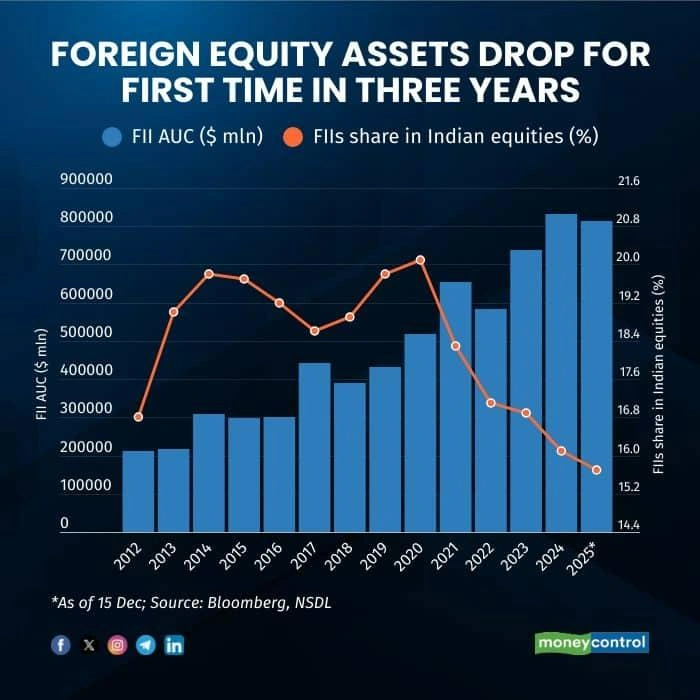
Over the past decade, domestic participation has grown significantly, reducing the market’s dependence on foreign capital compared to earlier years.
Many analysts believe this structural change has helped Indian markets absorb external shocks more effectively.
What Investors Are Watching Next
Market participants are closely monitoring several factors that could influence foreign investment flows in the coming months.
The most important development remains the geopolitical situation in West Asia. Any progress toward a peace agreement between the United States and Iran could ease concerns about energy supplies and support investor confidence.
Investors are also watching crude oil prices, inflation trends, and central bank policies both in India and globally.
Economic growth data and corporate earnings reports will also play a crucial role in determining whether foreign investors return to Indian markets later this year.
India Still Remains Attractive for Long-Term Investors
Although foreign investors have been selling shares in recent months, many global institutions continue viewing India as a strong long-term investment destination.
India’s expanding economy, large consumer market, infrastructure investments, and growing manufacturing sector remain key attractions.
Short-term market movements are often influenced by geopolitical events and global risk sentiment, but long-term investors typically focus on broader economic fundamentals.
For now, the latest data suggests that while foreign investors are still withdrawing money from Indian equities, the pace of selling is slowing as markets adapt to ongoing global challenges.
Click Here to subscribe to our newsletters and get the latest updates directly to your inbox.