
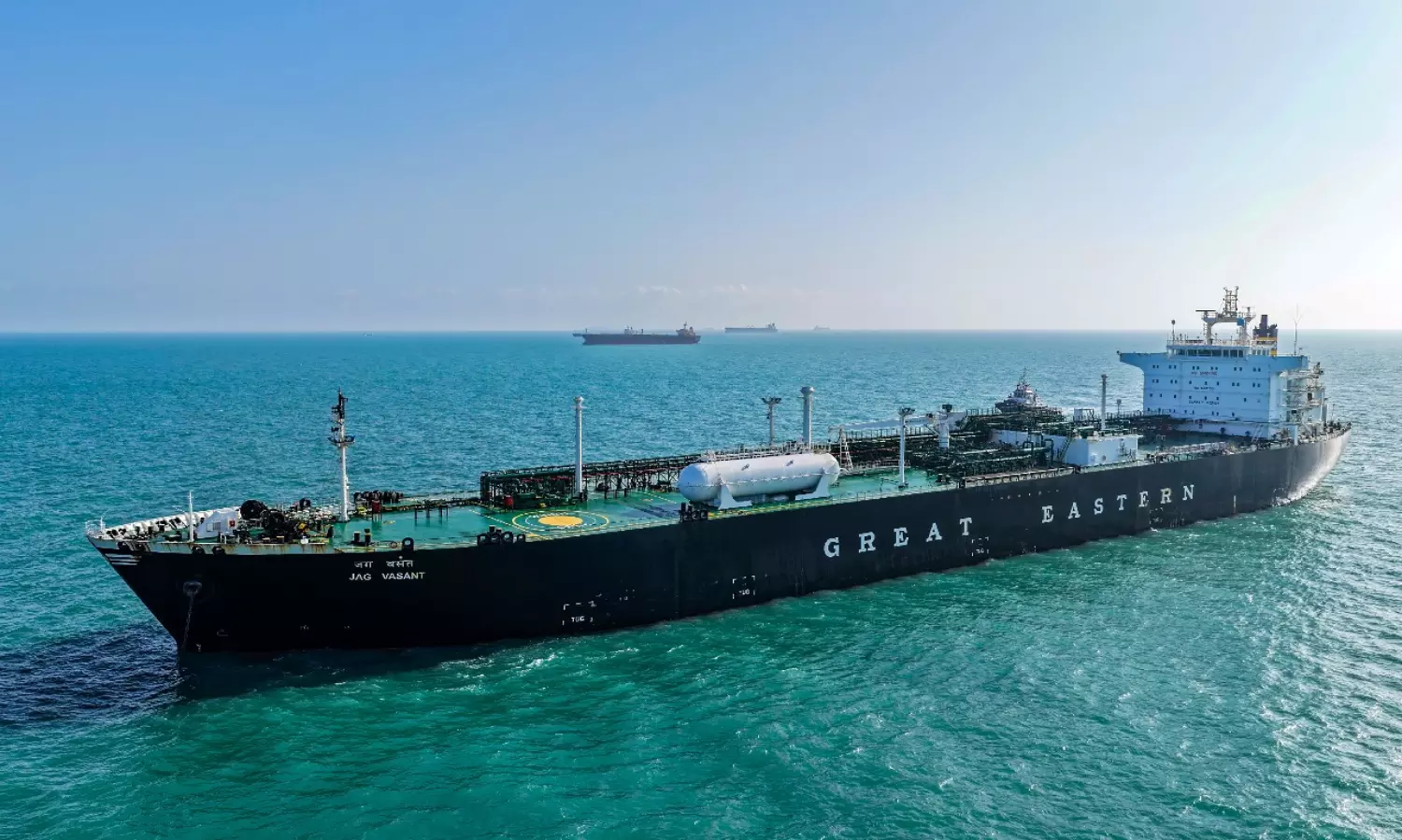
Strait of Hormuz Tension: Why Indian LPG Tankers Are Broadcasting Identity Signals Amid West Asia Conflict
Amid rising tensions in West Asia, two India-flagged liquefied petroleum gas (LPG) tankers have successfully crossed the strategically critical Strait of Hormuz. The vessels, identified as BW Elm and BW Tyr, had been anchored in the Persian Gulf before making their passage eastward through one of the world’s most sensitive maritime chokepoints.
According to ship tracking data, both tankers took precautionary measures by broadcasting their identity as Indian vessels with Indian crew through onboard transponders. This step is increasingly becoming a standard practice in the region, particularly as Iranian authorities maintain heightened surveillance over maritime traffic.
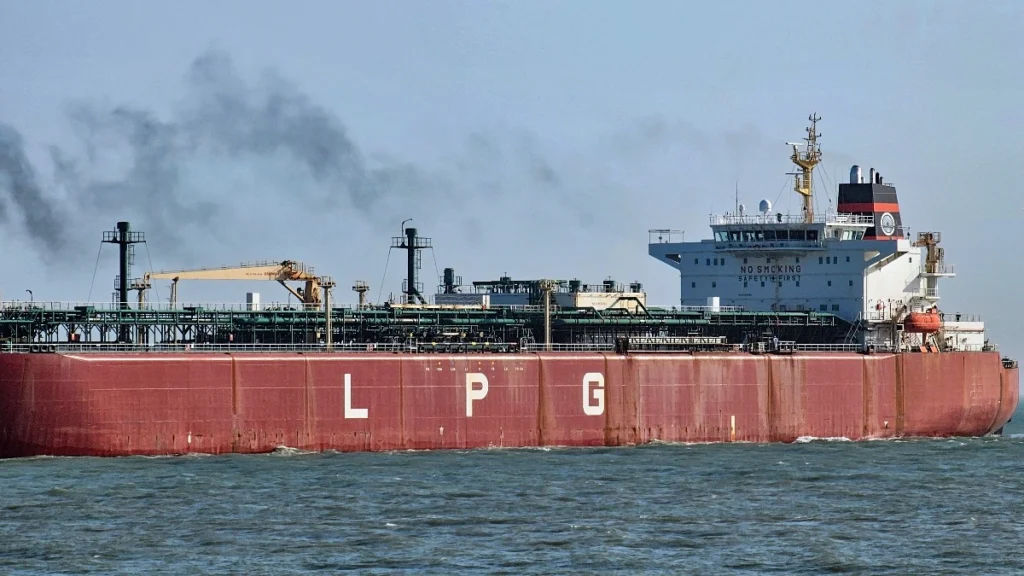
The Strait of Hormuz, located between Iran and Oman, serves as a crucial gateway connecting the Persian Gulf to global markets. Any disruption in this narrow corridor can have immediate and widespread implications for global energy supply chains.
Why the Strait of Hormuz Matters So Much
The Strait of Hormuz is often described as the world’s most important oil transit chokepoint. A significant portion of global crude oil and LPG shipments passes through this narrow stretch of water every day.
For countries like India, which rely heavily on energy imports, the security of this route is critical. Even minor disruptions can lead to supply delays, increased shipping costs, and fluctuations in fuel prices.
The ongoing conflict in West Asia has heightened concerns about the safety of vessels navigating this route. As a result, shipping companies and governments are taking extra precautions to ensure safe passage.
Identity Broadcasting: A New Safety Protocol
One of the most notable developments in recent days is the use of identity broadcasting by vessels crossing the Strait of Hormuz. The Indian tankers BW Elm and BW Tyr clearly identified themselves through transponders as Indian ships with Indian crew.
This practice helps reduce the risk of misidentification in a highly sensitive region where military and security forces are closely monitoring maritime activity. By clearly signaling their nationality, vessels aim to avoid unnecessary confrontation or delays.
Such coordination with regional authorities, particularly Iran, has become increasingly important as geopolitical tensions continue to rise.
18 Indian Vessels Still in the Persian Gulf
While the successful crossing of the two tankers is a positive sign, concerns remain as approximately 18 Indian vessels are still reported to be in the Persian Gulf region.
These ships may face similar challenges when attempting to navigate through the Strait of Hormuz, depending on how the situation evolves. The presence of multiple vessels in a high-risk zone highlights the scale of India’s dependence on maritime energy routes.
Authorities are likely monitoring the situation closely to ensure the safety of these ships and their crew.
Impact on India’s Energy Security
India is one of the largest importers of crude oil and LPG, with a significant share of its energy supplies coming from West Asia. Any disruption in shipping routes can directly impact domestic energy availability and pricing.
The safe passage of LPG tankers is particularly important, as LPG is widely used for cooking and household purposes across India. A prolonged disruption could affect supply chains and lead to price volatility.
In this context, the movement of Indian vessels through the Strait of Hormuz is not just a maritime issue—it is directly linked to the country’s energy security.
Global Market Implications
The situation in the Strait of Hormuz has implications far beyond India. Global oil markets are highly sensitive to developments in this region.
Any escalation in conflict or disruption in shipping can lead to spikes in oil prices, affecting economies worldwide. Investors and policymakers closely monitor maritime activity in the area as an indicator of potential risks to global energy supply.
The successful navigation of vessels provides temporary reassurance, but uncertainty remains as long as tensions persist.
What Lies Ahead
The crossing of BW Elm and BW Tyr highlights both the resilience and vulnerability of global energy logistics. While shipping operations continue, they are increasingly influenced by geopolitical factors.
For India, ensuring the safe movement of its vessels will remain a priority. This may involve closer coordination with international partners, enhanced maritime security measures, and strategic planning to mitigate risks.
As the situation evolves, the Strait of Hormuz will continue to be a focal point in global trade and energy discussions, with every vessel movement carrying broader economic significance.
States Offered More LPG Supply to Ease Energy Pressure
Click Here to subscribe to our newsletters and get the latest updates directly to your inbox.