
NASA’s New AI System Could Predict Dangerous Algae Blooms Before They Spread
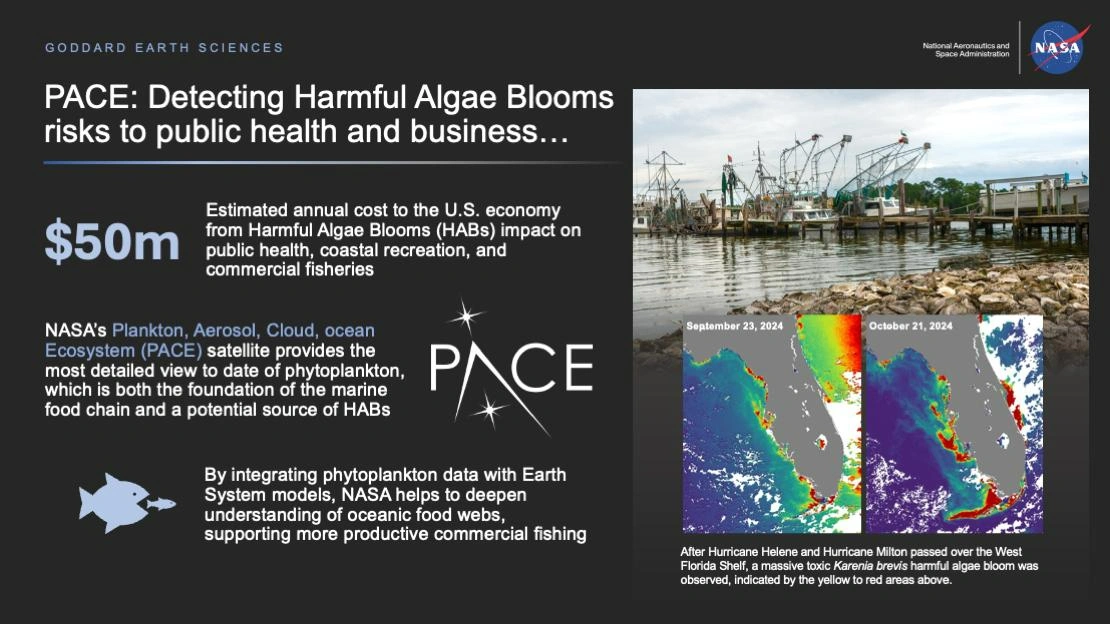
For many coastal communities around the world, harmful algae blooms are becoming an increasingly serious environmental and economic problem. These outbreaks can poison marine life, damage fishing industries, hurt tourism, and even create health risks for people living near affected waters.
The biggest challenge has always been timing.
In most cases, harmful algae blooms are only detected after they have already spread widely across coastal waters. By then, the damage is often already underway.
Now, researchers from NASA believe artificial intelligence may finally help change that.
A NASA-backed research team has developed a new AI-powered monitoring system capable of detecting harmful algae blooms much earlier than traditional methods. Instead of relying mainly on water sampling and laboratory analysis, the new system uses satellite imagery and machine learning to monitor coastal waters in near real time.
If successful on a larger scale, the technology could significantly improve how governments and environmental agencies respond to marine ecosystem threats.
Why Harmful Algae Blooms Are So Dangerous
Algae are naturally present in oceans, lakes, and rivers. In normal conditions, they play an important role in aquatic ecosystems.
The problem begins when certain types of algae multiply rapidly under favorable conditions such as warmer water temperatures, nutrient pollution, changing ocean chemistry, and reduced water circulation.
These rapid overgrowth events are known as harmful algae blooms, or HABs.
Some algae species release dangerous toxins that can kill fish, poison marine mammals, contaminate seafood, and create respiratory issues for humans.
In places like Florida, harmful blooms caused by Karenia brevis are responsible for the infamous “red tide” events that regularly affect beaches and marine life.
In recent years, algae blooms linked to Pseudo-nitzschia have also reportedly poisoned dolphins, sea lions, and other marine animals along parts of the US coastline.
The economic damage can also become severe.
Tourism declines, fishing operations are disrupted, and coastal cleanup costs rise sharply during major outbreaks.
Traditional Detection Methods Are Slow
One reason algae blooms remain difficult to manage is that traditional detection systems are often too slow.
Monitoring usually requires collecting water samples, sending teams on boats, performing laboratory testing, and waiting for chemical analysis.
That process can take several days.
By the time scientists confirm an outbreak, the algae may already have spread extensively across large coastal regions.
This delay limits how quickly authorities can issue public health warnings or protect marine ecosystems.
NASA’s new AI system is designed specifically to solve this timing problem.
How NASA’s AI System Works
The new system combines satellite observations with machine learning algorithms capable of identifying patterns associated with algae growth.
Instead of depending entirely on physical water sampling, the AI analyzes ocean color changes, water temperature, light reflection patterns, chlorophyll activity, and coastal environmental conditions.
These patterns are then processed through machine learning models trained to detect the early signs of harmful algae development.
Because satellites continuously monitor large ocean regions, the system can potentially identify risks much faster than conventional testing methods.
Researchers reportedly tested the technology in regions known for frequent algae outbreaks, including western Florida and southern California.
The early results appear promising.
AI Could Transform Environmental Monitoring
NASA’s algae detection project highlights a larger shift happening globally: artificial intelligence is increasingly being used for environmental protection and climate monitoring.
AI systems are now being applied in areas such as wildfire prediction, flood forecasting, climate modeling, deforestation tracking, ocean monitoring, and wildlife protection.
Environmental systems generate enormous amounts of satellite and sensor data every day. AI is particularly effective at analyzing these large datasets quickly and identifying patterns humans may miss.
In the case of algae blooms, speed matters enormously.
Earlier warnings could help governments protect fisheries, issue health advisories, reduce tourism disruption, prepare cleanup operations, and monitor drinking water systems before outbreaks reach dangerous levels.
Coastal Communities Could Benefit the Most
Communities living near coastlines may benefit significantly from earlier detection systems.
In many coastal regions, tourism and fishing industries depend heavily on healthy marine ecosystems.
Large algae outbreaks can devastate local economies for weeks or even months.
Beach closures, fish deaths, toxic water conditions, and foul odors often drive away tourists and hurt businesses that depend on seasonal visitors.
Earlier prediction systems may give local authorities enough time to alert businesses, adjust fishing operations, protect wildlife zones, and warn the public before conditions worsen.
Climate Change May Be Making Algae Blooms Worse
Scientists increasingly believe climate change is contributing to more frequent and severe algae blooms globally.
Warmer ocean temperatures create conditions that can accelerate algae growth in many marine ecosystems.
At the same time, pollution runoff containing fertilizers and industrial waste adds excess nutrients into coastal waters, further feeding algae expansion.
This means harmful blooms may become an even larger environmental issue in the coming years.
That is one reason why faster monitoring systems are becoming increasingly important.
Public Reaction Shows Growing Interest in AI for Science
Public reaction to NASA’s project has been largely positive.
Many people online praised the idea of using artificial intelligence for environmental protection rather than only for commercial applications or chatbots.
Scientists and environmental researchers also highlighted how satellite-based AI systems could improve global monitoring capabilities in regions where traditional marine testing infrastructure is limited.
Some experts, however, warned that AI predictions still require strong real-world validation.
Environmental systems are highly complex, and false positives or inaccurate predictions could create operational challenges if systems are deployed too aggressively without sufficient testing.
NASA Expanding AI Research Beyond Space
Although NASA is best known for space exploration, the agency has increasingly invested in Earth-focused AI research.
Satellite technology developed for observing Earth’s climate, oceans, and atmosphere is now becoming a critical part of environmental science.
AI allows researchers to process satellite information at much larger scales than before.
This combination of space technology and machine learning may become one of the most important tools for monitoring environmental risks in the future.
Why This Research Matters Globally
The importance of this project goes far beyond the United States.
Countries across Asia, Europe, Africa, and South America are also facing growing algae-related environmental problems due to pollution, warming oceans, and changing climate patterns.
Many developing countries lack advanced marine testing infrastructure, making satellite-based AI systems especially valuable.
If the technology continues improving, future systems could eventually provide near real-time global algae monitoring, helping governments and environmental agencies react much faster to dangerous outbreaks.
For coastal populations whose livelihoods depend on oceans, fisheries, and tourism, earlier detection could mean the difference between manageable disruption and major economic damage.
Click Here to subscribe to our newsletters and get the latest updates directly to your inbox.