
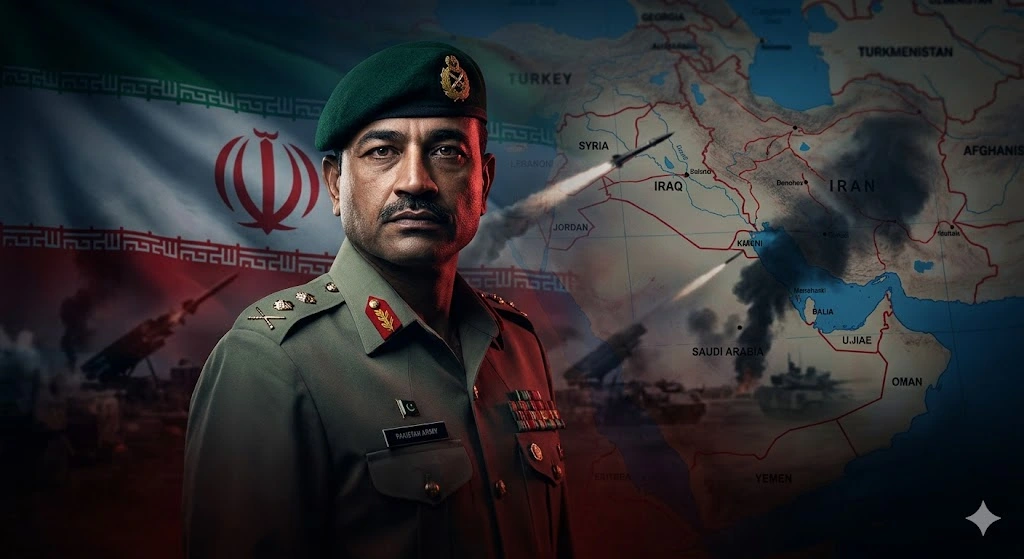
The man in the middle: Why General Asim Munir Became a Key Mediator in US–Israel–Iran Conflict
General Asim Munir landed in Tehran on Wednesday carrying Trump’s peace offer. Most coverage has focused on what he carried. Less attention has been given to why he, specifically, was the one sent.
The Hidden Story Behind Pakistan’s Mediation Efforts
As tensions escalated between the United States, Israel, and Iran, one country quietly stepped into a sensitive diplomatic role: Pakistan.
While global headlines focused on airstrikes and missile exchanges, a less visible story was unfolding behind closed doors—Pakistan attempting to act as a mediator.
But the real question is: why Pakistan, and why now?
Why General Asim Munir Matters
At the center of this effort is Asim Munir, Pakistan’s army chief.
Unlike most global leaders, Munir brings a unique advantage:
his past role as head of Pakistan’s intelligence agency, the Inter-Services Intelligence.
This background is critical.
- Munir is believed to have direct personal contacts within Iran’s security establishment, including links to elements of the Islamic Revolutionary Guard Corps.
- These relationships give Pakistan a rare communication channel that Western officials currently lack.
This is what makes Pakistan’s role more than symbolic—it provides a functional back channel in a high-risk conflict.
Pakistan’s Domestic Pressures: A Balancing Act
Pakistan’s mediation is not just about diplomacy—it is also driven by internal pressures.
The country has a large Shia population, estimated at around 40 million people, many of whom have strong religious and cultural ties to Iran.
Recent developments have added urgency:
- Rising sectarian tensions inside Pakistan
- Security concerns following incidents near diplomatic missions
- Political sensitivity around public statements by senior officials
This creates a delicate balancing act for Islamabad:
- Maintain relations with Iran
- Avoid alienating Western allies
- Prevent domestic instability
Pakistan’s “neutral” stance, therefore, is not entirely neutral—it is shaped by internal security and political realities.
China’s Quiet but Powerful Influence
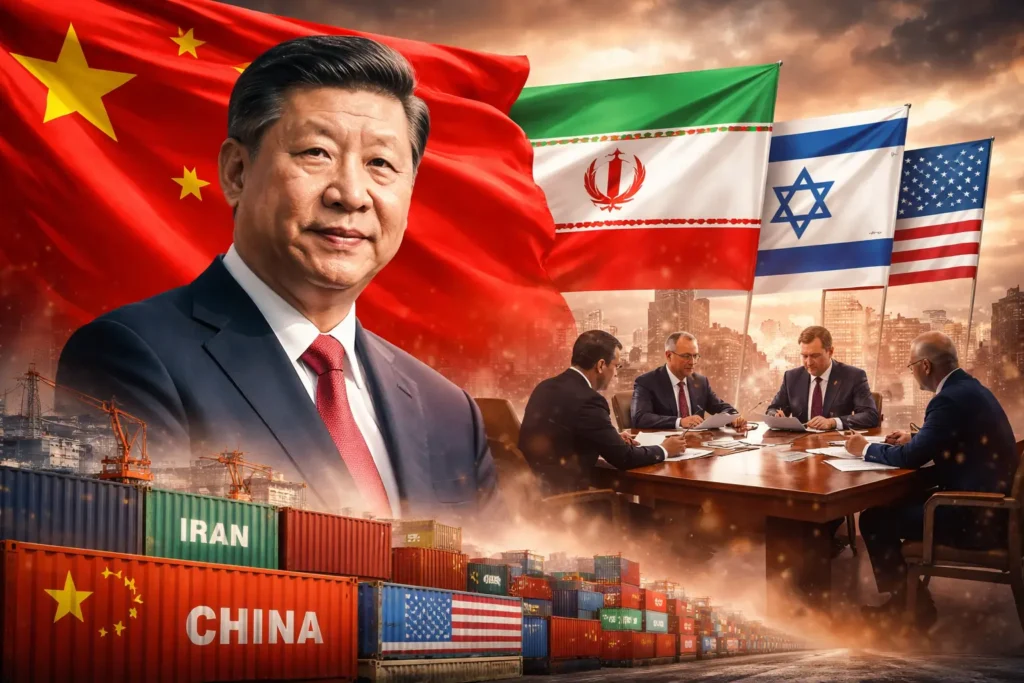
Another under reported dimension is the role of China.
While the United States and its allies dominate headlines, China has been working quietly behind the scenes.
Key developments include:
- Reports that China encouraged Iran toward a ceasefire effort in early April
- Pakistan’s foreign minister traveling to Beijing shortly after mediation talks stalled
China’s stakes are significant:
- It is one of the largest buyers of Iranian oil
- It has multi-billion-dollar strategic investments in Iran
- Regional stability directly affects its economic interests
This suggests that Pakistan’s diplomatic efforts may not be acting alone—but could be aligned, at least partially, with China’s broader regional strategy.
A New Diplomatic Axis Emerging?
Taken together, these developments point to a possible emerging dynamic:
- Pakistan acting as a bridge between Iran and the West
- China providing economic leverage and strategic backing
- The United States and Israel maintaining military pressure
This creates a complex, multi-layered geopolitical situation where diplomacy and conflict are unfolding simultaneously.
Why This Matters Globally
For global audiences, especially in the United States and allied countries, this development carries important implications:
1. Alternative Diplomatic Channels
Pakistan’s role shows that not all negotiations happen through traditional Western-led diplomacy.
2. Rising Influence of Regional Powers
Countries like Pakistan and China are playing more active roles in global conflict resolution.
3. Impact on Conflict Outcomes
Back channel negotiations could influence:
- Ceasefire timelines
- De-escalation strategies
- Long-term regional stability
What Happens Next?
Pakistan’s success as a mediator will depend on several factors:
- Whether its communication channels with Iran remain open
- How the United States and Israel respond to third-party mediation
- China’s continued involvement in diplomatic efforts
If these elements align, Pakistan could play a critical role in preventing further escalation.
Conclusion
The US–Israel–Iran conflict is not just a military confrontation—it is also a complex diplomatic puzzle.
Pakistan’s involvement, driven by General Asim Munir’s intelligence connections, domestic pressures, and China’s quiet influence, reveals a deeper layer of global geopolitics that is often missing from headlines.
As the conflict evolves, these behind-the-scenes dynamics may prove just as important as developments on the battlefield.
Click Here to subscribe to our newsletters and get the latest updates directly to your inbox.